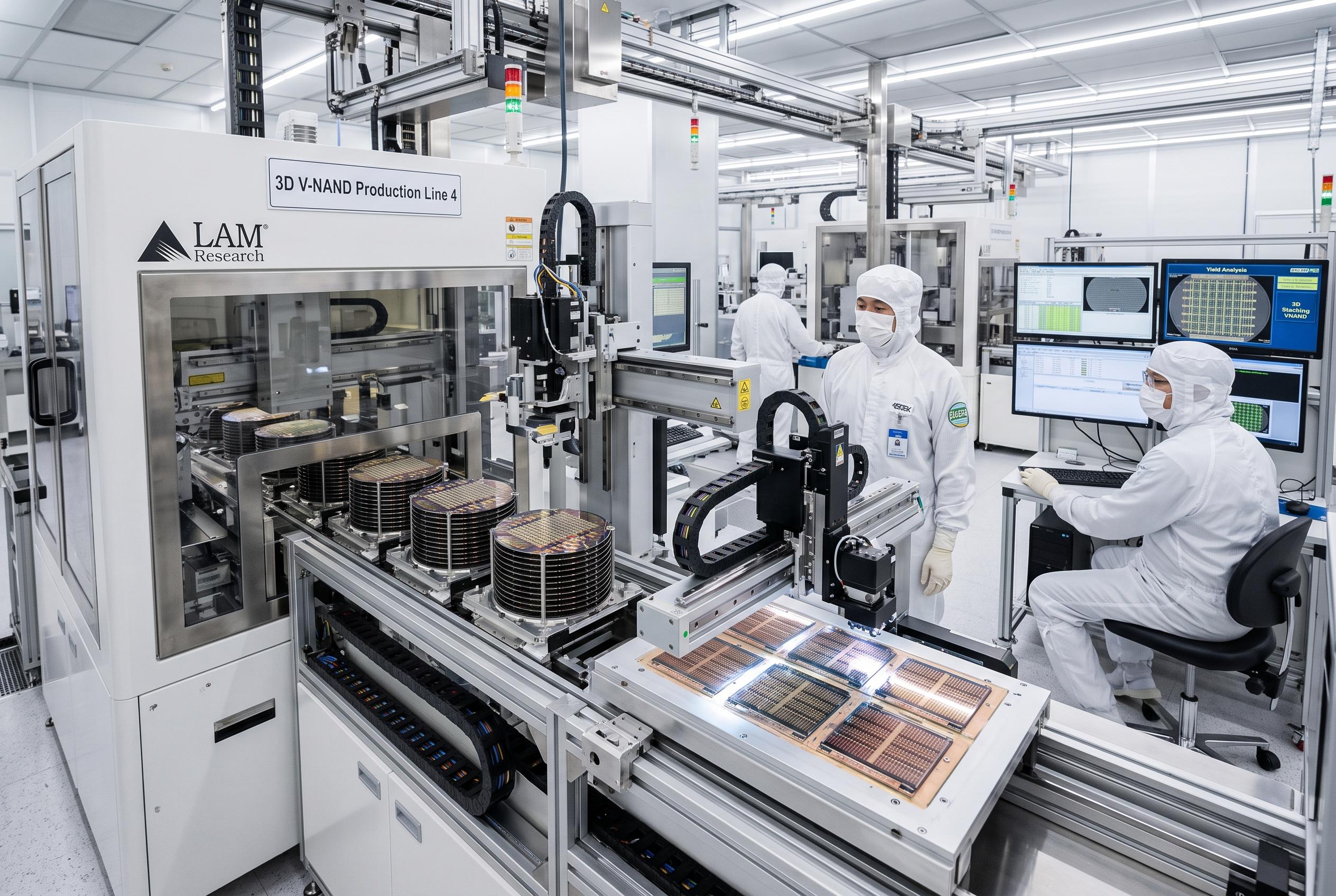

Intel’s CEO hints at a potential resurgence in memory chip production, exploring innovative architectures and stacking techniques, aiming to capitalise on current market demand driven by AI and high-performance computing.
Intel chief executive Lip-Bu Tan has signalled that the company may be weighing a return to memory manufacturing, an industry it helped pioneer before exiting decades ago. Speaking on Michael Marks’ TechSurge podcast, Tan said one of his personal interests is new memory architectures and suggested that combining logic chips and memory more tightly could open fresh technical possibilities. His comments point to a broader rethink of a market long treated as low-margin and routine.
Intel’s history in memory goes back to its earliest years. The company’s first product, introduced in 1969, was the 3101 static random-access memory chip, according to Intel’s own historical archive. That legacy is a long way from the company’s later identity as a microprocessor leader, but it helps explain why a renewed push into memory would not be entirely out of character. Intel eventually moved away from mainstream memory manufacturing and later experimented with NAND and Optane before stepping back again.
Tan gave one clue that the idea is being taken seriously inside Intel when he referred to the hiring of Seok-Hee Lee, the former chief executive of SK Hynix, as executive vice president of Intel Foundry. Intel said Lee will oversee advanced packaging, a part of chip production that is increasingly important for stacking different components together. That matters because Tan specifically mentioned the possibility of stacking memory directly on top of CPUs, a design approach that could be useful in high-performance systems and enterprise hardware.
Any comeback would still be a major gamble. Building competitive memory fabrication would require enormous capital spending at a time when Intel is under pressure to stabilise its foundry business and restore investor confidence. But the timing is not arbitrary. Reuters has reported that memory makers have been benefiting from the AI boom, while Tom’s Hardware noted that tight supply has kept prices elevated and that new fabs from Micron and SK Hynix are not expected to ease demand immediately. In that environment, a serious Intel entry could be attractive not only as a business move but as a way to gain greater control over future chip design.
Disclaimer: This content is intended for informational purposes only. Readers are advised to exercise their own judgement, conduct due diligence, or consult a qualified expert before acting on any information provided.