
MSI launches the Claw 8 EX AI+ at a premium price, boasting significant hardware upgrades and improved gaming performance, positioning it as a serious contender in the high-end handheld PC market.
MSI’s Claw 8 EX AI+ arrives at a moment when the handheld PC market has become sharply more expensive, largely because memory and storage costs have been pushed higher by demand from artificial intelligence systems. That matters here because the device is not trying to be a budget alternative. At $2,299, it is positioned as a premium machine, yet MSI’s argument is that the price is justified by a substantial hardware upgrade and, more importantly, by a clear shift in performance. According to the review, the Claw 8 EX AI+ is now a serious contender rather than an experimental Intel-backed effort.
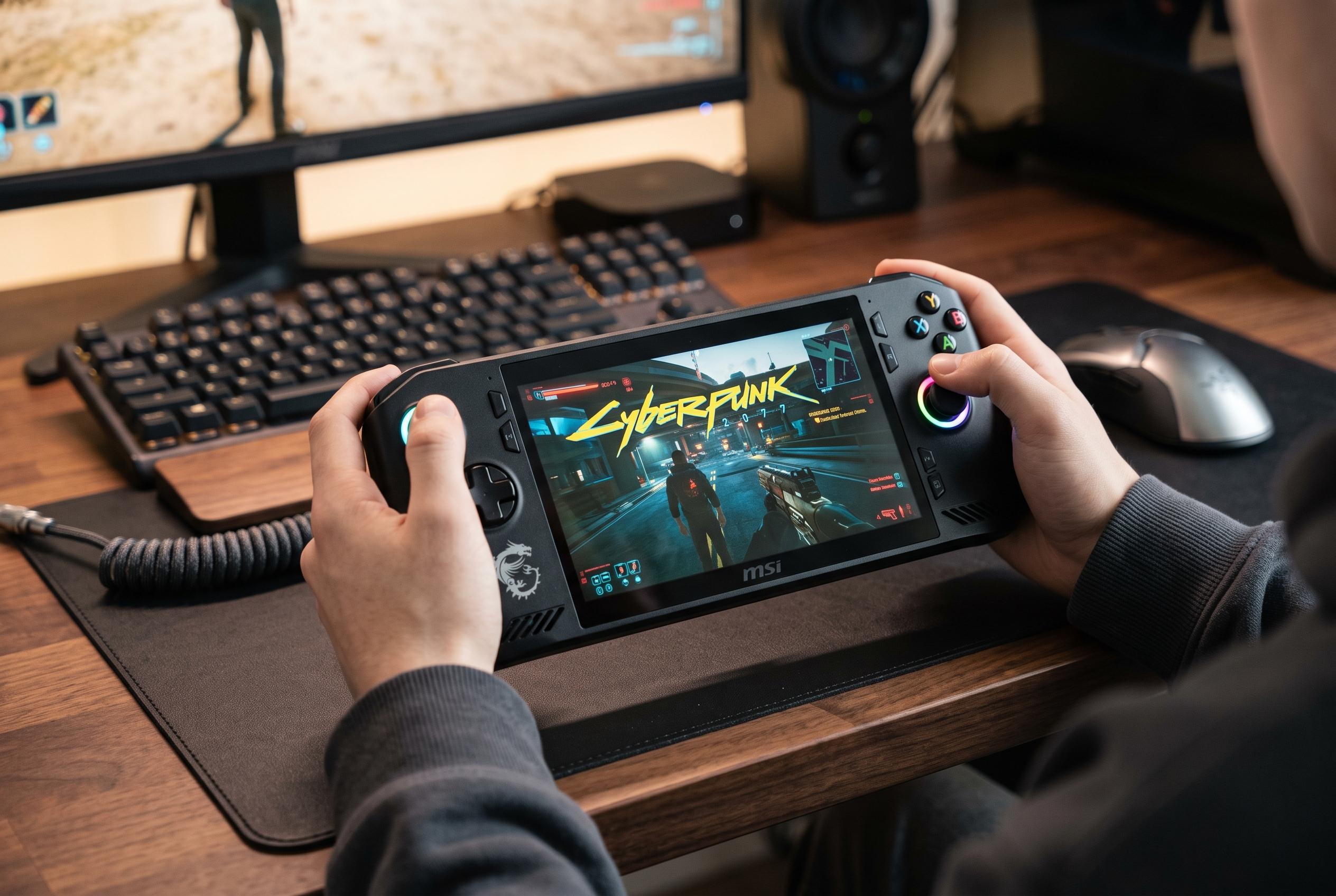
The hardware specification is straightforwardly ambitious. MSI pairs Intel’s Arc G3 Extreme processor with Arc B390 integrated graphics, 32GB of memory and a 1TB SSD. The company says the handheld uses an 8-inch 1,920 x 1,200 touchscreen with a 120Hz refresh rate, 100% sRGB coverage and an 80Wh battery, while MSI’s own materials also highlight Hall effect joysticks and triggers, dual Thunderbolt 4 ports and Windows 11 Home. In practical terms, that puts the Claw 8 EX AI+ in the class of large, fully featured Windows handhelds rather than the smaller, more compromise-heavy models that first defined the category.
Size is one of the Claw’s defining characteristics. The review describes it as bigger and heavier than rivals such as the ROG Xbox Ally X, but also more comfortable than its dimensions might suggest, thanks to deep grips and controls that sit naturally under the fingers. The trade-offs are familiar: a plastics-heavy shell that does not feel as luxurious as the asking price implies, a circular D-pad that is competent rather than exceptional, and a screen technology choice that stands out less favourably. MSI chose an IPS panel instead of OLED, which the review says is easier to overlook at lower prices but difficult to ignore on a device costing well over two grand. Even so, the larger display makes text, menus and interface elements easier to read, and the extra chassis space helps MSI fit a larger battery and more connectivity.
Where the device makes its strongest case is performance. In the review’s game testing, the Claw 8 EX AI+ was ahead of the nearest AMD-based handhelds in several titles without upscaling, and it widened that lead in most cases once image reconstruction was enabled. The review says Intel’s Arc B390 was not merely competitive with the Ryzen Z2 Extreme’s Radeon 890M, but often operating at a clearly higher level. MSI’s own claims focus on higher frame rates and better efficiency, and the review’s battery results partly support that story: more than two and a half hours in a gaming test and close to 17 hours in a light office workload. That does not make it a work machine, but it does suggest the chip can be efficient when gaming loads are lower.
The broader conclusion is that MSI and Intel have finally produced a handheld that matches the promise of the original Claw. The review judges it to be the most capable PC gaming handheld it has tested, even if it is not the most polished or the most attractive. Windows 11 remains an awkward fit for a handheld device, and the lack of OLED at this price remains a notable omission. But the performance advantage is real, and that changes the equation. For buyers who care most about value, the ROG Xbox Ally X remains the more sensible choice. For buyers who want the fastest handheld experience and can tolerate the cost, the Claw 8 EX AI+ now has a credible claim to being the class leader.
Disclaimer: This content is intended for informational purposes only. Readers are advised to exercise their own judgement, conduct due diligence, or consult a qualified expert before acting on any information provided.