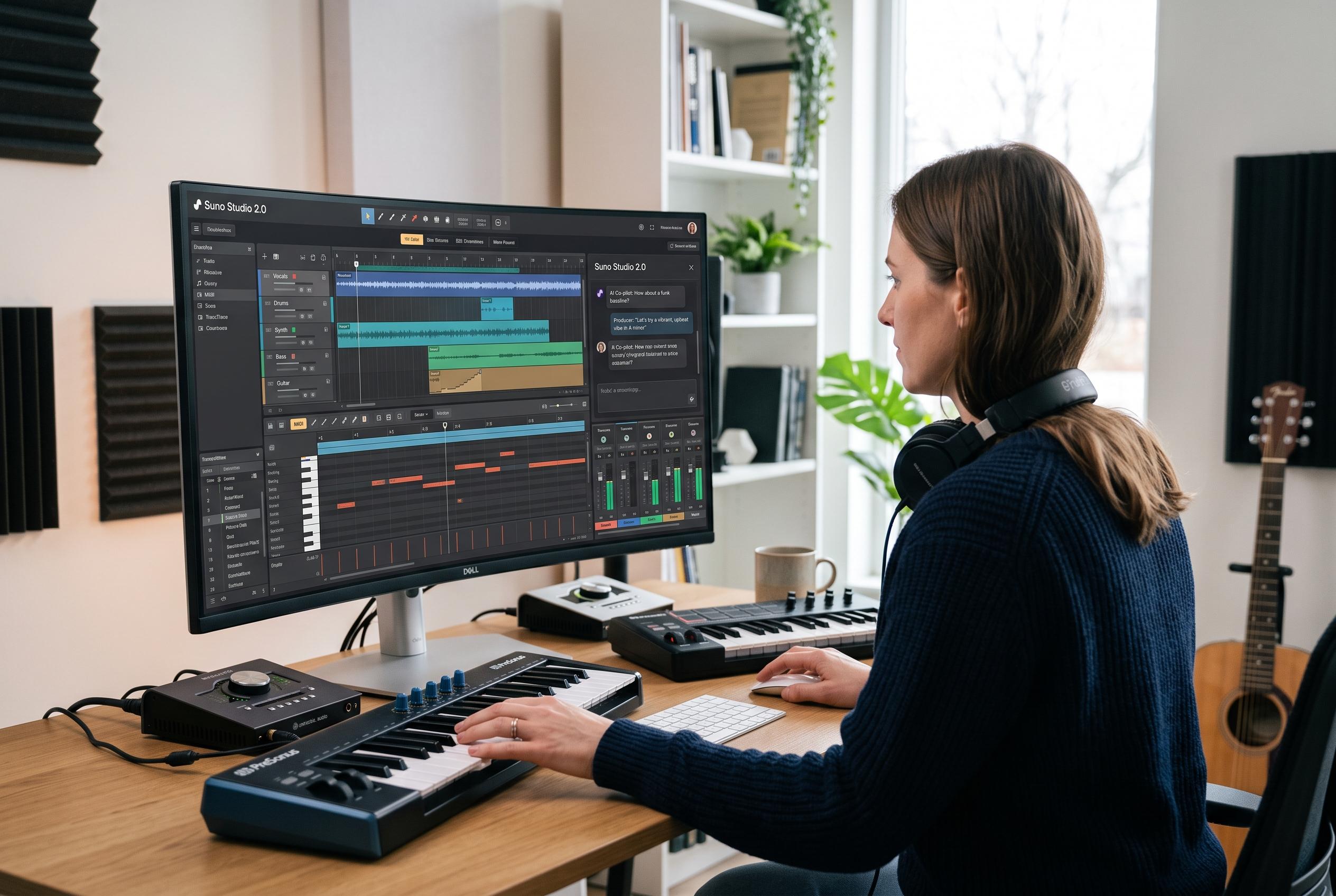

Suno has launched Studio 2.0, a major update to its browser-based audio workstation, introducing MIDI recording, editing, and AI-powered session tools that bridge the gap between traditional DAWs and innovative music production workflows.
Suno has rolled out Studio 2.0, a substantial update to its browser-based audio workstation that brings it closer to a conventional digital audio workstation while keeping AI generation embedded throughout the workflow. According to Studio product manager Henry Phipps, the release is now available to Premier subscribers and adds MIDI recording and editing, a wavetable synthesiser, session-aware chat tools, custom effects plugins, automation and improved stem separation.
MIDI is the headline addition. Phipps said it is the most requested feature since Studio launched in September 2025. Users can now import, record and edit MIDI on the timeline, play notes with a typing keyboard if they do not have a controller and use MIDI clips as prompts for new audio. In practice, that means a melody or chord progression can be played in and then turned into audio, extended or developed further by Suno’s model.
The new chat bar, in beta at launch, gives the session a conversational assistant that Suno says is aware of the current project. Users can ask it to generate instruments and vocals, write lyrics or parts, or clean up a session. The same interface also underpins custom plugin creation, letting users describe effects in chat rather than build them manually. Suno said factory tools include sidechain compression and convolution reverb, and that creating plugins will not require credits at launch, although that could change later.
Studio 2.0 also introduces automation for drawing parameter changes across a track, plus a refined stem-separation system that can pull apart outside audio as well as material created inside Suno. Premier subscribers can export 32-bit, 48kHz multitracks and stems without limits. The wider strategy is becoming clearer as well. Suno announced a global partnership with BMG on August 12, 2026, one day before the Studio update, and CEO Mikey Shulman has recently set out principles that include no artist names in training metadata, no prompts for specific artists or copyrighted songs, third-party screening of uploads and planned watermarking and fingerprinting. That follows years of legal pressure from major labels over training data, and it helps explain why Suno is pushing Studio towards the look and feel of standard production software rather than a standalone generator.
Disclaimer: This content is intended for informational purposes only. Readers are advised to exercise their own judgement, conduct due diligence, or consult a qualified expert before acting on any information provided.