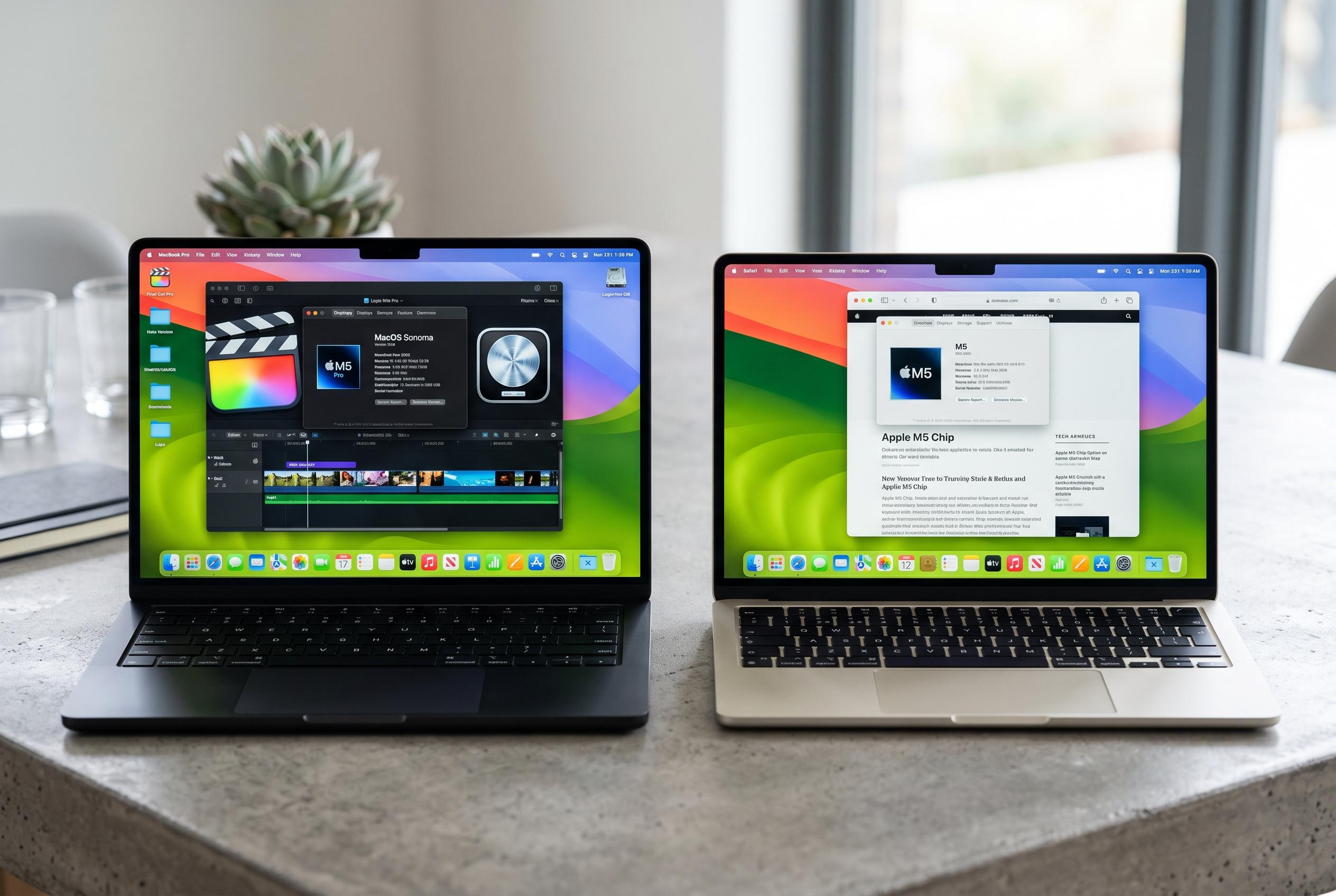

Apple’s 2026 Mac line-up features new M5 MacBook Air and MacBook Pro models, a budget MacBook Neo, and updated displays, but the eagerly anticipated OLED touchscreen MacBook Pro remains unconfirmed amid ongoing rumours.
Apple’s 2026 Mac line-up has already vindicated much of the bold forecast that described the year as potentially the most significant for the Mac since 1984, but the picture is more nuanced than the headline implied. By 12 August 2026, Apple had shipped new M5 MacBook Air and MacBook Pro models, introduced MacBook Neo as a lower-cost laptop, unveiled updated Studio Display hardware and previewed macOS 27. The one major hold-out is the OLED touchscreen MacBook Pro, which remains unconfirmed. According to the original analysis, the phrase “biggest since 1984” was always an editorial judgement rather than an Apple designation.
The clearest confirmation came in March, when Apple unveiled the M5 MacBook Air in 13-inch and 15-inch versions. Apple said the new Air starts at 512GB of storage, rises to 4TB in higher configurations, and uses the M5 chip with a faster CPU, updated graphics and Neural Accelerators in each core. Apple’s UK newsroom also said the machine brings improved wireless connectivity in a thin aluminium design, while MacRumors reported that pre-orders opened on 4 March and retail availability followed on 11 March, with U.S. prices starting at $1,099 and $1,299.
Apple also brought out refreshed MacBook Pro models with M5 Pro and M5 Max chips, giving professionals a current shipping option rather than a product to wait for. That matters because the earlier preview treated the spring update as an expected evolutionary release, not a wholesale redesign. In practice, the new Pro machines became the obvious choice for sustained workloads such as software development, video editing, 3D rendering and other tasks that regularly push a laptop hard.
The most surprising confirmation was MacBook Neo, Apple’s new lower-cost Mac laptop. MacRumors reported that Apple priced it from $599 in the US, with a $499 education price, and said it uses a version of the A18 Pro chip from the iPhone 16 Pro family. The company positioned it as a more affordable Mac for mainstream users, with a 13-inch display, up to 512GB of storage and 8GB of RAM. That is directionally close to the forecast of a cheaper entry Mac, but the final product name, chip and price were not the same as the speculation.
Apple’s display story also progressed. The 2026 Mac preview anticipated new screens, and reporting in March said Apple announced both a new Studio Display and an all-new Studio Display XDR. The important distinction is that these are separate products, not minor variations of a single model. For buyers building a desktop setup, the practical question is no longer whether Apple will refresh its monitor line, but which of the two displays best fits resolution, HDR, connectivity and budget needs.
On software, Apple previewed macOS 27 and a next-generation Apple Intelligence direction at WWDC26 on 8 June. The update is real, but the report that mattered most for buyers was regional and linguistic availability. Apple said Siri AI would arrive later in beta for supported devices using English, with additional languages to follow, while availability in the European Union and China depends on local support and regulatory conditions. That makes macOS 27 important, but not a reason to buy a Mac on the assumption that every AI feature will be available immediately everywhere.
Not every prediction has been confirmed. The OLED touchscreen MacBook Pro, which some secondary reporting places in late 2026 or early 2027, is still unannounced and remains a rumour rather than a product. Likewise, manufacturing plans for Mac mini in Houston do not amount to a new Mac mini model, and official support material still points to the existing Mac Studio generation rather than a confirmed 2026 M5 refresh. Those distinctions matter because manufacturing and supply-chain news can easily be mistaken for product launches.
For buyers, the practical conclusion is straightforward. The M5 MacBook Air is the best mainstream option now for students, office users and travellers, especially in 13-inch form. The M5 Pro and M5 Max MacBook Pro are the right choice for sustained professional work. MacBook Neo is the budget model to watch, but it should be judged on its actual configuration and current price, not on early rumours. The bigger lesson is that 2026 has already been an unusually active year for the Mac, even if one of the year’s most ambitious predictions is still waiting to be proved.
Disclaimer: This content is intended for informational purposes only. Readers are advised to exercise their own judgement, conduct due diligence, or consult a qualified expert before acting on any information provided.