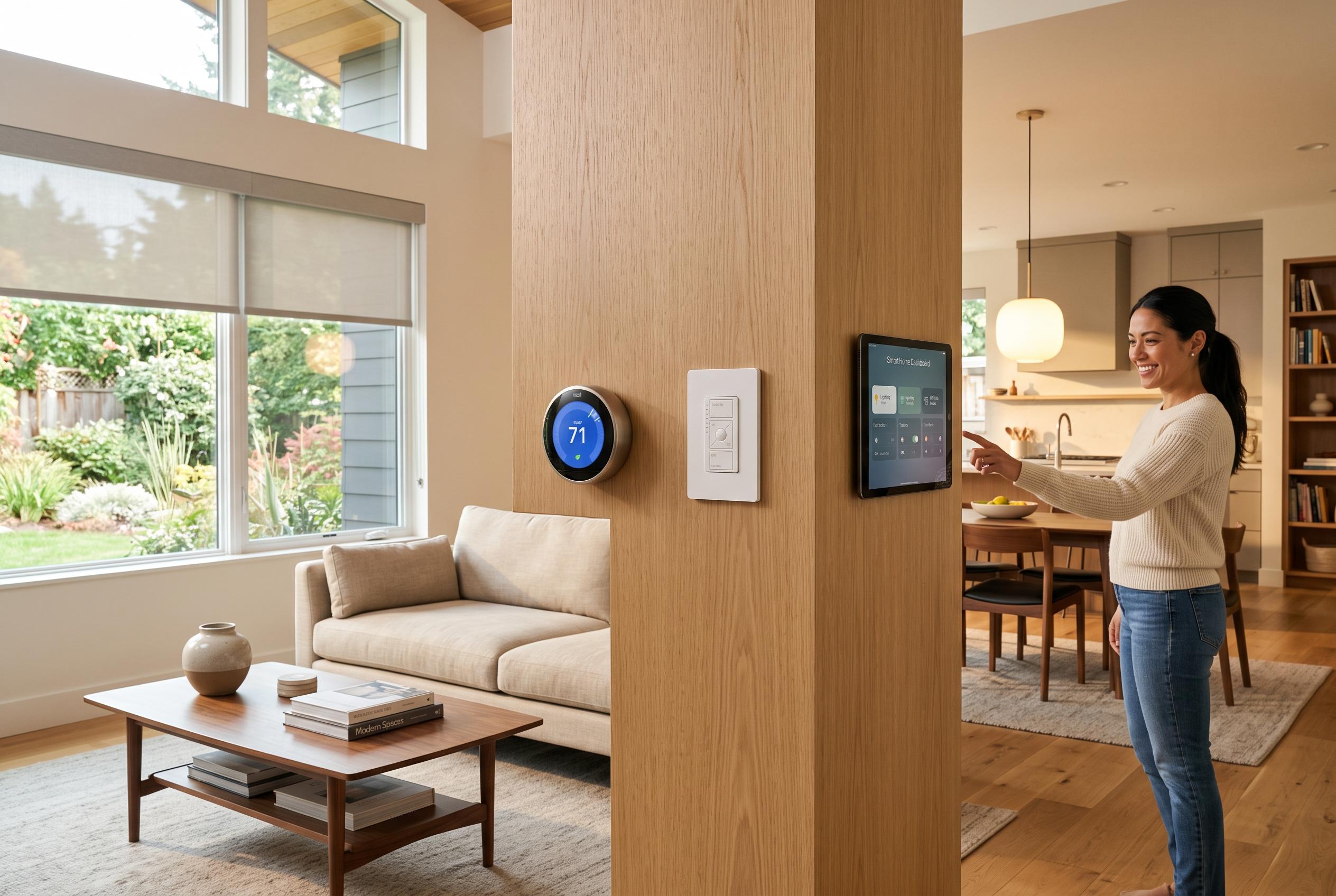

Smart home features are transitioning from luxury upgrades to key selling points, driven by consumer demand for convenience, energy efficiency, and long-term value in home renovations.
Smart home features are moving from optional extras to core renovation choices. For homeowners planning a remodel, the strongest case for adding them is practical: better convenience, tighter energy control and wider appeal to future buyers. Industry groups and property-market commentators increasingly treat these systems as part of a modern upgrade, not an afterthought.
The features with the clearest market appeal are still the basics: smart thermostats, smart lighting and security systems. The National Association of Realtors says these are among the most desired technologies among buyers, while CEDIA reports that many buyers are willing to pay more for homes with smart features and that such upgrades can lift resale value. The broader pattern is clear: devices that improve comfort, safety and operating costs are the ones most likely to matter at sale.
That makes planning important. Installing technology during a renovation is usually easier than retrofitting it later, because it allows for cleaner wiring, better outlet placement and a network built around the home rather than around individual gadgets. Ethernet connections to fixed locations, for example, can support more reliable performance for televisions, offices and hubs than wireless connections alone.
Energy management is another major draw. Smart thermostats can adjust heating and cooling automatically, while connected lighting and smart plugs can reduce wasted electricity when rooms are empty or appliances are idle. Industry coverage from CNBC and Zillow has also noted that these systems can improve a home’s attractiveness to buyers, particularly when they are integrated well and supported by a strong internet network.
The most durable approach is to choose systems that work across major platforms such as Apple HomeKit, Google Home and Amazon Alexa. That helps avoid lock-in to a single brand and gives homeowners more flexibility as products change. In practice, the best smart renovation is not the one with the most devices, but the one that is planned around long-term use, reliable connectivity and everyday value.
Disclaimer: This content is intended for informational purposes only. Readers are advised to exercise their own judgement, conduct due diligence, or consult a qualified expert before acting on any information provided.