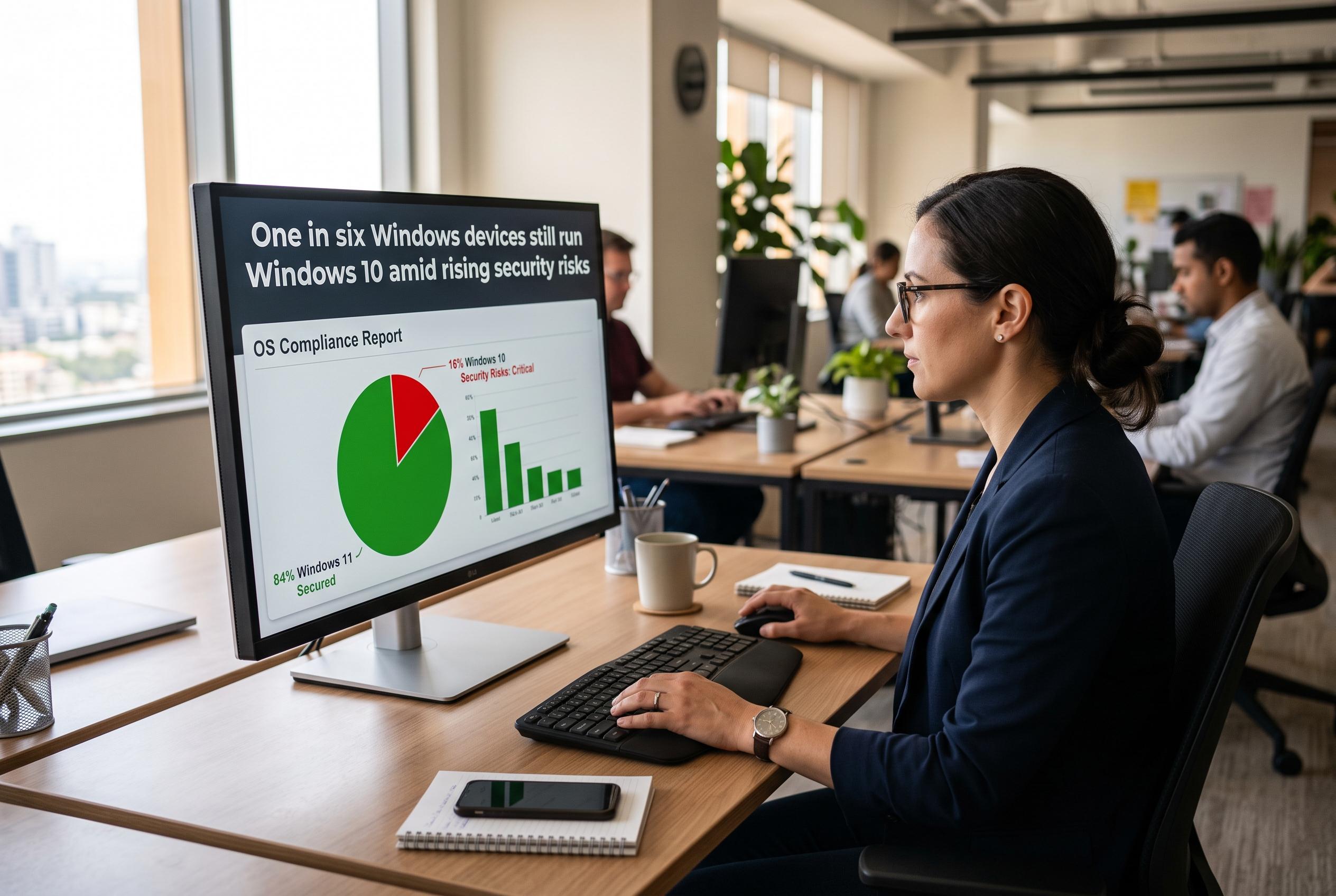

Despite Microsoft ending regular support last October, approximately 16% of Windows devices continue to operate on Windows 10, exposing organisations to significantly higher security vulnerabilities than Windows 11, according to Lansweeper analysis.
Windows 10 remains on roughly one in six Windows devices even after Microsoft ended regular support last October, and a new Lansweeper analysis says that installed base now carries a much heavier security burden than Windows 11. The study, reported by TechSpot, PCWorld and others, found an average of 1,903 active vulnerabilities on Windows 10 machines, compared with 652 on Windows 11 systems, a gap of about 3 to 1.
Lansweeper said 66% of the active flaws affecting Windows 10 are classed as high or critical, while a smaller but still significant share is known to be exploited in the wild. The company’s findings suggest that unsupported systems are not just more exposed in theory; they also face a greater practical risk because newly discovered weaknesses no longer receive routine fixes.
The research also shows that Windows 11 has now reached 78.8% of Windows client devices, but the pace of migration is slowing. Windows 10 still accounts for 16.9% of devices, or about one in six, despite the operating system’s age and Microsoft’s withdrawal of standard security updates. Lansweeper said that many of the remaining systems cannot be upgraded easily because of hardware limits or specialist use cases.
That problem is particularly acute in healthcare, industrial and other regulated environments, where equipment may depend on older software or certified configurations. Lansweeper urged organisations to move to Windows 11 where possible or, where migration is not immediately feasible, to use Microsoft’s Extended Security Updates programme as a temporary measure. Even so, the company warned that the ESU option is limited and does not remove the underlying risk of running an ageing platform.
Disclaimer: This content is intended for informational purposes only. Readers are advised to exercise their own judgement, conduct due diligence, or consult a qualified expert before acting on any information provided.