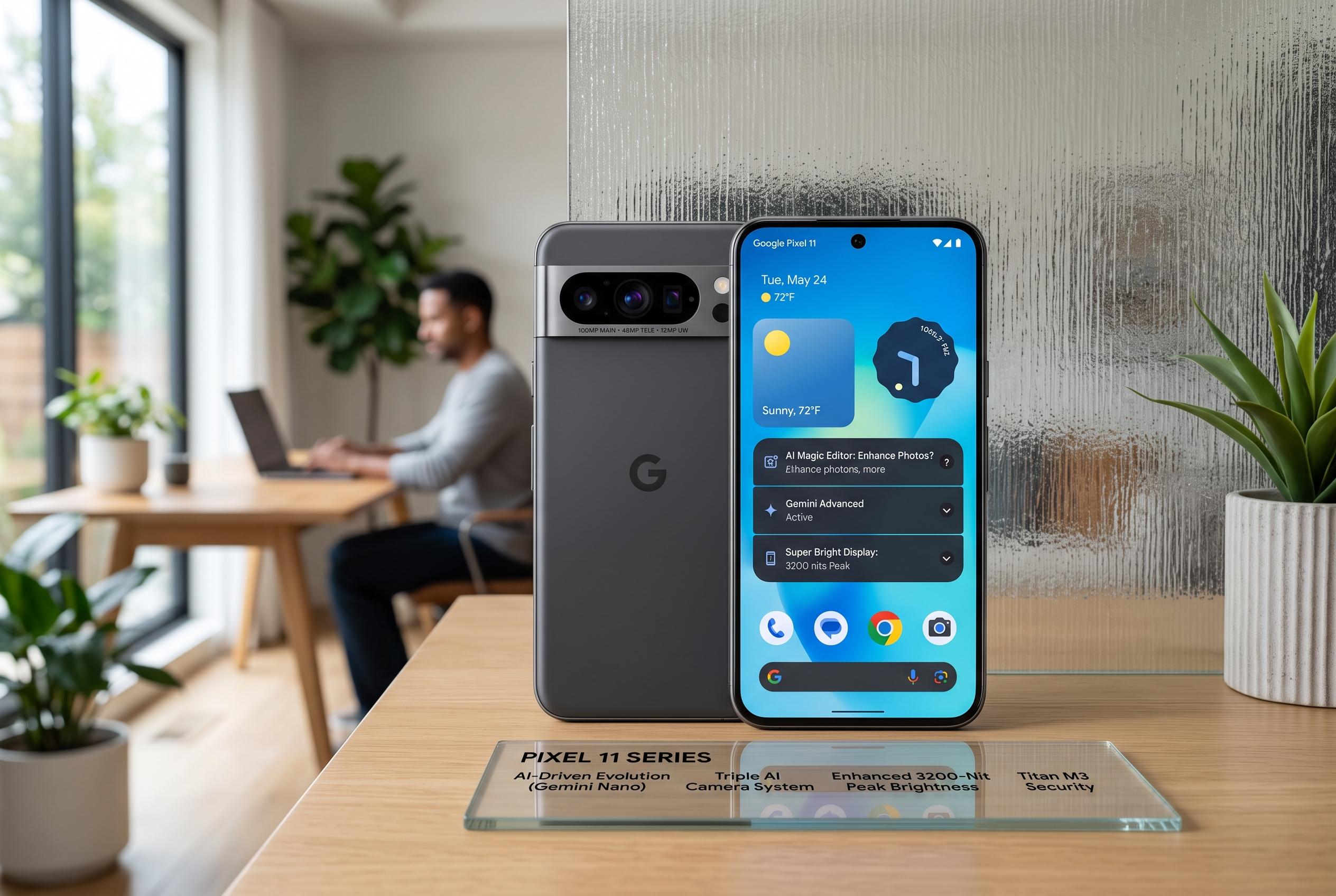

Google unveils the Pixel 11 series, emphasising AI integration, advanced camera features, and enhanced display brightness, marking a significant shift towards smarter, more connected phones amidst a busy week for tech innovation.
Google used its Made by Google event on 12 August to widen the Pixel range with four new phones: the Pixel 11, Pixel 11 Pro, Pixel 11 Pro XL and Pixel 11 Pro Fold. According to Android Central, the base model now starts at 256GB of storage, with the 128GB option removed, while all four devices move to the Tensor G6 processor and run Android 17 with Gemini features built in. The launch also marks a sharper push into AI-led hardware, with Google presenting the phones as a more integrated mix of design, performance and software.
The camera system is central to that pitch. Digital Camera World reported that the standard Pixel 11 uses a new 48MP main sensor with improved light sensitivity, while the Pro models step up to a 50MP main camera and a 48MP telephoto unit that supports up to 120x zoom. Google also highlighted a new Magic Capture mode, designed to help users catch better moments by combining video and high-resolution stills, while keeping images clear through automated cropping and deblur tools. The wider line-up also brings brighter OLED panels, with peak brightness rising to 3,600 nits on the Pro phones, plus battery life that Google says lasts beyond 30 hours.
The Pixel launch was only one part of a busy week in consumer technology. TechCrunch said Meta has begun testing a stand-alone Creator Studio app that uses artificial intelligence to help content makers plan posts, analyse performance and engage audiences without relying on outside tools. Google, meanwhile, has started adding Gemini directly into Google Messages, giving Android users access to conversational AI from inside the default messaging app, according to reporting from the launch coverage.
Elsewhere, software updates are moving across the Android ecosystem. Samsung’s One UI 9, built on Android 17, has begun reaching its newest foldable phones, with wider rollout to older Galaxy models expected soon. Xiaomi has also opened a beta programme for HyperOS 4 in three phases, with the first wave due to begin on 14 August. Together, the launches point to a broader industry shift: phones are still competing on hardware, but increasingly on how deeply artificial intelligence is woven into everyday use.
Disclaimer: This content is intended for informational purposes only. Readers are advised to exercise their own judgement, conduct due diligence, or consult a qualified expert before acting on any information provided.