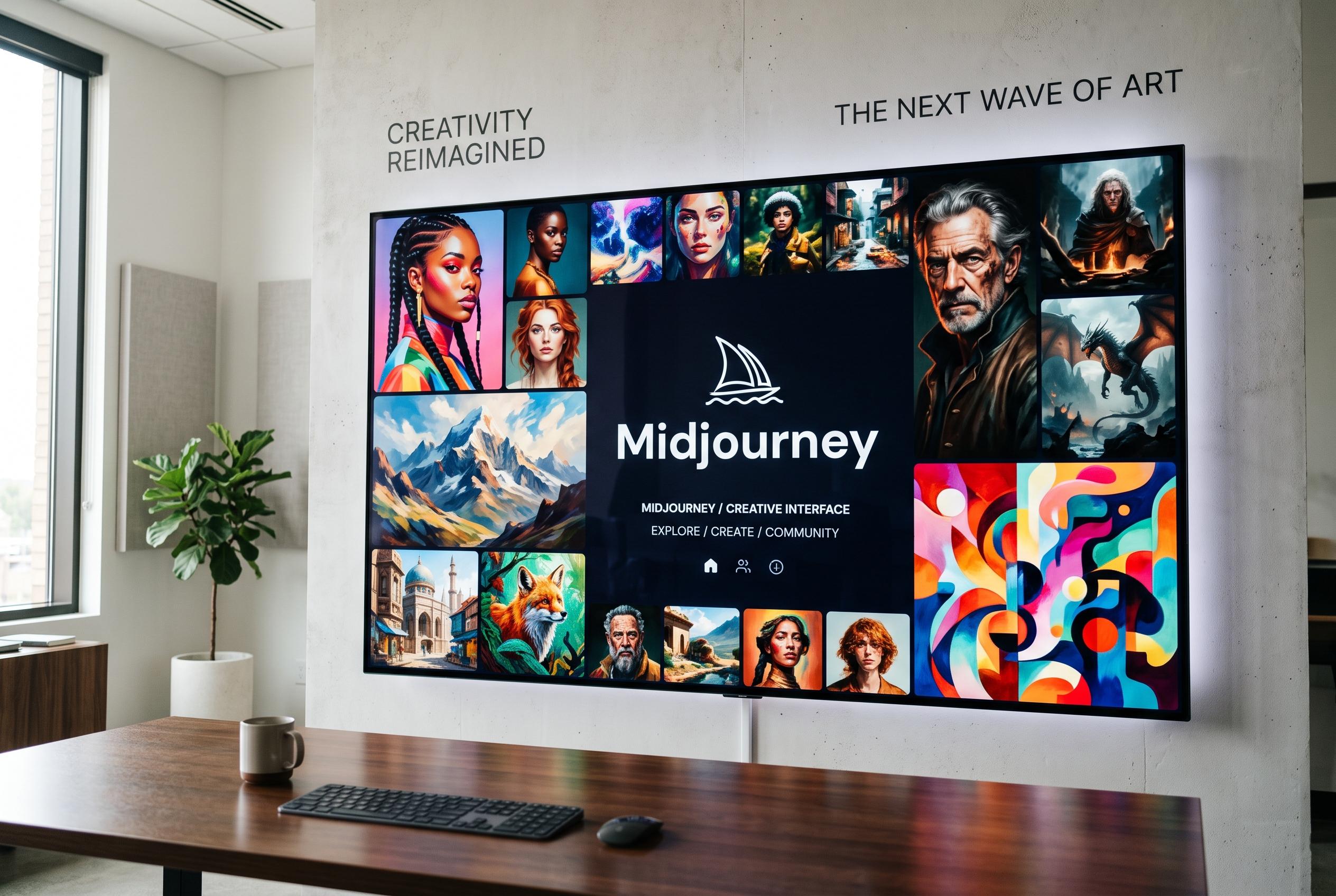

Midjourney, once a niche AI image tool, has become a leading platform with an expanding user base of up to 20 million and innovative features, reshaping digital visual creation.
Midjourney has grown from a niche generative image tool into one of the most widely used AI systems for creating visuals, with industry estimates placing its daily active users between 1.2 million and 2.5 million. Reports cited by Morphed and Gradually put its registered user base at about 20 million by late 2025 and early 2026, while annual revenue was estimated at roughly $500 million, underlining how firmly the platform has moved into the mainstream of AI image generation.
The service remains subscription-only. According to Midjourney’s own documentation, it offers four paid plans: Basic at $10 a month, Standard at $30, Pro at $60 and Mega at $120. Annual billing carries a 20% discount, and the higher tiers unlock features such as more GPU time, Relax Mode and, on Pro and Mega plans, Stealth Mode for private work. That makes plan choice more than a pricing question: it also determines how much freedom users have over privacy and throughput.
Getting started is straightforward, whether a user signs up through Google or Discord. Midjourney’s web interface now provides the clearest entry point for most beginners, while Discord remains important for community use and direct bot interaction. Once inside, the central workflow is simple: type an image prompt, let the system generate a four-image grid and then choose whether to refine, vary or upscale one of the results.
Prompting, however, still separates casual use from consistent results. Effective prompts usually work best when they are built around a clear subject, a setting, lighting, camera detail and style notes. The strongest outputs tend to come from concise prompts that lead with the main subject and avoid unnecessary description. Midjourney is particularly strong when users specify atmosphere, composition and visual style, but it can become less reliable when instructions are too long or too vague.
Editing tools have also become a major part of the platform’s appeal. Features such as Vary, Remix, Upscale, Pan and Zoom allow users to adjust selected regions, create new versions or extend a scene without rebuilding an image from scratch. The newer animation tools add short motion sequences, usually around 5 seconds, but Midjourney is still better suited to stylised clips than full video production. For users seeking more cinematic or long-form video work, rival tools remain more appropriate.
Even with its improvements, Midjourney still rewards patience. Its image model can struggle with anatomy, especially hands, and results often improve through targeted revision rather than wholesale re-creation. Personalisation now matters too, with users able to train the system towards their preferred visual taste. In practice, the platform is at its best when treated less like an automated artist and more like a powerful but demanding creative instrument.
Disclaimer: This content is intended for informational purposes only. Readers are advised to exercise their own judgement, conduct due diligence, or consult a qualified expert before acting on any information provided.