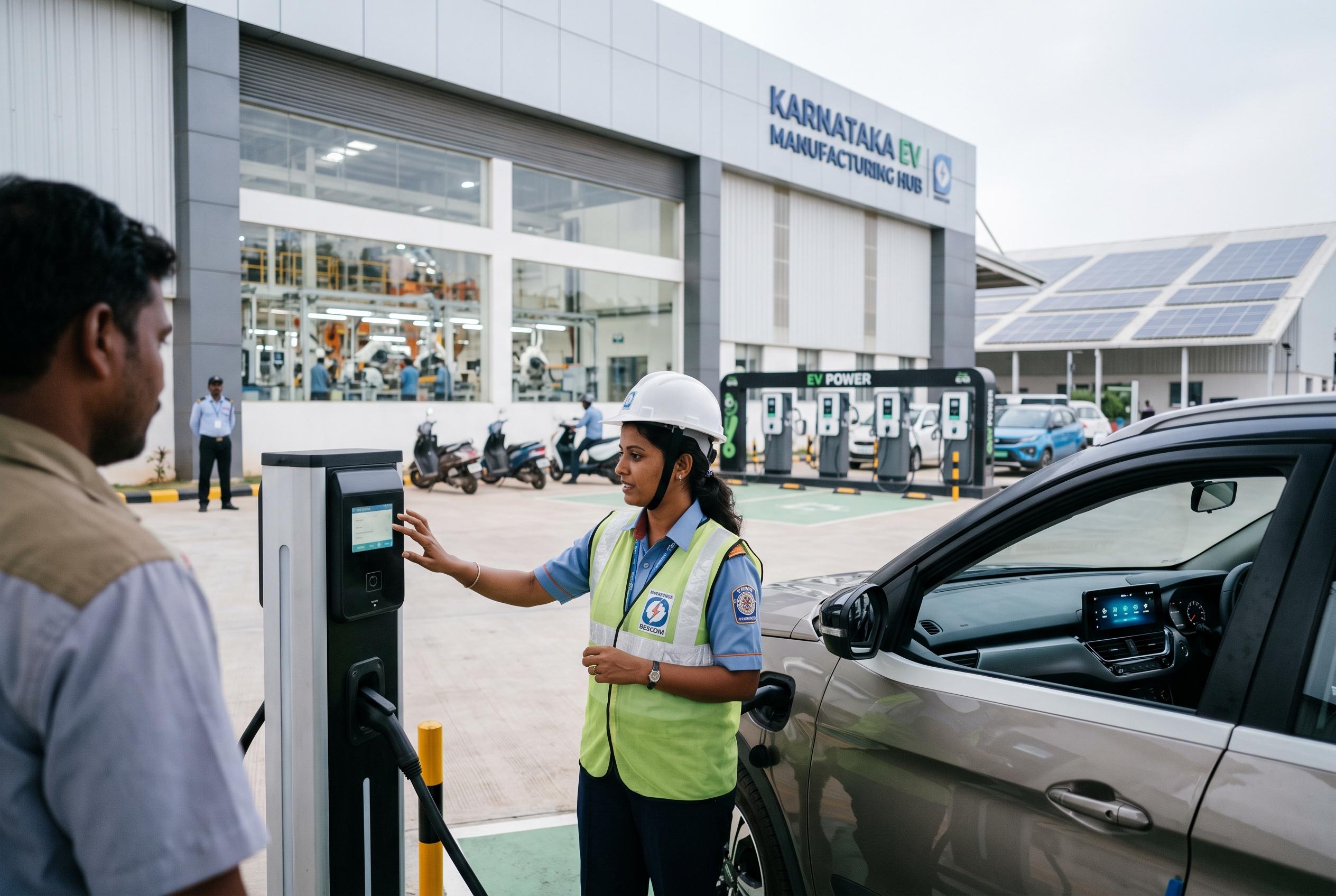

Karnataka solidifies its position as India’s top electric vehicle hub, with robust growth in manufacturing, adoption, and infrastructure driven by policy initiatives and rising demand across major cities.
Karnataka is consolidating its position as one of India’s strongest centres for electric vehicles, with growth visible both in manufacturing and in everyday use. The state has become especially prominent in Bengaluru, Mysuru, Hubballi and Mangaluru, where electric scooters are increasingly replacing petrol-powered two-wheelers for short urban trips. Rising fuel costs, a dense city commute pattern and incentives from government policy are all helping drive that shift.
The centrepiece of the state’s push is its Clean Mobility Policy 2025–2030, which aims to attract ₹50,000 crore in investment and generate 100,000 jobs. According to the policy outlined in the source material, Karnataka also plans 2,600 new charging stations and fast-charging points at 50-km intervals on major highways. New clean mobility clusters are planned for Gauribidanur, Dharwad and Harohalli to deepen the supply chain and draw more manufacturers into the state.
The numbers already suggest that Karnataka has moved well ahead of many peers. State figures cited in the source material show EV sales rising nearly 17-fold between FY21 and FY26, while penetration reached 13.65%, compared with a national average of 9.12%. The state now has more than 8,600 charging stations, the highest count in India, and the electric fleet has climbed past 319,000 vehicles, placing Karnataka third nationally, according to industry reporting.
That rapid adoption is also beginning to show up in the power system. Moneycontrol reported that electricity consumption in Karnataka rose sharply in April, with peak demand also increasing as more drivers plugged in at home and at public stations. Analysts quoted in the report said the trend underlines the need to treat EV charging as a major new source of energy demand, rather than a peripheral one.
For buyers, the state’s EV boom still depends on practical questions as much as policy. Daily travel distance, battery range, charging access, warranty cover, servicing support and insurance terms all matter, particularly for scooters used in routine city commuting. Coverage for batteries and electrical faults is especially important because these components are among the costliest parts of an electric vehicle, and future growth will depend on whether charging infrastructure continues to spread beyond the largest cities. Some manufacturers have also warned that any new lifetime tax on electric cars could slow adoption and deter investment, even as the wider market continues to expand.
Disclaimer: This content is intended for informational purposes only. Readers are advised to exercise their own judgement, conduct due diligence, or consult a qualified expert before acting on any information provided.