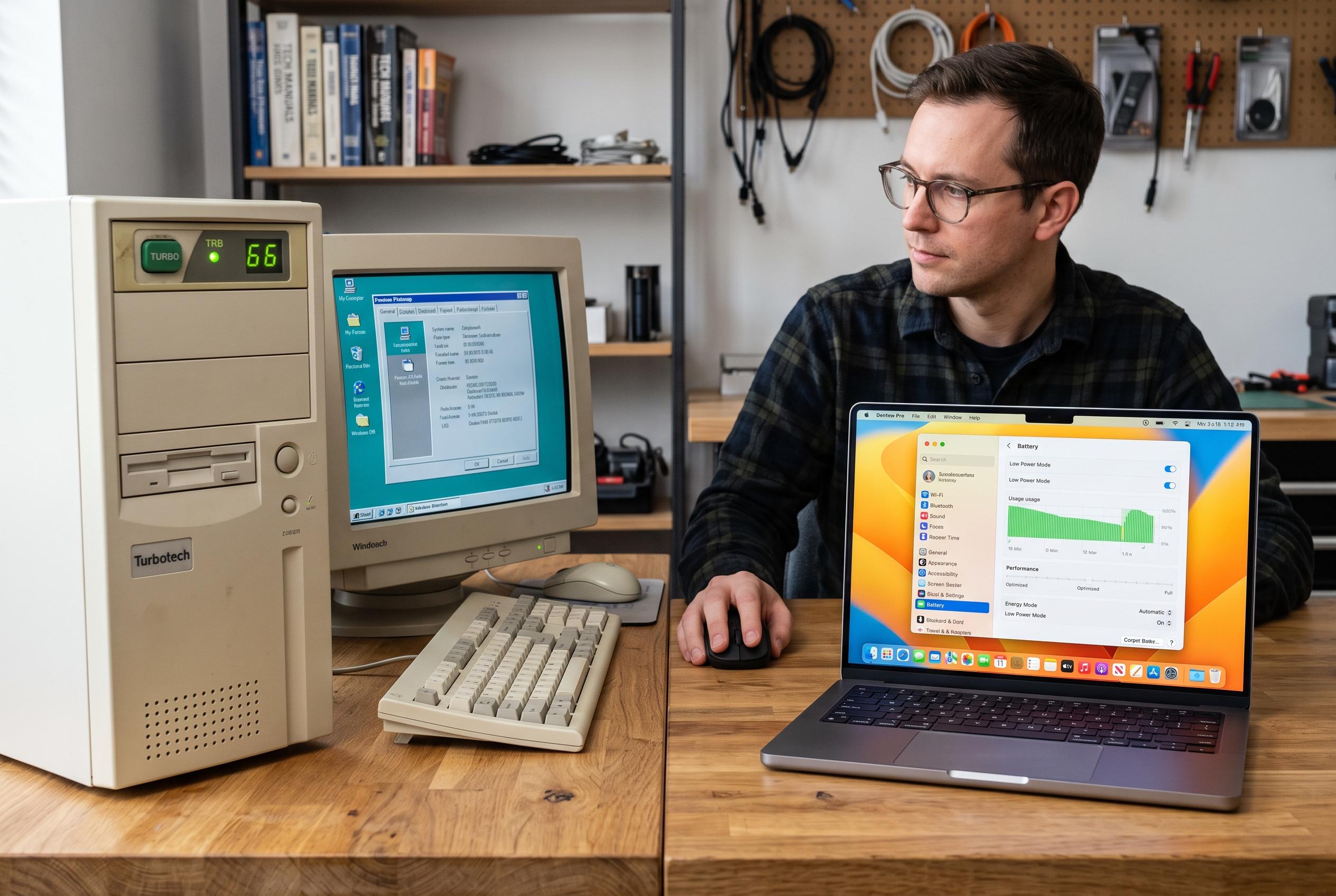

A comparison of the old PC ‘Turbo’ button and modern Mac energy controls reveals how user-driven performance management has evolved from hardware hacks to software solutions, maintaining the same core idea of balancing speed and endurance.
For a generation of PC users in the 1990s, the most misleading button on the front of a beige tower was the one labelled “Turbo”. Despite the name, it was often used to slow a machine down so it could run older software that broke when processors became too fast. That odd bit of hardware history has an echo in modern Macs, where Apple now gives users manual control over performance and power use, but through software rather than a physical switch.
The original feature emerged in the mid-1980s, when IBM-compatible computers began outpacing the assumptions built into earlier programmes and games. According to reference material on the classic Turbo button, systems running at faster clock speeds could make older titles run far too quickly, creating timing, audio and gameplay problems. The solution was to offer two speeds: a full-rate mode and a reduced mode for compatibility. Marketers turned that compromise into a sales point by calling the faster setting “Turbo”, even though the button was really there to rein in speed when needed.
Apple never adopted that specific button on the Mac, but the company did spend years moving towards the processor ecosystem that made such controls unnecessary. The Spanish report notes that Apple first considered an Intel transition in the 1980s, then explored a System 7 port to Intel under the Star Trek project in February 1992 before shifting its focus to PowerPC. The strategy changed again after Steve Jobs returned to the company, and Apple finally announced the move from PowerPC to Intel at WWDC in 2005. Intel later added Turbo Boost, introduced in 2008, which automatically raises clock speeds under heavier loads. Intel says the technology is designed to lift performance when workloads demand it while keeping power use lower during lighter tasks.
The modern Mac version of that old idea is less theatrical but more practical. On Apple Silicon systems, macOS offers energy controls that let users choose between higher performance and longer battery life, depending on the model. According to the Spanish article, some of Apple’s more capable Macs support a high-power mode that increases fan speed to sustain peak performance during demanding jobs, while a low-power mode trims processor speed slightly to stretch battery life. In other words, the old trade-off between speed and compatibility has become a choice between speed and endurance.
That is the real historical symmetry. In the 1990s, users pressed a button to tame an overpowered PC so it could behave like an older one. In 2026, Mac users open Control Centre or System Settings and decide whether the computer should run flat out or conserve energy. The mechanism has changed completely, but the underlying idea is the same: sometimes the best way to use a fast machine is to let it slow down on purpose.
Disclaimer: This content is intended for informational purposes only. Readers are advised to exercise their own judgement, conduct due diligence, or consult a qualified expert before acting on any information provided.