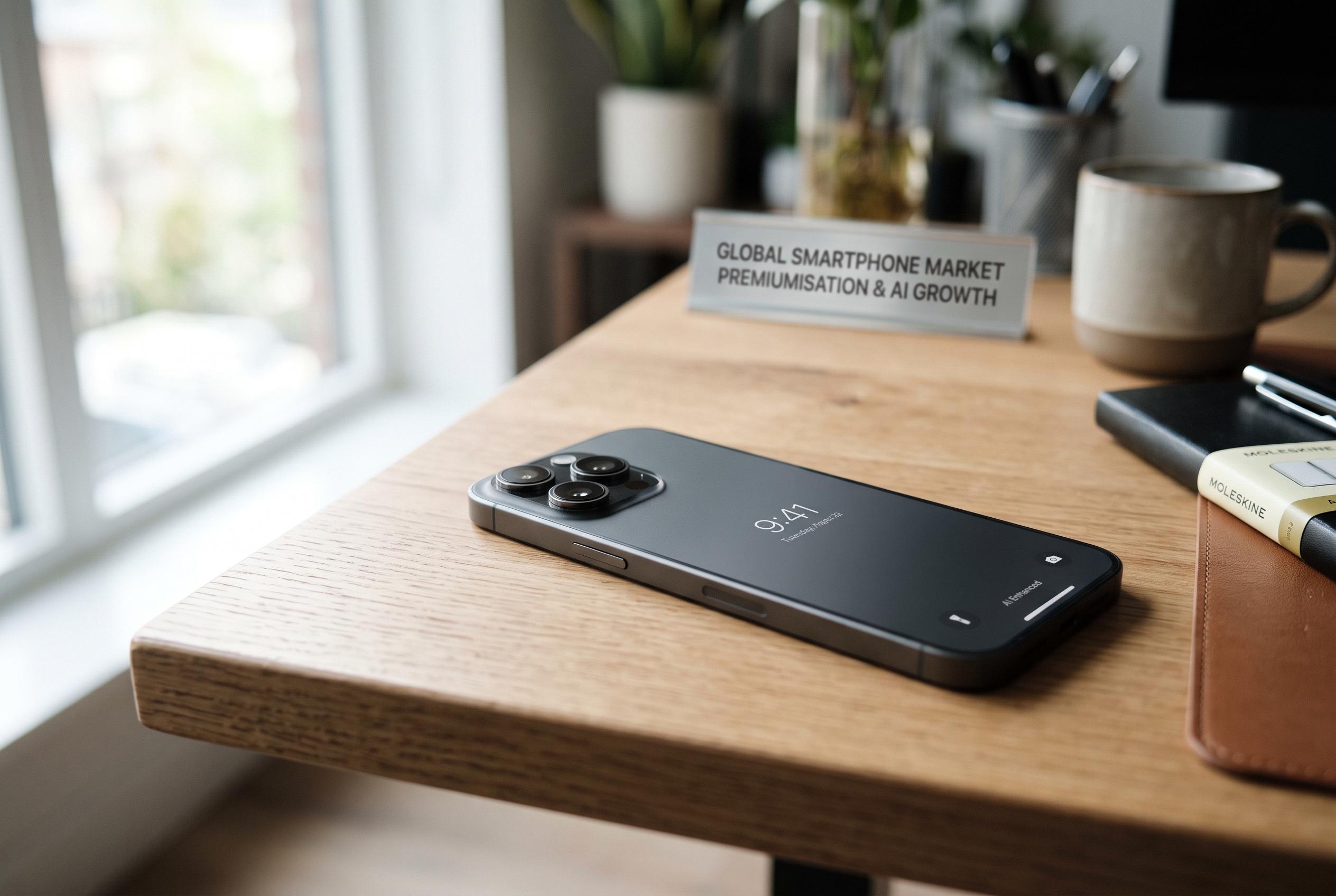

The global smartphone industry is evolving into a more complex landscape, driven by AI, premium devices, and regional diversification, as growth slows and profitability increases.
The global smartphone market is entering a slower but more complex phase of growth, with value increasingly driven by artificial intelligence, replacement buying and premium devices rather than first-time ownership. Grand View Research estimates the market was worth USD 537.6 billion in 2025 and will rise to USD 556.4 billion in 2026 before reaching USD 749.1 billion by 2033, implying a compound annual growth rate of 4.3% from 2026 to 2033. That outlook suggests the industry is no longer expanding simply by adding new users; it is now being reshaped by what people expect their phones to do. According to the report, Asia Pacific accounted for 47.9% of revenue in 2025, with China remaining the largest national market.
The competitive structure remains highly concentrated. Apple, Samsung, Xiaomi, OPPO and vivo continue to dominate global revenue and shipments, largely because they control ecosystems as much as devices. Apple’s iPhone business is reinforced by services and software integration, while Samsung and Xiaomi use broader device portfolios to keep users within their own product networks. Grand View Research says Android held 60.8% of global revenue in 2025, but iOS continued to capture a disproportionately large share of profits. The report also flags HarmonyOS and other alternatives as the fastest-growing operating systems, a sign that regional platform diversification is becoming more important as technology supply chains and political alignments fragment.
Artificial intelligence is emerging as the main product battleground. A separate Grand View Research study on mobile artificial intelligence valued that market at USD 23.8 billion in 2025 and projected growth to USD 206.9 billion by 2033, at a compound annual rate of 31.9% from 2026 to 2033. It said demand is rising for on-device processing and generative AI functions built into smartphones and mobile apps. That matters because local AI features depend on tighter coordination between chipsets, software and cloud services, which tends to favour vertically integrated groups such as Apple and Samsung over smaller rivals. In this context, AI is becoming a differentiator in both consumer demand and supplier economics.
Pricing and channel trends are reinforcing the divide between market leaders and challengers. Grand View Research says offline retail still accounts for the largest distribution share because buyers of higher-end phones often want to inspect displays, cameras and build quality before purchasing. Online sales are growing faster, helped by promotions and transparent pricing, but the physical store remains central to premium buying behaviour. By price tier, the mid-range segment has the largest revenue share, while the premium segment is growing fastest as consumers increasingly treat smartphones as both productivity tools and status goods. At the same time, foldable phones remain a niche, but one that helps manufacturers raise average selling prices and signal technical leadership.
The longer-term pressure points are becoming harder to ignore. Semiconductor cost swings, linked to supply disruptions and geopolitical tension, continue to squeeze margins and force manufacturers into difficult trade-offs between pricing and features. Sustainability is also moving from branding to compliance, particularly in Europe, where e-waste and repairability rules are pushing longer software support and more repair-friendly designs. Regional demand is diverging as well: Asia Pacific leads on scale, North America is driven by subsidised upgrades and premium demand, Europe is shaped by privacy and regulation, and China remains the centre of foldable innovation and AI integration. Taken together, the numbers suggest a market that is growing modestly in aggregate but becoming more profitable and more stratified beneath the surface.
Disclaimer: This content is intended for informational purposes only. Readers are advised to exercise their own judgement, conduct due diligence, or consult a qualified expert before acting on any information provided.