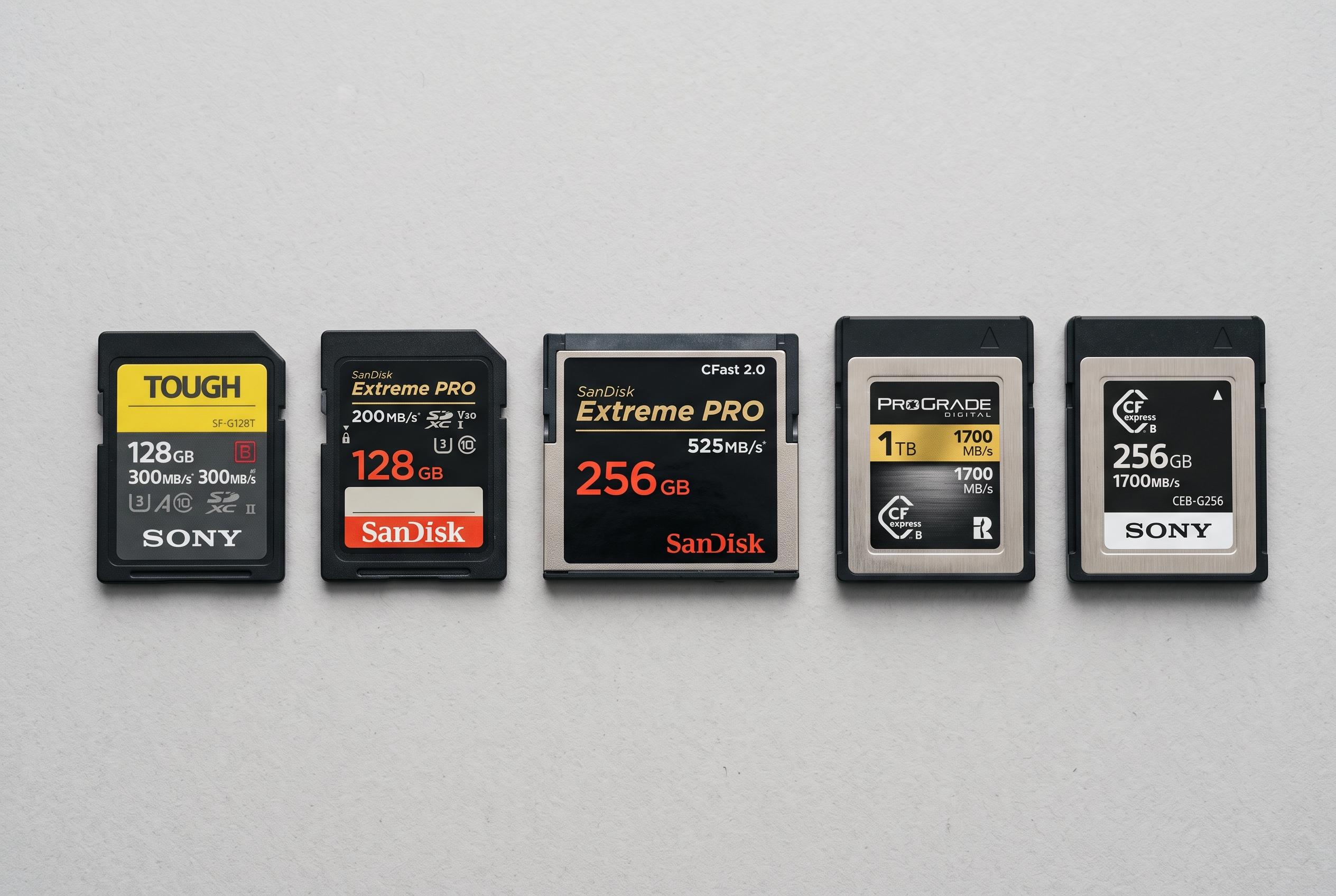

With Blackmagic RAW’s variable data rates, selecting the right memory card, whether SD, CFast, or CFexpress, is crucial for reliable recording, especially at high bitrates. This guide highlights the best options for different needs to ensure stable and efficient footage capture.
Choosing the right memory card for Blackmagic RAW recording is less about brand loyalty than matching the card to the camera and codec. Blackmagic RAW scales its data rate with compression ratio, so a card that is fine for 12:1 recording may fail completely at 3:1. In practice, that means UHS-II V90 SD cards suit lighter BRAW settings, while CFast 2.0 and CFexpress Type B are the safer choices for higher-bitrate work and modern Blackmagic bodies.
For Blackmagic users with CFexpress slots, the SanDisk 128GB Extreme PRO CFexpress Type B remains the most broadly dependable option. B&H Photo Video lists it at up to 1,700MB/s read and 1,200MB/s write, with RescuePRO Deluxe recovery software available as a free download and compatibility with select XQD cameras after a firmware update. That combination makes it a sensible all-round card for pocket cinema cameras and other Blackmagic systems that need fast, stable recording.
Those who need more headroom should look at ProGrade Digital’s 512GB CFexpress 4.0 Type B Gold card. B&H Photo Video says it delivers up to 3,400MB/s read speeds and a minimum sustained write speed of 850MB/s, which is the figure that matters most in long-form recording. Digital Camera World’s 2026 buyer’s guides also underline a wider point that applies here: the important test is not headline speed alone, but whether the card can sustain the camera’s workload without throttling or frame loss.
Lexar’s 128GB Professional CFexpress Type B Silver is another strong option for high-quality Blackmagic RAW shooting, particularly if capacity needs are modest and speed is the priority. At the other end of the market, SanDisk’s 128GB Extreme PRO CFast 2.0 still has a place in older URSA and URSA Mini bodies that cannot use CFexpress. For those cameras, CFast remains the practical route to reliable recording, especially for ProRes and other demanding formats.
SD users are not excluded. For Blackmagic cameras with SD slots, UHS-II V90 cards remain the sensible baseline, and the two names that recur in serious workflows are SanDisk Extreme PRO V90 and Lexar 2000x V90. In both cases, the key advantage is sustained write performance rather than maximum transfer speed. That distinction matters on set, where a card must hold a steady rate for the full take, not just a short burst.
The broader lesson is straightforward. Match the card type to the slot, the slot to the codec and the codec to the shoot. High-capacity CFexpress cards reduce swaps on long days, while smaller cards can limit the damage if one fails during a crucial scene. Whatever the format, buy from authorised sellers, format in camera before each shoot and treat storage as part of the camera system rather than an accessory. In Blackmagic RAW work, that discipline is often what protects the footage.
Disclaimer: This content is intended for informational purposes only. Readers are advised to exercise their own judgement, conduct due diligence, or consult a qualified expert before acting on any information provided.