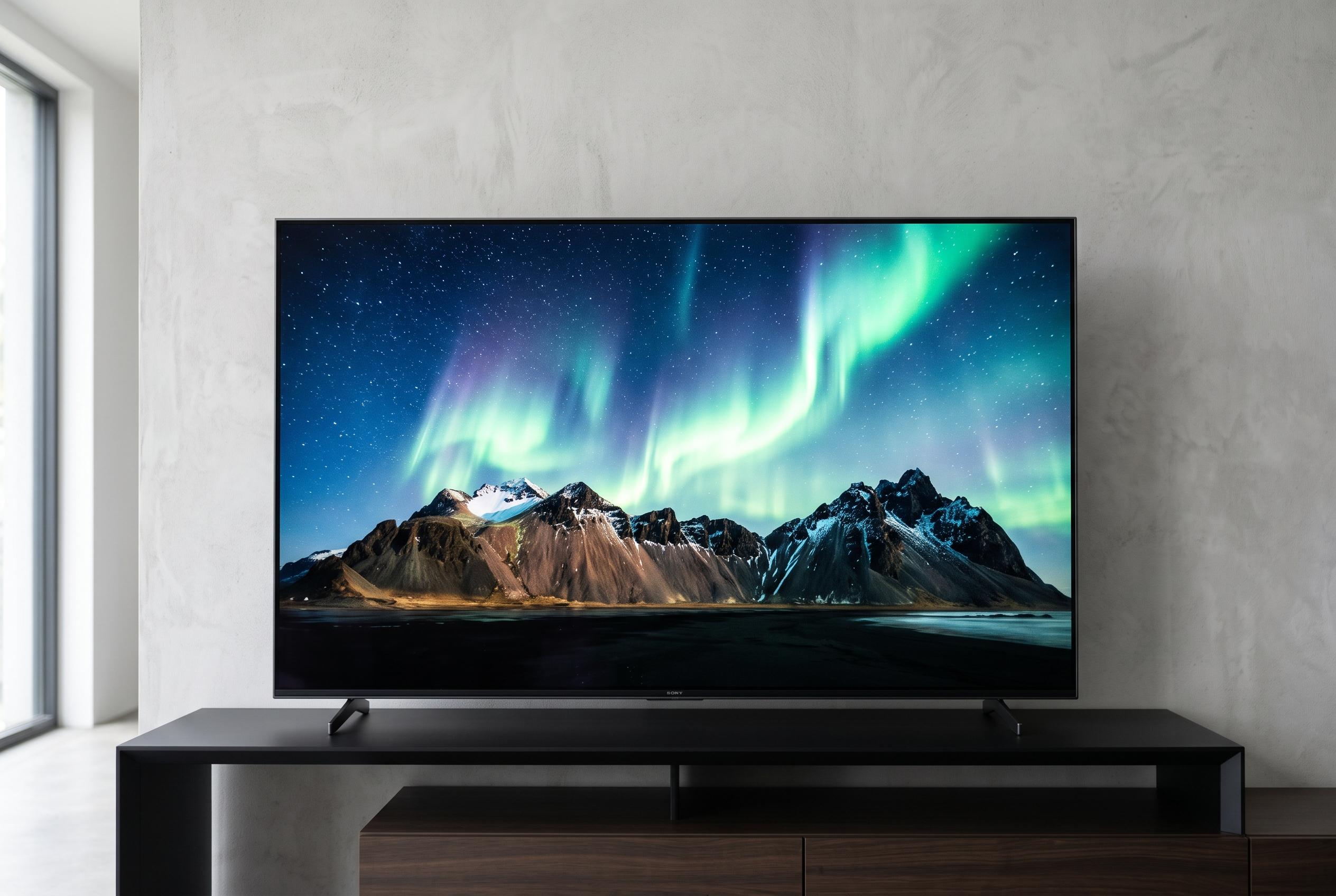

Sony’s new Bravia 9 II, featuring its innovative RGB Mini LED system, offers unprecedented brightness and impacts traditional OLED performance, highlighting a clear technological divide in high-end TVs.
Sony’s latest televisions set up an unusually clear choice between two high-end display technologies. The Bravia 9 II uses Sony’s new RGB Mini LED system, which the company calls True RGB, while the Bravia 8 II sticks with QD-OLED. In practice, that means the newer set is aimed at viewers who want extreme brightness and impact, while the OLED model remains the more established option for black level, precision and all-round consistency.
Price is one of the first dividing lines. The Bravia 8 II is the cheaper television, helped by the fact that it also comes in a 55-inch version, while the Bravia 9 II starts at 65 inches. What Hi-Fi? said the 65-inch Bravia 9 II launched at £3,499, around £500 more than the same-size Bravia 8 II at launch, and noted that the OLED has since become cheaper still. That makes the older model easier to justify for buyers who do not need a larger screen or the latest backlit panel technology.
Design also splits opinion. According to What Hi-Fi?, the Bravia 8 II is smart and familiar, but the Bravia 9 II looks more ambitious, especially with its Mirage Stand that gives the impression of a floating panel while hiding cables from view. The trade-off is practicality: the stand cannot be adjusted, and the more advanced anti-reflective coating on the Bravia 9 II can leave the screen looking slightly greyer in bright rooms than the Bravia 8 II. Both TVs run Google TV and offer four HDMI inputs, including two HDMI 2.1 ports, though one is used for eARC.
On features, Sony has kept the gap narrow. Both models support Dolby Vision, Dolby Atmos, IMAX Enhanced, HDR10 and HLG, along with 4K/120Hz gaming, VRR, ALLM and PlayStation 5-friendly features. What Hi-Fi? also said Sony’s new My Cinema interface, which simplifies picture and sound controls, has now been added to the Bravia 8 II through a software update. Independent reviews of the Bravia 9 II from RTINGS and Tom’s Guide describe the set as especially strong in colour volume, brightness and gaming performance, which fits Sony’s positioning of the TV as a more technically adventurous flagship.
Picture quality is where the OLED still holds an edge for many buyers. What Hi-Fi? praised the Bravia 8 II for its balance, depth, shadow detail and near-perfect viewing angles, saying it delivers a three-dimensional image with excellent motion and refined sound. The Bravia 9 II, by contrast, impressed with unusually vivid colour and exceptional whole-screen brightness, making it particularly suited to daylight viewing. Even so, the OLED remains better at pixel-level precision, handling tiny highlights against dark backgrounds and preserving contrast when viewed off-axis. That leaves the Bravia 9 II as the brightest and most striking backlit TV Sony has made, but not yet a complete replacement for OLED.
Sound follows a similar pattern. The Bravia 8 II’s Acoustic Surface Audio+ system ties dialogue closely to the image and sounds more focused and refined, while the Bravia 9 II’s wider speaker array delivers greater scale and more bass weight. What Hi-Fi? still preferred the OLED overall, arguing that it is more natural and controlled, even if the newer set is more expansive. For most households, the conclusion is straightforward: the Bravia 9 II is the more dramatic choice, especially for large or very bright rooms, but the Bravia 8 II remains the more rounded purchase.
Disclaimer: This content is intended for informational purposes only. Readers are advised to exercise their own judgement, conduct due diligence, or consult a qualified expert before acting on any information provided.