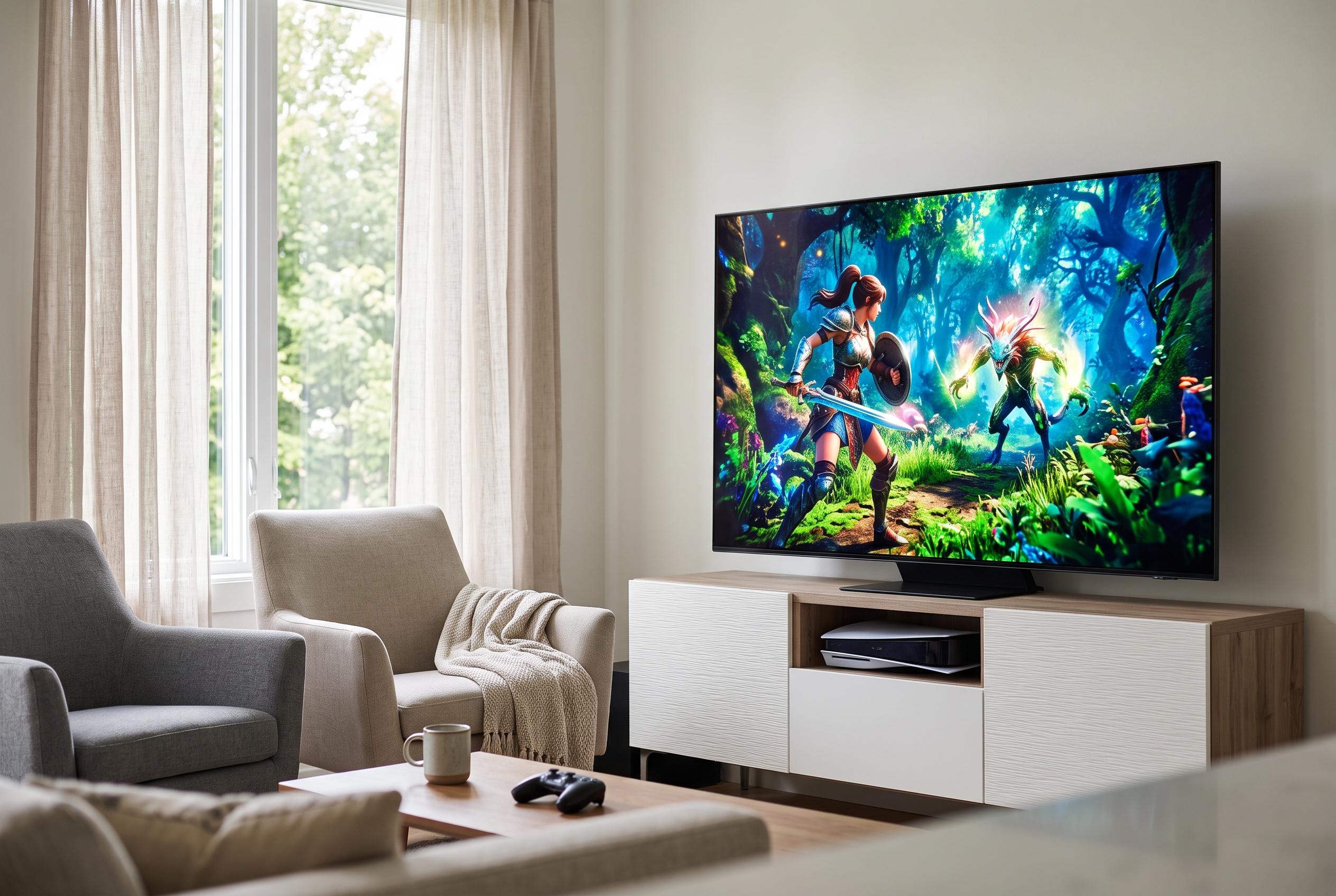

Leading brands like Sony, Samsung, Hisense, TCL and others are advancing mini-LEDs and HDR support, making QLEDs more versatile for various room conditions and uses, with recent models nearing OLED performance in brightness and contrast.
For shoppers choosing a new television in 2026, the QLED category remains focused on a simple trade-off: brightness, colour volume and value against the perfect blacks of OLED. In practice, that makes the best QLED sets especially attractive for bright living rooms, daytime viewing and mixed-use households that want strong HDR performance without paying OLED premiums. Sony’s flagship Bravia 9 remains the reference point in the field, while rival models from Hisense, Samsung and TCL have pushed mini-LED performance closer to premium OLED territory in several important areas.
Sony’s Bravia 9 stands out as the most polished all-rounder. Its strengths are not limited to raw light output; the set also delivers controlled blacks, minimal blooming and excellent motion handling. The presence of Dolby Vision, HDR10 and HLG support gives it broad compatibility with current streaming and disc content, and its 70-watt audio system is unusually capable for an integrated solution. Tom’s Guide recently said Sony’s newer Bravia 9 II remains the more versatile premium option for bright rooms, which reinforces the idea that Sony’s top QLED-style sets are built to balance luminance, accuracy and gaming features rather than chase brightness alone.
At a more accessible level, Hisense’s U7SG and U8QG show how far lower-priced mini-LED televisions have advanced. The U7SG combines strong peak brightness with an anti-reflective coating, a useful advantage in sunlit rooms, while the U8QG adds even more brightness, broader HDR support and tighter local dimming control. Both are aimed at buyers who want vivid colour and gaming-friendly performance without moving into flagship pricing. The main compromise remains viewing angle, which is typical of many QLED designs and still matters in wider seating layouts.
Samsung’s QN90D and QN90F are the clearest examples of QLED sets built for living rooms that stay bright through the day. Both rely on mini-LED backlighting, aggressive anti-glare treatment and fast processing to keep sports, films and games sharp under strong ambient light. Samsung still omits Dolby Vision, preferring HDR10+, which may matter to buyers with large streaming libraries, but the overall package is strong: four HDMI 2.1 ports, high refresh rates and low input lag make these models particularly appealing to console and PC gamers.
TCL’s QM6K and QM7K occupy a slightly different part of the market, offering much of the mini-LED experience at lower prices. The QM6K is the more obvious value pick, with good colour accuracy, broad HDR support and improved viewing angles for a mid-range TV. The QM7K steps up brightness and contrast further, making it the more convincing choice if a buyer wants a more dramatic picture without jumping to a premium brand. TCL’s wider strategy is clear: deliver serious HDR performance, keep gaming support extensive and undercut the market leaders on price.
For most buyers, the right QLED depends less on the format itself than on room conditions and priorities. If the set will live in a bright lounge, QLED’s luminance advantage is hard to ignore. If the room is dark and cinema-like, OLED still has the edge in black level and micro-contrast, as Tom’s Guide’s comparison of Sony’s latest premium QLED-style model with its OLED sibling makes plain. But for families who want a television that can handle glare, sports, games and streaming with equal ease, 2026’s best QLEDs are more competitive than ever.
Disclaimer: This content is intended for informational purposes only. Readers are advised to exercise their own judgement, conduct due diligence, or consult a qualified expert before acting on any information provided.