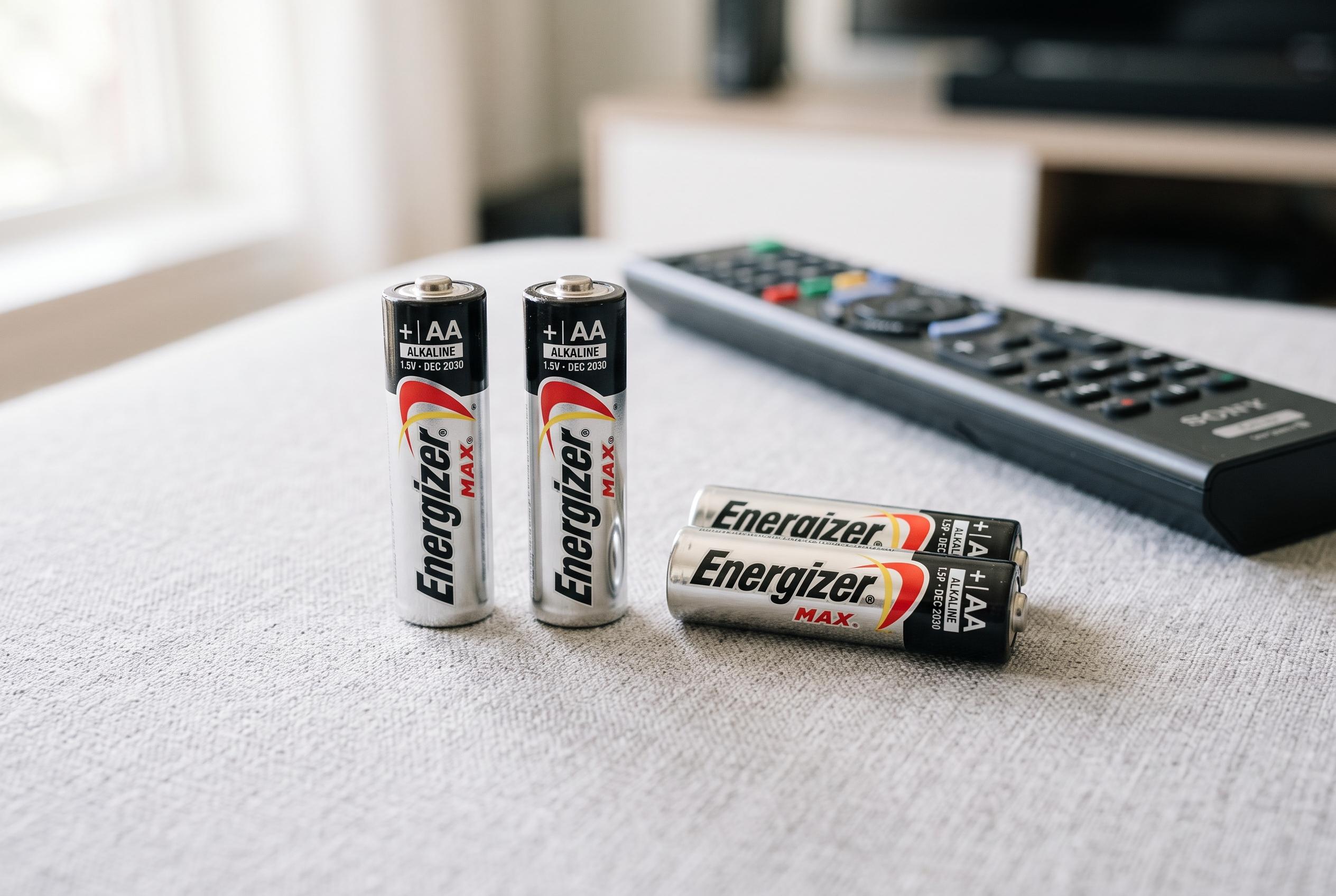

Proper care of remote control batteries is often overlooked, but neglecting to replace or remove exhausted cells can cause leaks and expensive damage. Experts advise timely replacement and safe storage practices to extend device life and prevent malfunctions.
Remote control battery care is often overlooked, yet it can determine whether a device keeps working cleanly or develops avoidable damage. In households with televisions, air conditioners, home cinema systems and fans, the remote is usually treated as a minor accessory. But the battery inside it is not minor at all: once it has run flat, leaving it in place for weeks or months can create a problem that is far more expensive than replacing a pair of cells.
There is no single replacement date that suits every remote, because battery life depends on the device and how heavily it is used. Sony says a normal set of remote batteries may last about three to six months, while some remotes can run for roughly a year under ordinary conditions. Panasonic gives a similar warning, saying reduced range or sluggish response often means the batteries are weakening and should be changed. In practice, the clearest signs are behavioural: if the remote becomes intermittent, needs closer range, or reacts more slowly than before, the batteries are probably near the end of their useful life.
The real risk begins after the batteries are exhausted. Industry guidance from Panasonic and Duracell both says depleted cells should not be left inside a device, because old batteries can leak over time. The escaped material can corrode contacts and damage the remote’s internal circuitry. Consumer Reports explains that leakage is linked to chemical reactions inside the cell that build pressure until the casing fails. That is why a remote that suddenly stops working is not necessarily suffering from a fault in its buttons or board; the battery compartment itself may be the source of the failure.
If a remote will not be used for a long period, the batteries should be removed altogether. Sony and Panasonic both advise taking batteries out of remotes stored for months or years, particularly spare remotes for older televisions, DVD players or air conditioners. It is also better to replace all batteries in a remote at the same time, rather than swapping out only one exhausted cell and leaving another old one in place. Panasonic and Duracell also warn against mixing old and new batteries, or using different battery types together, because performance can become uneven and leakage risk may rise.
If leakage is already visible, usually as a white or powdery residue, the compartment should be cleaned before fresh batteries are fitted. Sony recommends cleaning the battery bay thoroughly first. Consumer guidance on battery leaks also stresses caution when handling the residue, since it can irritate skin and damage electronics. Batteries should likewise be kept away from excessive heat and humidity, which can shorten life and increase the chance of leakage. In India, where heat and moisture are common, that means avoiding storage in places such as kitchens, window ledges or other warm, damp spots.
Disclaimer: This content is intended for informational purposes only. Readers are advised to exercise their own judgement, conduct due diligence, or consult a qualified expert before acting on any information provided.