
The Pixel 11 enters the premium smartphone market with a focus on AI capabilities, enhanced camera system, and extended battery performance, pitting itself against the iPhone 17’s refined design and charging features.
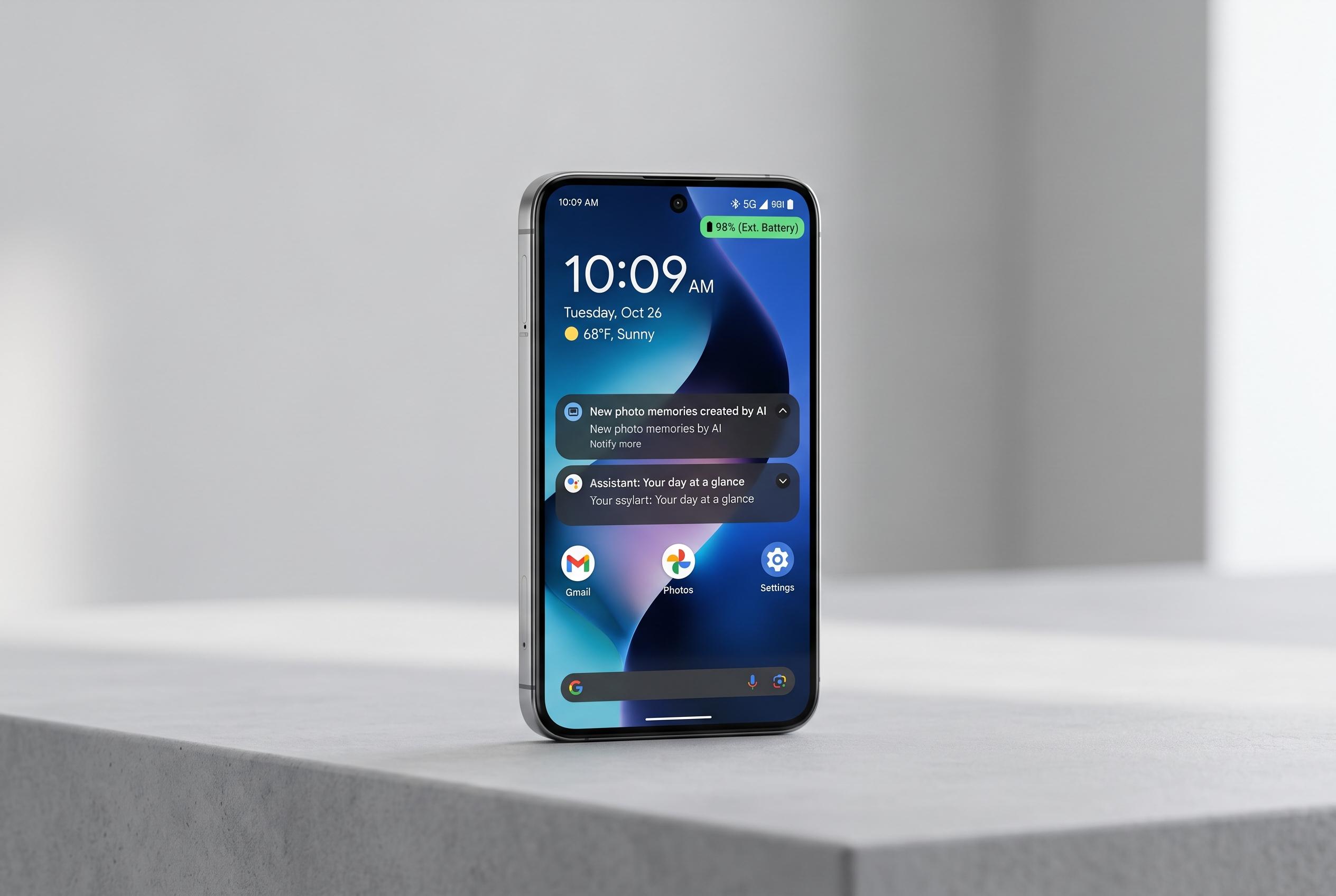
Google’s Pixel 11 has entered the premium phone market with a clear strategy: it is not trying to out-Apple Apple’s iPhone 17 on every front, but instead to win users over with AI-led features, a larger battery and a more flexible camera system. Android Central said the Pixel 11 family was unveiled on 12 August 2026 and spans four models, all powered by Tensor G6, while Apple’s latest base iPhone continues to lean on the A19 chip and a more restrained product approach.
The two phones also diverge in design. Google keeps its familiar camera bar, refined with edge-to-edge glass, while Apple retains the flat-sided body and vertically aligned rear cameras that have defined recent iPhones. In materials terms, the Pixel 11 uses Gorilla Glass Victus 2 on the back and carries IP68 resistance, whereas Apple says Ceramic Shield 2 on the iPhone 17’s front is three times more scratch resistant than the previous generation.
Both handsets use 6.3-inch OLED-class displays with 120Hz refresh rates, but the implementation differs. The iPhone 17 adds ProMotion with an adaptive range from 1Hz to 120Hz and a peak outdoor brightness of 3,000 nits. The Pixel 11, according to Android Central and comparison listings, reaches up to 3,000 nits at peak, with HDR brightness rated lower than Apple’s flagship figure. In practice, both should feel smooth and bright, though Apple offers the more granular refresh-rate control.
Performance is where the product philosophies become clearest. Google pairs the Pixel 11 with 12GB of RAM and Tensor G6, which Android Central says is faster and more efficient than before, with a stronger TPU for on-device AI work. Apple counters with the A19 and 8GB of RAM. The result is two different priorities: the Pixel emphasises machine-learning features and Google’s Gemini-based software layer on Android 17, while the iPhone focuses on general performance and graphics consistency.
Camera hardware may decide the argument for many buyers. The Pixel 11 offers a triple rear system, led by a 48-megapixel main camera, a 13-megapixel ultra-wide lens and a 10.8-megapixel telephoto unit with 5x optical zoom and OIS, plus a 10.5-megapixel front camera with autofocus. The iPhone 17 takes a different route with dual 48-megapixel rear sensors and an 18-megapixel selfie camera with Centre Stage, which can automatically reframe shots when more people enter the frame.
Battery and charging also favour Google on paper. The Pixel 11 carries a 4,985mAh cell and Google says it lasts more than 30 hours, with 30W wired charging and Qi2 support. Apple does not disclose battery capacity, but says the iPhone 17 can deliver up to eight extra hours of video playback versus the iPhone 16 and can reach 50% charge in around 20 minutes with a compatible charger, alongside MagSafe and Qi2. Price completes the contrast: the Pixel 11 starts at $900, while the iPhone 17 begins at $799. For buyers, the choice is straightforward. The Pixel 11 is the stronger AI-and-camera pitch; the iPhone 17 is the more rounded value proposition with Apple’s display and charging refinements.
Disclaimer: This content is intended for informational purposes only. Readers are advised to exercise their own judgement, conduct due diligence, or consult a qualified expert before acting on any information provided.