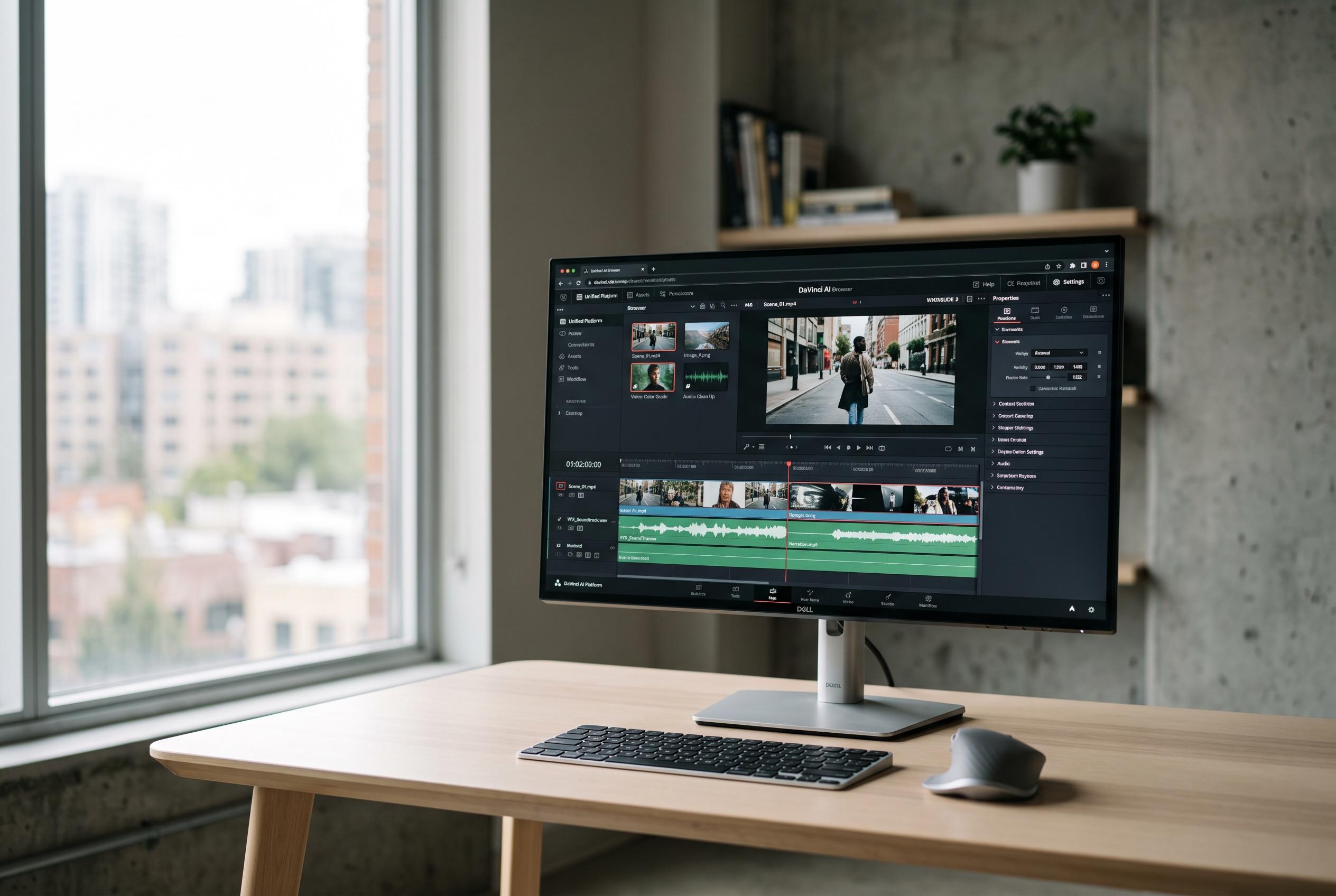

DaVinci AI introduces a unified browser-based platform that consolidates image, video, and audio tools, streamlining workflows for creators, marketers, and small businesses by reducing the need for multiple siloed applications.
DaVinci AI is trying to solve a familiar problem in generative media: creators often need different models for different jobs, yet most tools remain siloed. In practice, that means one platform for image work, another for video, and perhaps a third for voice or music. DaVinci AI packages those functions into a single browser-based workspace, with mobile apps as well, so users can move from one task to the next without juggling separate logins or subscriptions, according to Fossbytes and other reviews of the service.
Its main appeal is breadth. The platform gives users access to a wide catalogue of image and video systems, including Sora, Veo, Kling, Seedance, Seedream and Nano Banana, all presented through one interface. Techloy and Milik.ai both describe the same core idea: instead of picking one model and hoping it fits every brief, creators can test multiple outputs from one dashboard and compare results more quickly. For teams and freelancers, that can cut down on the friction of moving between products.
DaVinci AI also goes beyond generation. The review by Fossbytes highlights a set of editing tools that cover common production tasks: removing unwanted objects, swapping backgrounds, adjusting lighting, changing the camera angle of a scene and upscaling images. That matters because a good prompt is only the starting point; many real-world jobs require refinements before an asset is usable. Some supported models also offer character consistency, which helps maintain the same visual identity across repeated scenes.
The platform’s wider content kit is aimed at users who do not want to build everything from scratch. It includes artwork presets, moodboards and template categories such as business portraits, thumbnails, logos and product adverts. That makes it more approachable for marketers, small businesses and solo creators who need repeatable outputs rather than experimental one-offs. The same logic extends to its audio features, where DaVinci AI integrates text-to-speech tools and music generation, allowing users to create voiceovers and tracks inside the same project.
Pricing remains a practical consideration. Fossbytes says new users can generate an initial image without entering card details, which lowers the barrier to trial. After that, access is credit-based, with plan tiers affecting model availability, queue priority and the volume of work that can be produced each month. That structure is common in the market, but it also means heavier users may need to move up to more expensive plans. The review recommends checking the latest terms directly, which is sensible because promotional pricing and plan contents can change.
Taken together, DaVinci AI looks less like a single-purpose generator and more like a consolidation layer for creators who work across formats. The strongest case for it is not that it beats every specialist model, but that it reduces the operational burden of using several of them at once. For creators, marketers and designers who regularly test prompts, compare outputs and assemble mixed media assets, that convenience may be the feature that matters most.
Disclaimer: This content is intended for informational purposes only. Readers are advised to exercise their own judgement, conduct due diligence, or consult a qualified expert before acting on any information provided.