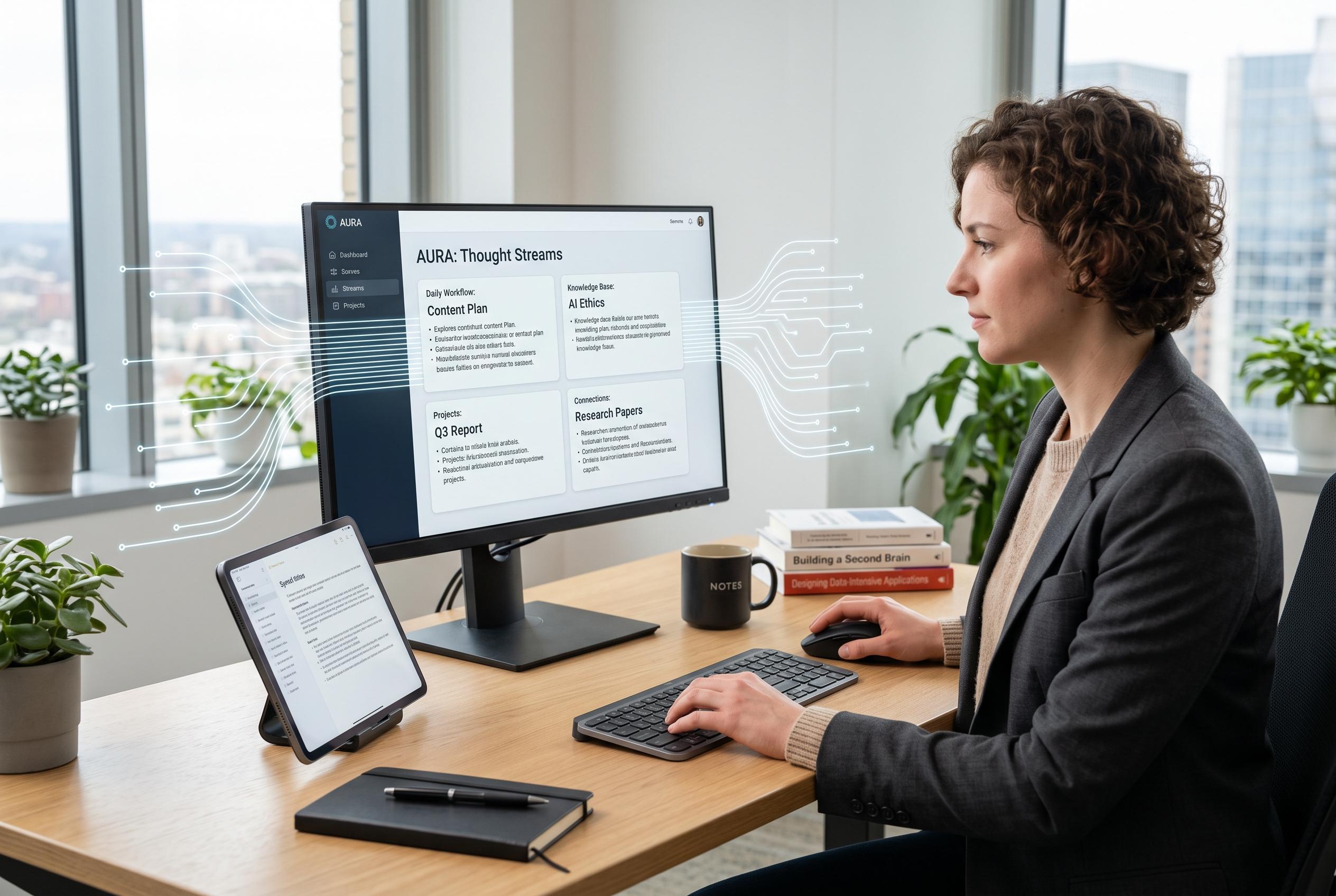

As personal AI second brains become more organised and integrated, they promise to enhance continuity, decision-making, and efficiency in managing vast information stores, shifting focus from memory to structured workflows.
A personal AI second brain is less a novelty than an attempt to impose order on the way knowledge is now stored, retrieved and reused. Geeky Gadgets describes it as a structured intelligence layer that gathers notes, drafts, research and other material into one system that can be queried by tools such as ChatGPT, Claude and Gemini. The practical aim is simple: instead of asking an assistant to begin from nothing, the user supplies a reliable context base so outputs are more relevant, less repetitive and easier to build upon.
The idea sits within a wider personal knowledge management tradition. The Building a Second Brain course frames the method as a trusted external system that supports clearer thinking and better work, while Fabric’s guide to Tiago Forte’s framework sets out the familiar sequence of Capture, Organise, Distil and Express. That approach matters because it shifts effort away from memory alone and towards a repeatable workflow for handling information overload. In practice, the AI layer adds another step: it makes that organised material immediately usable by modern assistants.
A robust setup depends on structure rather than volume. Geeky Gadgets highlights four essentials: a searchable repository, compatibility across AI platforms, privacy controls and flexible local or cloud storage. Copana’s guide adds a more technical view, stressing persistent memory, automatic learning, quick capture, semantic search and integration with existing tools. Taken together, these features point to the same requirement: the system must not merely store files, but preserve meaning, context and retrieval paths in a form that AI can use effectively.
Setup is therefore a design exercise. Users are advised to define categories that match their work, then funnel material into those buckets through a fixed intake process. Geeky Gadgets says the workflow usually involves uploading documents to a designated folder, allowing the system to extract and classify key points, and then reviewing the results before they enter the main knowledge base. The value of this approach is consistency. A project manager, for example, can recover prior metrics and strategies quickly, while a researcher can trace earlier findings without rebuilding a source trail from scratch.
The strongest case for a second brain is not convenience alone, but continuity. As the summaries from Geeky Gadgets, GrowthTrait and Cerebro all suggest, the method is intended to reduce duplication, improve decision-making and keep accumulated knowledge active across projects. Regular updating is essential, as is filtering out sensitive material that should not be exposed to connected services. Used properly, the result is a personal system that does not replace judgement, but gives AI a more disciplined foundation on which to work.
Disclaimer: This content is intended for informational purposes only. Readers are advised to exercise their own judgement, conduct due diligence, or consult a qualified expert before acting on any information provided.