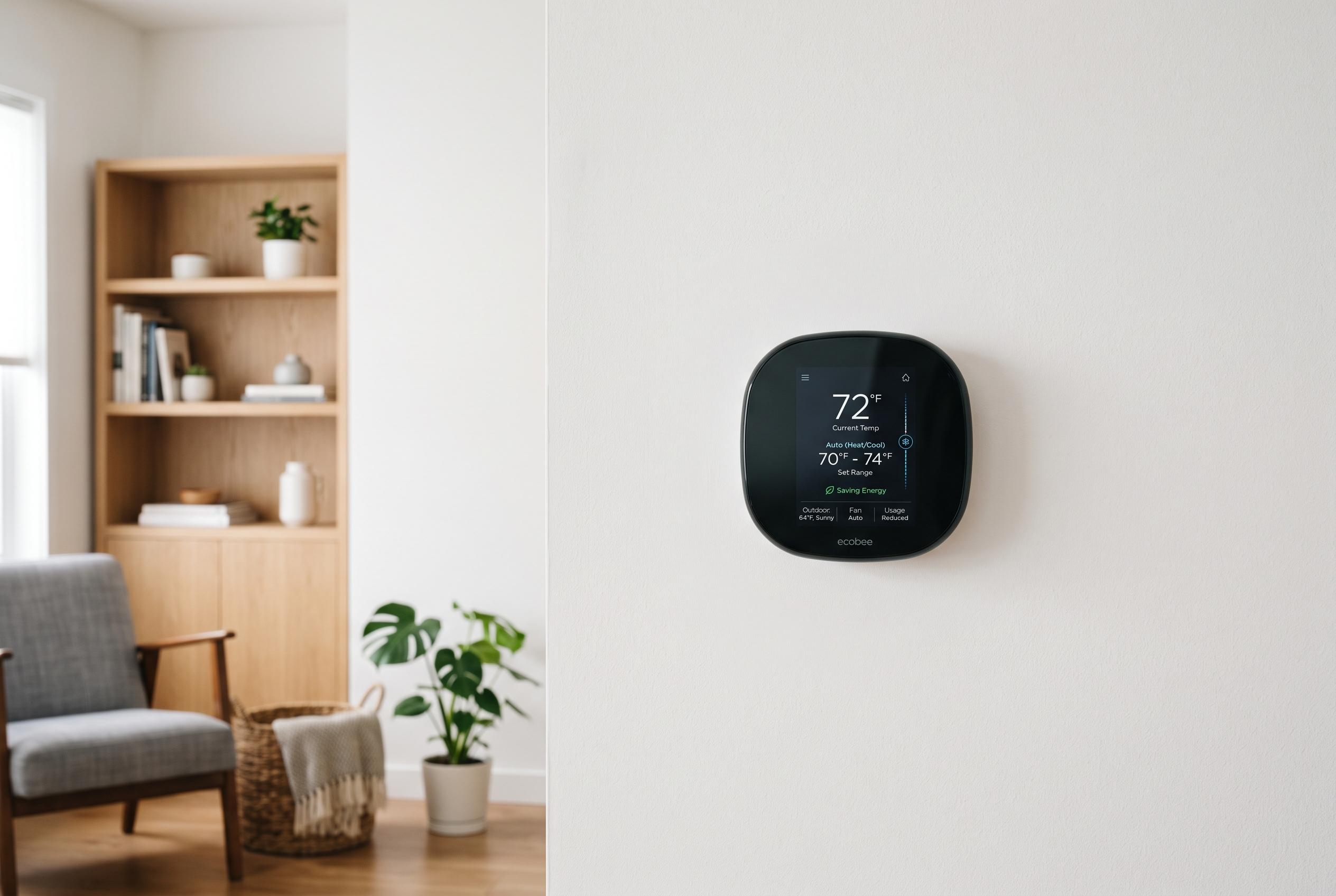

Amidst soaring household energy costs, ecobee’s adaptable and user-controlled thermostats are emerging as a preferred choice over Google’s Nest, especially in older homes and for those seeking granular comfort management.
Rising household energy bills have sharpened interest in smarter climate control, and the case for a connected thermostat is stronger than it used to be. Pew Research Center found in May 2026 that 75% of U.S. adults had seen their home energy costs rise in recent years, with 42% saying the increase had been significant. Respondents most often blamed utility companies’ profit motives, but many also pointed to higher grid costs and the growing electricity demand from data centres and AI systems.
Against that backdrop, the choice between Nest and ecobee is less about novelty than practical control. ecobee’s strongest case is its remote SmartSensor, which measures both temperature and occupancy. That matters in real homes, where one room may run cold while another overheats. Because the sensor can tell whether anyone is actually using a room, ecobee is better placed to direct heating and cooling to the spaces that matter most.
Nest takes a different approach. It is designed for people who want the thermostat to learn their routine with minimal input, then build an automatic schedule around it. That makes it appealing in homes with steady habits and relatively even temperatures. It is also the simpler fit for households already invested in Google hardware and services.
The contrast becomes clearer when automation starts making decisions on your behalf. Nest leans more heavily on self-adjusting routines, while ecobee is generally more conservative, offering suggestions and giving the user more control over whether to accept them. ecobee also uses humidity data to fine-tune comfort, which can reduce the need for aggressive temperature swings. For many households, that combination is easier to live with than a system that changes settings too freely.
Hardware support may also influence the decision. Ecobee says its SmartThermostat Premium works with more than 95% of systems and includes a Power Extender Kit for homes without a C-wire. Google’s Nest range is broader in style but more mixed in compatibility, with some models rated for fewer systems and certain older or more complex setups still needing extra wiring help. That makes ecobee the safer choice in older homes.
Long-term support is another point in ecobee’s favour. The company says it continues to support older hardware and offers a three-year warranty, which matters for a device expected to stay on a wall for years. Nest remains attractive for its clean design and Google ecosystem integration, but ecobee appears better aligned with households that want room-by-room comfort, stronger manual control, and fewer surprises. For most homes, that is enough to tip the balance.
Disclaimer: This content is intended for informational purposes only. Readers are advised to exercise their own judgement, conduct due diligence, or consult a qualified expert before acting on any information provided.