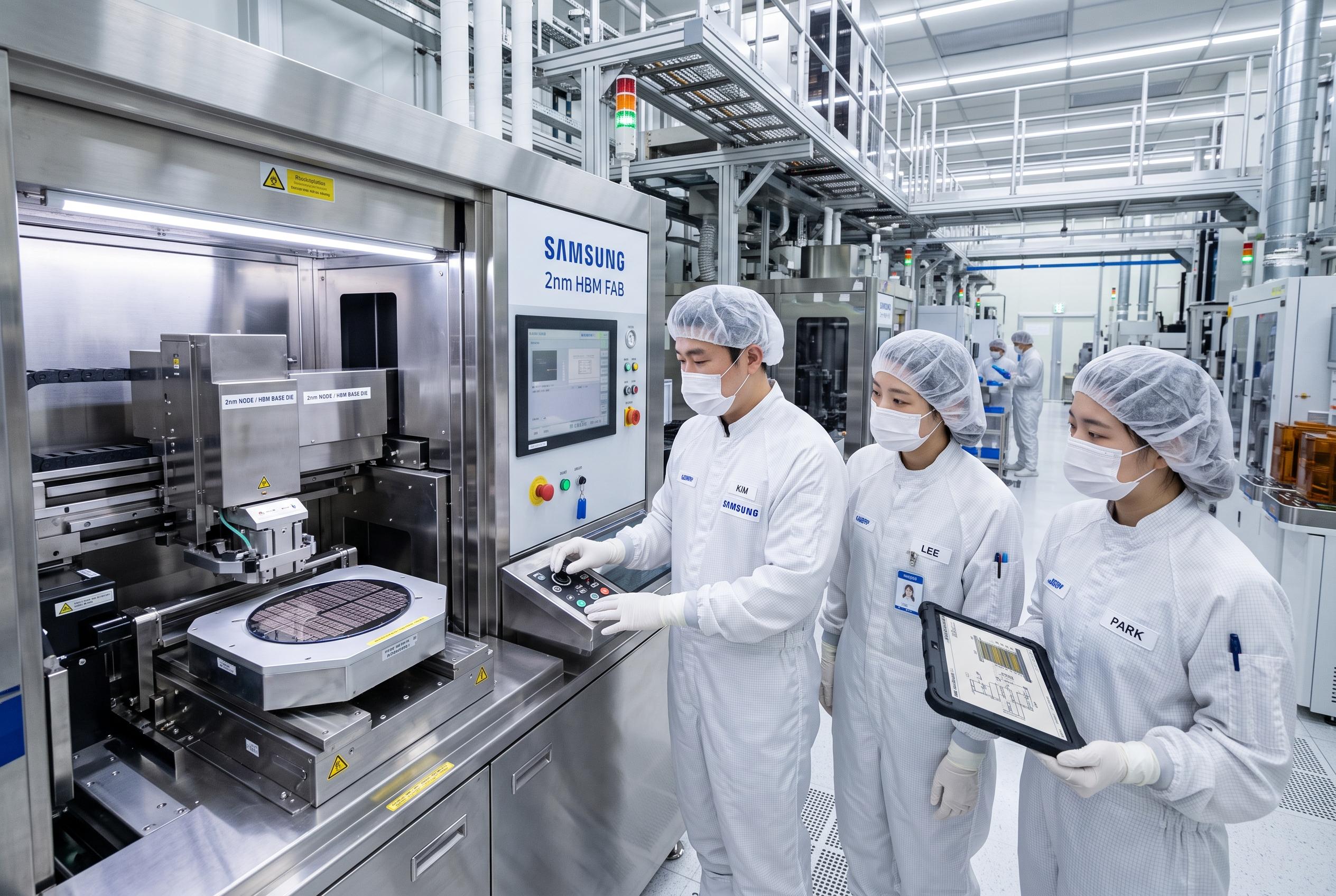

Samsung Electronics considers repurposing its Yongin campus for the production of 2nm base dies for next-generation HBM memory, signalling a strategic move to strengthen its position in the advanced AI memory market amid rising demand and shifting supply chains.
Samsung Electronics is preparing a possible shift in its Yongin campus strategy that could give the site a more direct role in its AI memory ambitions, according to ZDNet and industry reports. The second phase of the company’s NRD-K complex in South Korea may be repurposed from research use towards contract production of 2nm base dies for next-generation HBM memory, a move aimed at customers such as Nvidia. That would allow Samsung to keep more of the supply chain in-house at a time when advanced AI memory is becoming increasingly customised.
The proposed change matters because the base die in HBM stacks is taking on a larger share of the performance burden as generations advance. Samsung’s next HBM5 memory is expected to use its own 2nm process for that component, while later HBM5E development is said to involve 1d DRAM for the core die and the same 2nm node for the base chip, according to semiconductor industry reports. Samsung has also said its HBM5 mock-up uses a thermal design called Heat Path Block, intended to tackle rising heat at the interface between memory and processor.
Samsung has not yet made the Yongin repurposing decision final, and the company could still assign the site a different role as market conditions evolve. Even so, the plan fits a wider pattern of investment in advanced manufacturing. The first generation of Samsung’s 2nm process is already in production, and the company is also expanding work on other AI-related chips. Separate reports say Samsung is manufacturing Nvidia’s Groq 3 LPU on a 4nm node, while also preparing a packaging line in Cheonan to speed HBM4, HBM4E and HBM5 output.
The Yongin campus remains a major long-term project for Samsung. One production line was completed in late 2024, construction on a second line began this year, and the group expects to bring three lines online by 2030. The company has put the total cost of the campus at about $14bn. If the second phase is ultimately assigned to HBM5 base dies, it would underline Samsung’s effort to compete more aggressively with rivals such as SK hynix in the high-margin AI memory market.
Disclaimer: This content is intended for informational purposes only. Readers are advised to exercise their own judgement, conduct due diligence, or consult a qualified expert before acting on any information provided.