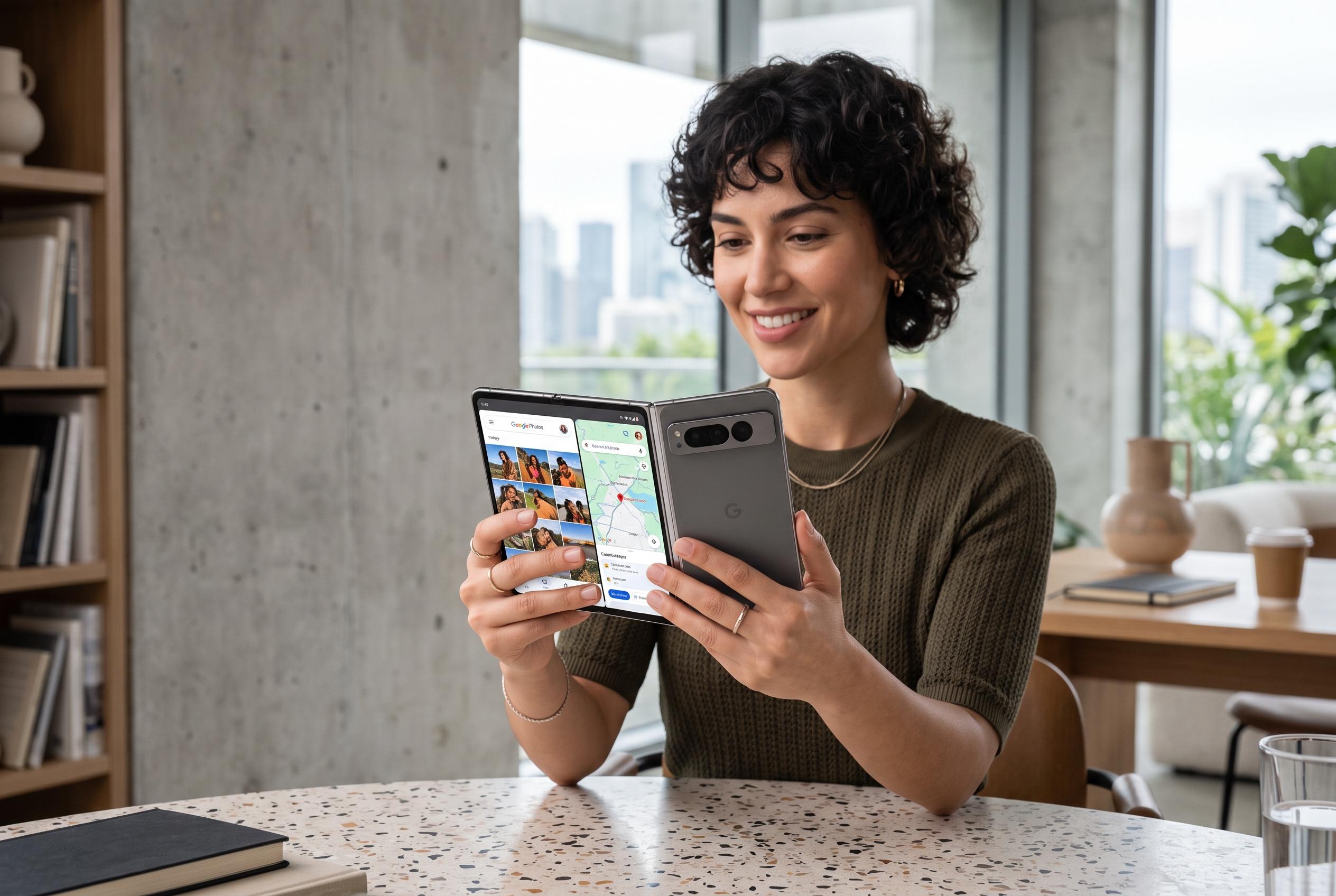

Google’s new Pixel 11 Pro Fold marks a significant upgrade in foldable technology, intensifying competition as Apple’s much-anticipated foldable remains shrouded in speculation, signalling a disruptive shift in the premium foldable market.
Google has pushed its foldable line further upmarket with the Pixel 11 Pro Fold, a device aimed less at chasing extreme thinness than at fixing many of the compromises that have held foldables back. Android Central reported that the handset was unveiled on 12 August and is due to go on sale on 20 August at $1,899, while Apple remains only at the rumour stage with a foldable iPhone expected, if leaks prove accurate, later this year. The contrast underlines a market that is moving quickly, but still has no settled winner.
On paper, Google’s new book-style foldable is a substantial upgrade. It pairs a 6.5-inch outer display with an 8-inch inner panel, both rated at 120Hz and up to 3,600 nits of peak brightness. Android Central said the design is lighter than before at 239g and includes a tougher hinge, ceramic outer glass, a glass-fibre composite back and IP68 water and dust resistance. The phone is powered by the Tensor G6 chip, with 16GB of RAM and storage options reaching 1TB. Google also appears to have improved endurance and charging, with a 4,750mAh battery, 30W wired charging and 25W wireless charging.
Camera hardware is familiar in layout but more ambitious in execution. The Pixel 11 Pro Fold uses a 48-megapixel main camera, a 10.5-megapixel ultrawide and a 10.8-megapixel telephoto lens with 30x zoom, alongside 10-megapixel front cameras on both the cover and inner displays. TechRadar said Google is leaning heavily on Gemini-powered software features such as Magic Capture and real-time translation, which is increasingly where its foldables try to differentiate themselves. The result is a device that looks designed for users who want a large screen without giving up the wider Pixel ecosystem.
Apple’s foldable, by contrast, remains speculative. The reports circulating online point to a device that may be called the Fold Ultra or iPhone Fold, with a 7.76-inch or 7.8-inch main display, a 120Hz refresh rate, and a dual-camera system built around two 48-megapixel sensors. The claimed battery capacity is higher than Google’s, at around 5,800mAh, but none of those details has been confirmed by Apple. For now, the comparison is mostly theoretical: Google has a shipping product with a clear spec sheet, while Apple has a set of leaks and a likely launch window. Whether that changes the foldable balance later this year will depend on what Apple actually delivers.
Disclaimer: This content is intended for informational purposes only. Readers are advised to exercise their own judgement, conduct due diligence, or consult a qualified expert before acting on any information provided.