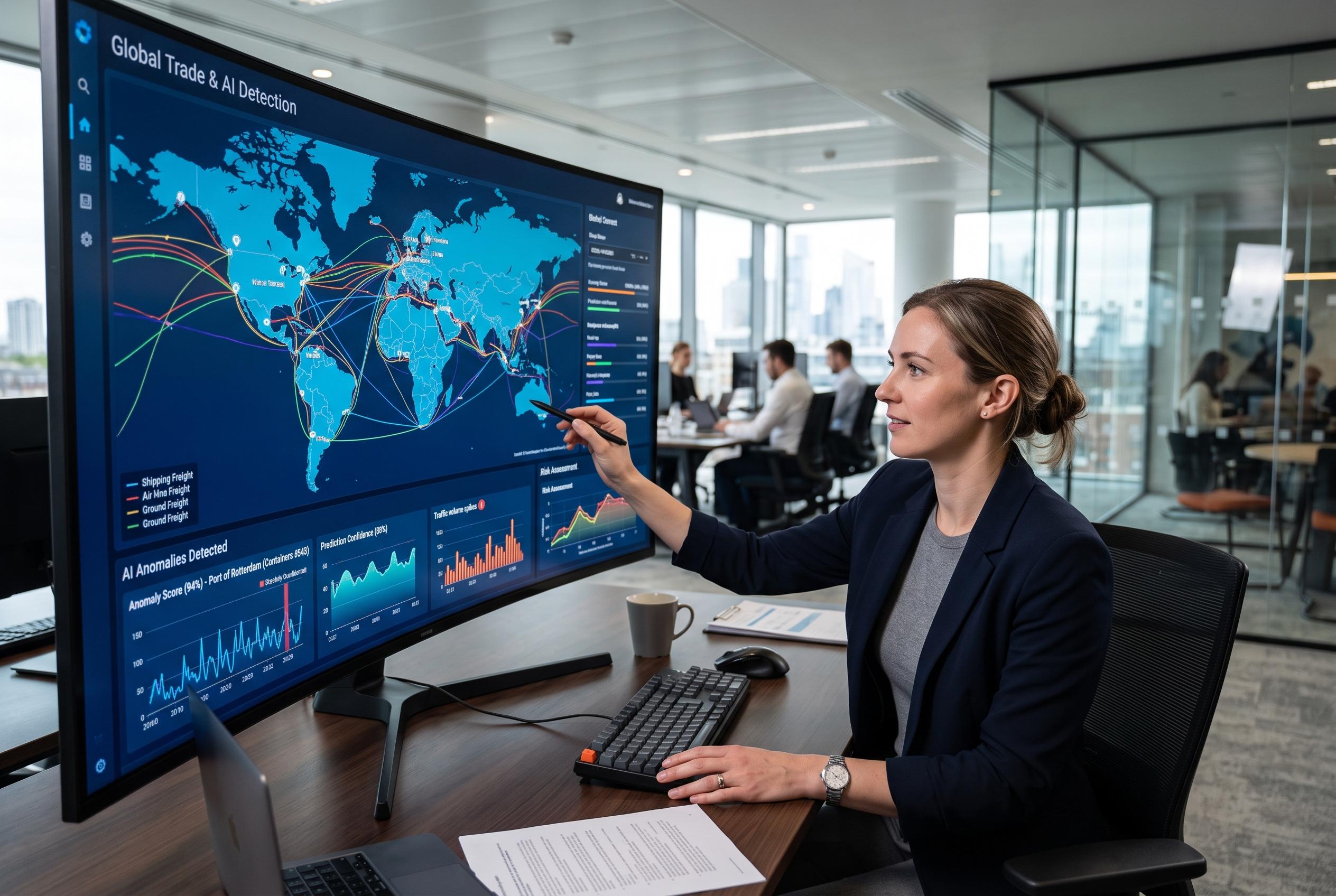

The United States claims that India and over 40 countries are facilitating Chinese goods to reach American markets through indirect routes, as part of efforts to circumvent tariffs, prompting the deployment of AI-based detection systems.
The United States has accused India and more than 40 other countries of helping Chinese goods reach American buyers through indirect trade routes, in what Washington describes as an attempt to evade tariffs. According to Business Today, the claim appears in a report written by Peter Navarro, Donald Trump’s trade and manufacturing adviser, who says the practice is being tackled with a new artificial intelligence-based detection system.
Mr Navarro’s report, titled “The Great Transhipment Scam”, argues that as much as $40bn to $303bn worth of goods a year may be moving through questionable transhipment channels. He names Mexico, Canada, the European Union, India, Japan and South Korea among the trade partners he says are involved in what he calls China’s “shadow transhipment network”. The report says the practice expanded after the Trump administration imposed Section 301 tariffs on China in 2018.
The allegation is not new in substance. Research and congressional testimony cited in related materials have described Chinese firms using third countries such as Vietnam and Malaysia to reroute exports, alter shipment information, or make limited changes to products before re-exporting them. A 2024 analysis from the Pacific Forum said some Chinese companies have set up operations in countries including India, Vietnam and Mexico to exploit trade agreements and obscure the origin of goods. A 2025 congressional witness statement also warned that tariff evasion and customs fraud remain difficult to police.
India features prominently in Mr Navarro’s account. Business Today reported that he pointed to a Pune-Gujarat-Chennai industrial corridor, saying it could be used to move Chinese pumps and compressors into the US market under an Indian label. He argued that such routing distorts supply chains in American manufacturing centres such as Cincinnati, Dayton and Columbus. The claim echoes wider concerns in trade-policy studies that rules of origin can be manipulated when oversight is weak.
Washington’s proposed response is a data-driven screening system that it describes as an AI-based “detective border” tool. According to the report, it would examine shipment records, routes, product details, corporate links and production capacity to separate legitimate foreign investment and trade from suspected diversion. If a shipment is flagged as high-risk, US authorities could use it to support duties, penalties or seizure of goods. The broader backdrop remains the unresolved tariff conflict between the US and China, which other recent analyses say has continued to drive tit-for-tat measures and efforts by firms to shift trade through third countries.
Disclaimer: This content is intended for informational purposes only. Readers are advised to exercise their own judgement, conduct due diligence, or consult a qualified expert before acting on any information provided.