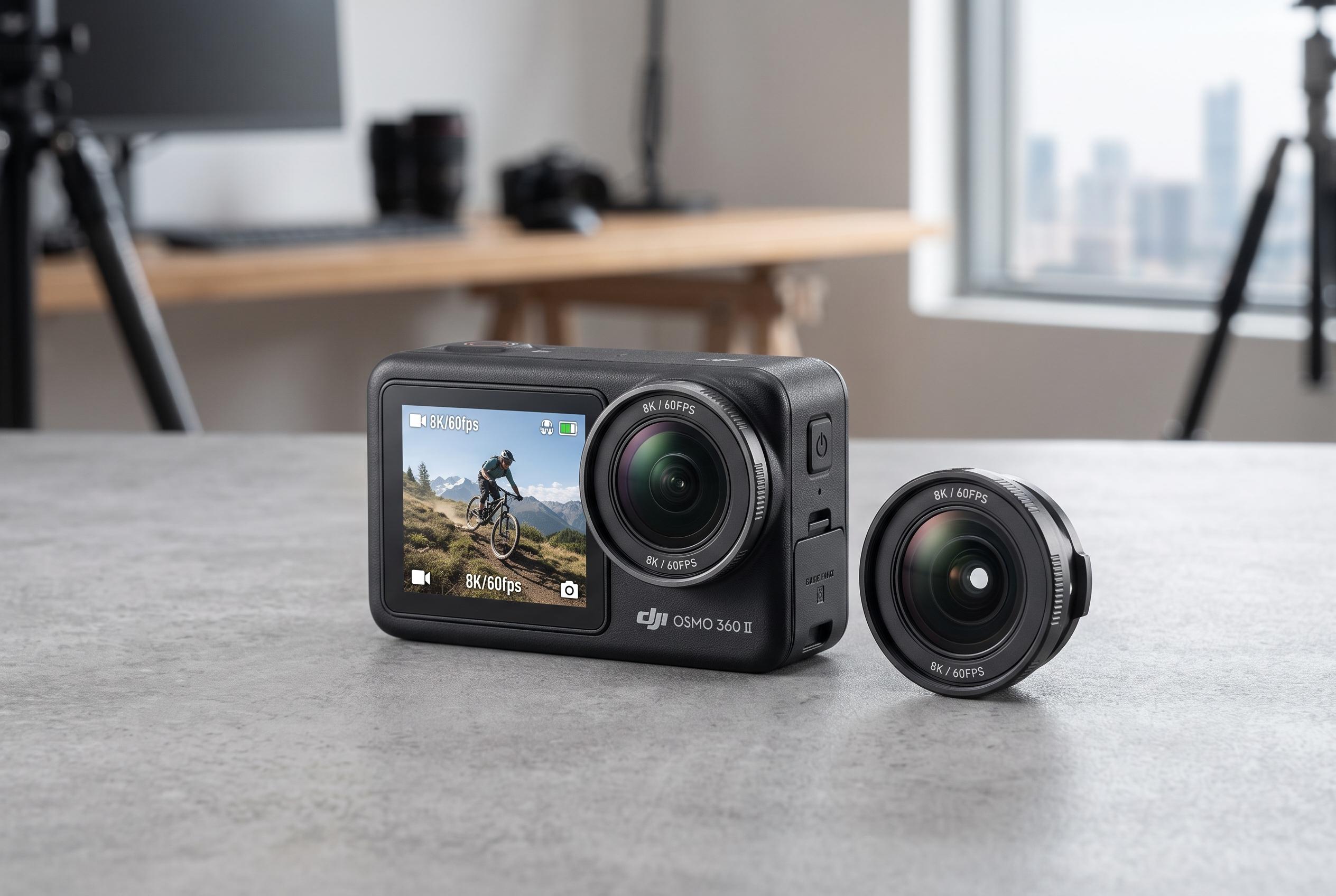

DJI launches the Osmo 360 II in China, featuring 8K/60fps recording, longer battery life, and user-replaceable lenses, signalling a significant upgrade for action camera creators.
DJI has put the Osmo 360 II on sale in China, positioning the camera as a more capable follow-up to its first 360-degree model. The new device arrives with a clear set of upgrades aimed at creators who want higher frame rates, longer battery life and, crucially, more durable optics. According to the launch coverage, the standard bundle is priced at about HKD 3,899, or roughly $499, with an Adventure Combo near $599. DJI has not yet announced US pricing or a domestic release date.
The most notable technical change is the move to dual 1.1-inch sensors with native 8K recording at 60 frames per second. That lifts the ceiling from the original model’s 8K/50fps limit and is paired with panoramic stills up to 120 megapixels and 14.5 stops of dynamic range in D-Log M, according to DJI. The company also says a new AI SuperNight 2.0 mode is designed to improve low-light footage.
Battery life has also been extended. Leaks reported by Notebookcheck and DroneXL suggested a 2,150mAh pack, and the launch details now match that figure. DJI rates the camera for about 100 minutes of continuous 8K/30p recording, while fast charging can take the battery to 80% in 22 minutes. Internal storage rises to 128GB, of which 105GB is usable, and the camera keeps a microSD slot for cards up to 1TB.
The design change likely to matter most in real use is the introduction of user-replaceable lenses. The first Osmo 360 used fixed optics, so lens damage meant repair rather than replacement. DJI says the new lenses use an ion-coated finish that can withstand heavy abrasion, a meaningful adjustment for a camera likely to be used on helmets, handlebars and other exposed mounts. Leaks ahead of launch also pointed to a nearly unchanged body shape, a left-side switch and more prominent branding.
DJI’s launch also helps place the Osmo 360 II within a wider camera range. It is a standalone 360-degree action camera, not a phone gimbal, so it sits apart from the Osmo Mobile stabiliser line and the smaller Action series. For buyers in markets where DJI has not yet confirmed availability, the wait may matter. Until an international rollout is announced, rivals such as Insta360 remain the more practical option for anyone needing a flagship 360 camera immediately.
Disclaimer: This content is intended for informational purposes only. Readers are advised to exercise their own judgement, conduct due diligence, or consult a qualified expert before acting on any information provided.