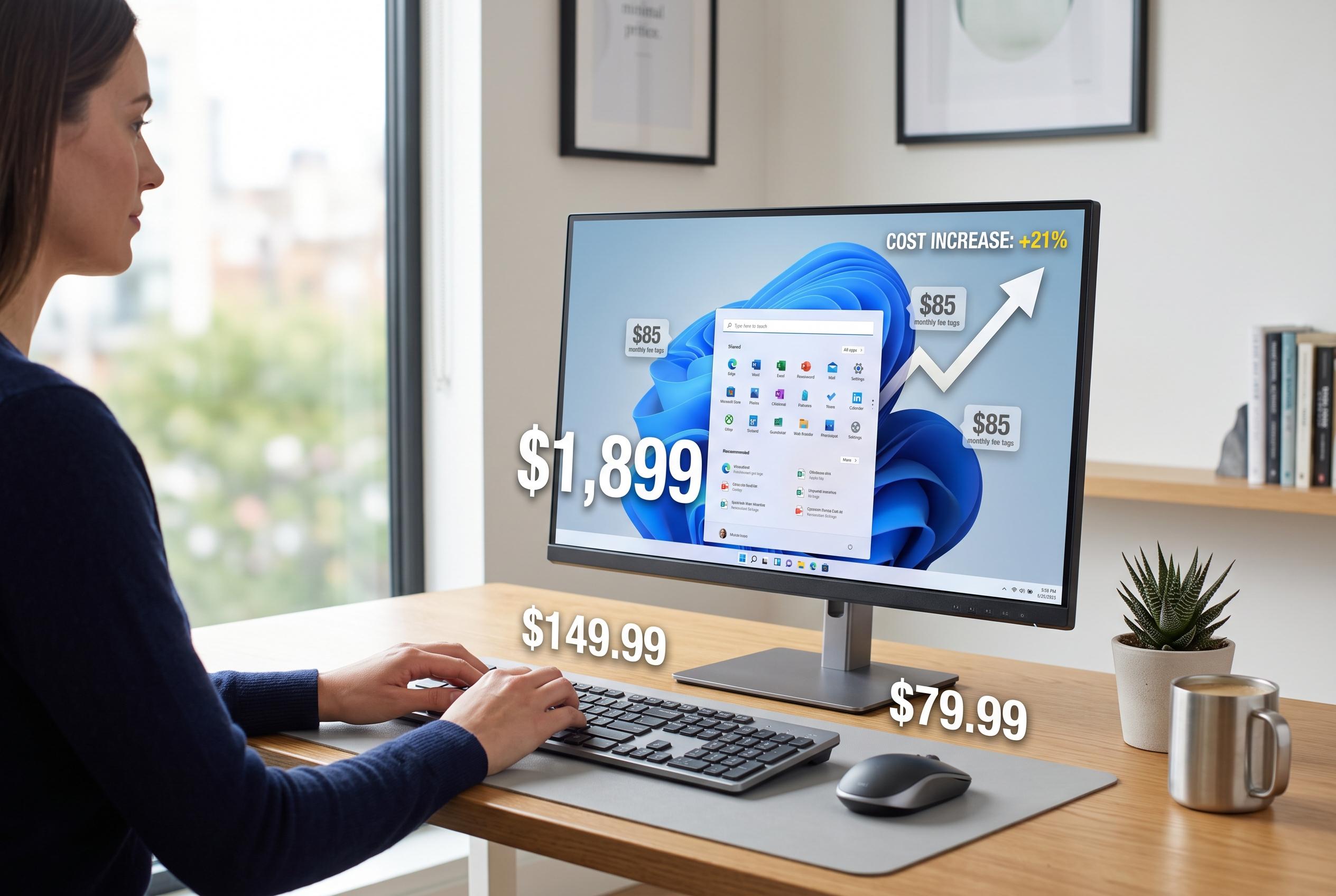

A recent increase in Microsoft’s Windows OEM licence fees is pushing PC prices higher at a time of global component shortages, threatening to slow a market already under strain.
PC buyers are facing another cost increase, this time from software rather than silicon. A report in Taiwan’s United Daily News, picked up by several technology outlets, says Microsoft has raised the fees it charges computer makers for Windows OEM licences, with the latest increase landing well above the small annual adjustments brands have usually seen. The change comes as component inflation is already pushing retail prices higher.
According to the reports, Microsoft’s licensing costs for manufacturers have risen by about 7% to 10%, with the exact charge depending on the processor tier inside the machine. Higher-end systems therefore carry a larger fee than entry-level models. Industry sources quoted in the coverage say the increase arrived in July and is already filtering through to finished products, even though Microsoft has not publicly explained the move.
The timing is awkward for buyers because hardware prices are rising across the board. Windows Central said memory shortages are inflating the cost of RAM, SSDs and CPUs, while Tom’s Hardware reported sharp U.S. price rises for Nvidia’s RTX 50-series graphics cards. Tom’s Hardware also reported that SSD prices remain highly elevated after a year of AI-driven supply pressure, with some consumer models more than tripling in price. In that environment, Microsoft’s fee increase adds another layer of pressure, rather than a fresh feature or benefit for customers.
The combined effect is showing up in retail pricing. Windows Central said entry-level PCs that once sold for around $600 to $800 are now moving closer to $1,000, while premium laptops have shifted towards the $2,000 mark. It also noted that Microsoft’s own Surface devices have become materially more expensive. The wider market remains under strain: Counterpoint Research expects global PC shipments to fall 4% year on year to around 65 million units in the second quarter of 2026, which would mark the first annual decline since early 2025. AI PCs and the Windows refresh cycle are still supporting demand, but they are not offsetting the effect of higher costs.
Disclaimer: This content is intended for informational purposes only. Readers are advised to exercise their own judgement, conduct due diligence, or consult a qualified expert before acting on any information provided.