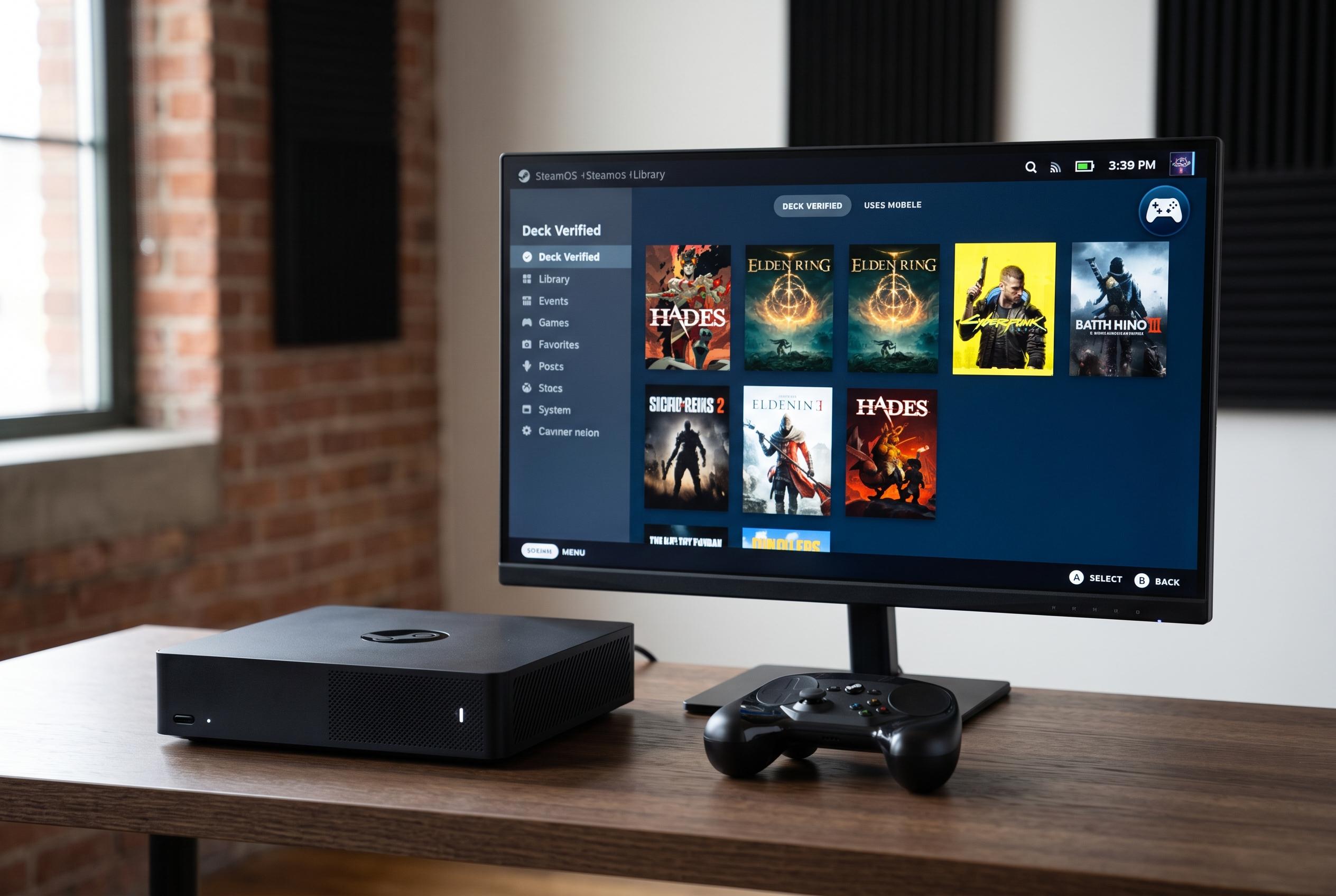

Valve’s latest Steam Machine highlights a significant move towards Linux as a viable gaming alternative, challenging Windows’s dominance and prompting PC manufacturers to consider Linux beyond enthusiasts and niche markets.
Valve’s latest Steam Machine has done something more important than sell a new box: it has further weakened the long-standing assumption that Windows is the only serious operating system for gaming PCs. The device itself may be drawing criticism over price and value, but the software stack behind it has become the real story. SteamOS now demonstrates that a gaming-focused Linux system can deliver a streamlined experience without the clutter that many PC owners still accept as normal.
That shift matters because Linux gaming is no longer being judged on theory. Valve’s work on SteamOS, Proton and Gamescope, together with the Steam Deck’s success, has made support for modern PC games routine rather than experimental. The company’s own compatibility ecosystem now covers tens of thousands of verified or playable titles, and services such as ProtonDB show that a large share of tested games run at least acceptably. In practice, the question is not whether SteamOS works, but which kinds of players it suits best.
There are still limits. Titles that rely on kernel-level anti-cheat remain a major obstacle, which keeps many competitive multiplayer games tied to Windows. For players whose libraries centre on games such as Valorant, Fortnite, Battlefield or Call of Duty, Linux remains the wrong choice. That is why the Steam Machine debate has become so revealing: the software is no longer the weak point, but the hardware makers around it have yet to treat Linux as a mainstream option.
That reluctance is starting to look more like caution than necessity. Valve has recently expanded SteamOS support to third-party handhelds, including devices from MSI and Ayaneo, while a separate open-source project called Xodus aims to bring Xbox PC and Game Pass titles to Linux by reverse-engineering Microsoft’s Game Development Kit. At the same time, Meta PCs has released what it says is the first prebuilt gaming desktop to ship with SteamOS. Together, these developments suggest that the platform is moving beyond Valve’s own hardware, even if the wider PC market has not yet fully caught up.
Windows is not disappearing. Its software ecosystem remains broader, and many gamers will continue to prefer it. But SteamOS has now proved that a credible alternative exists, one that boots straight into games, keeps the system lean and avoids much of the overhead that enthusiasts often strip out of Windows installations. The next question is not whether Linux can support gaming PCs. It is whether any major manufacturer is prepared to ship one and let the market decide.
Disclaimer: This content is intended for informational purposes only. Readers are advised to exercise their own judgement, conduct due diligence, or consult a qualified expert before acting on any information provided.