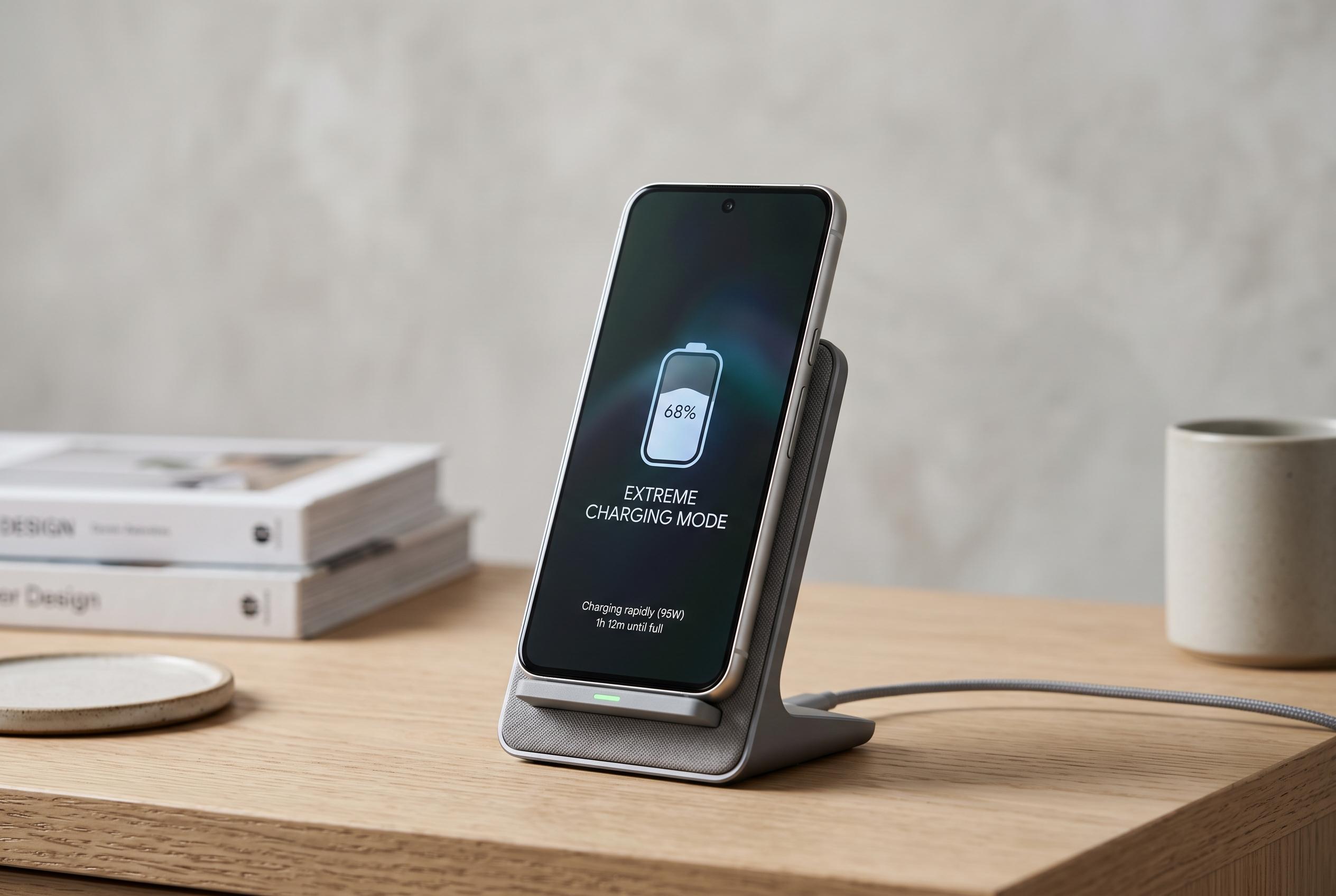

Google introduces ‘Extreme Charging Mode’ on the Pixel 11 series, but industry experts argue it offers limited benefits compared to rivals’ fast and cooling charging solutions, highlighting ongoing trade-offs in battery technology.
Google’s Pixel 11 series has arrived with a new “Extreme Charging Mode”, but the label appears to promise more than the hardware delivers. According to Android Central, the Pixel 11 and Pixel 11 Pro still top out at 30W charging, while the Pixel 11 Pro XL reaches 45W. The new mode does not increase those limits. Instead, it reduces background activity and allows the phone to run hotter while plugged in, with the option only available below 50% battery. Google has not published a clear time saving for the feature.
That makes the setting look less like a charging breakthrough than a managed concession to thermal limits. Android Central says the standard Pixel 11 models can reach 55% in 30 minutes on a 30W PPS charger, while the Pro XL can hit 75% in the same period on a 45W PPS charger. The Pixel 11 range also supports Qi2 wireless charging at up to 25W, thanks to magnet integration for Pixelsnap accessories and other Qi2-compliant hardware.
The larger concern is that Google is still treating battery health and charging speed as a trade-off rather than a solved engineering problem. Tech Ish notes that Google’s Battery Health Assistance begins lowering maximum battery voltage at 200 charge cycles and continues to adjust charging behaviour up to 1,000 cycles, and that users cannot switch it off. The company says the feature is intended to extend battery life, but it also means charging performance is shaped by software limits as well as the charger itself.
That approach stands in contrast to some rivals. Notebookcheck says Infinix has offered bypass charging on several phones for years, including gaming-focused models that send wall power directly to the device while limiting battery stress. The site also reported that the Infinix GT 50 Pro combines 45W wired charging, 30W wireless charging and an accessory cooler that supports wireless bypass charging, while the Infinix Zero Ultra reached 180W in 2022 by splitting its battery into two cells. In other words, the wider industry is exploring faster and cooler charging paths while Google is still framing warmth itself as a feature.
Battery capacity also adds context. Android Central reports that Google has slightly increased capacities across the Pixel 11 line, but the numbers remain modest by current flagship standards. Tech Ish contrasts the Pixel 11 Pro’s 4,850mAh battery and $1,099 starting price with devices such as the Honor X9d, which it says carries 8,300mAh in a thinner body for a far lower price. Samsung only moved to silicon-carbon batteries in its Galaxy Z Fold 8 range last month, according to the same report, while Apple is said to now charge faster than Google on its latest iPhone. For a company that helped define premium Android, Google’s latest charging story feels more defensive than leading.
Disclaimer: This content is intended for informational purposes only. Readers are advised to exercise their own judgement, conduct due diligence, or consult a qualified expert before acting on any information provided.