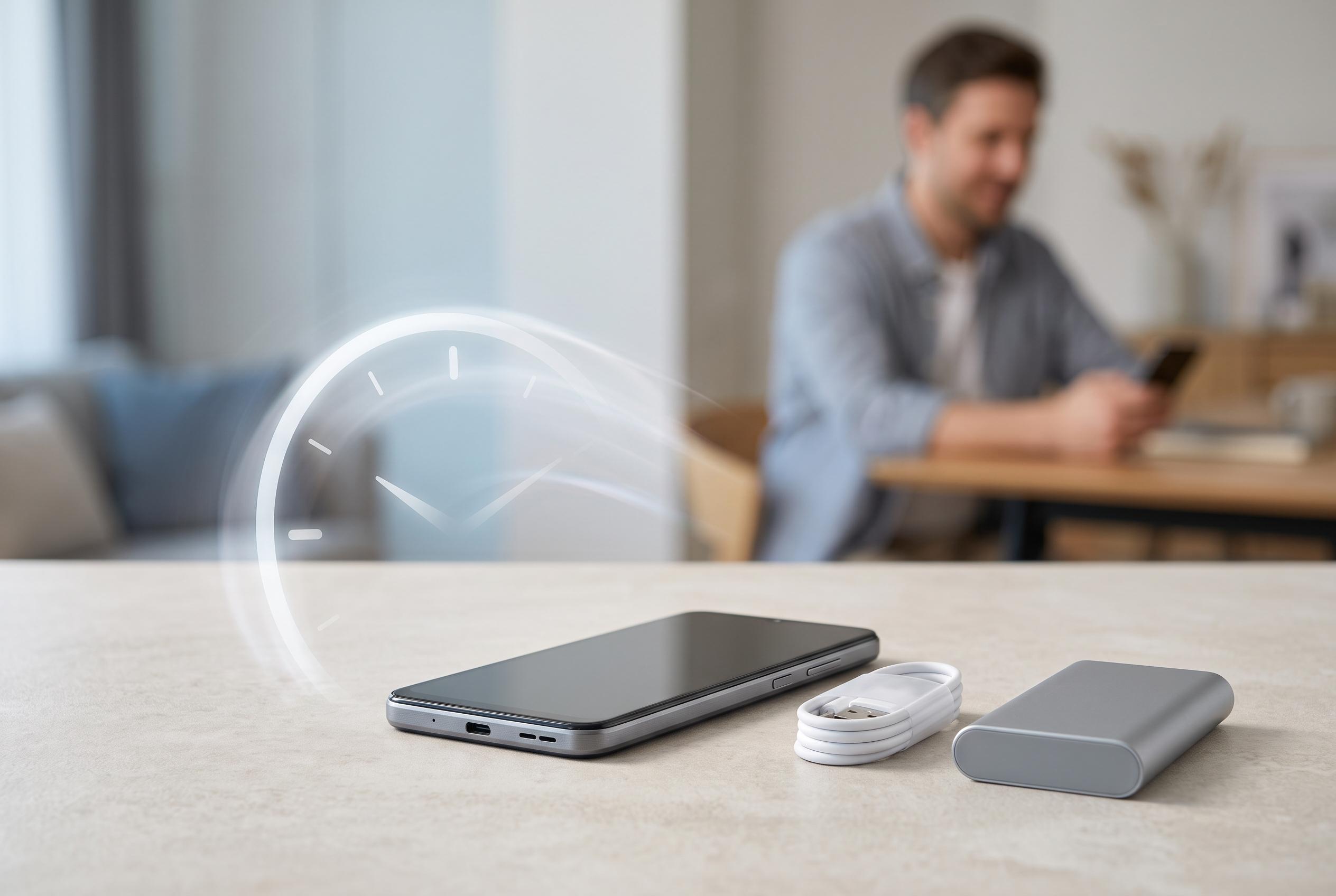

The Redmi 17 4G, launched in Vietnam, offers an ultra-long 73-hour battery life with a 7,500mAh cell, but its modest specs and competitive pricing highlight a focus on endurance over performance in the budget segment.
Xiaomi’s Redmi 17 4G has arrived in Vietnam as a phone built around one clear promise: very long battery life. The device went on sale on 7 August and is being positioned as an affordable large-screen handset, but it has also drawn criticism because its starting configuration offers only 4GB of RAM despite a list price of VND 5.99 million. That creates an obvious trade-off: stamina over speed, and endurance over flexibility.
The battery is the headline feature. Xiaomi says the Redmi 17 4G carries a 7,500mAh cell, and EU EPREL certification cited by Gizchina indicates 45W fast charging, a claimed endurance of more than 73 hours on a single charge and battery health retention above 80% after 1,000 cycles. For buyers who spend long days away from a charger, that is a meaningful advantage, especially in a budget segment where battery life often decides whether a phone feels practical.
Elsewhere, the specification sheet looks more restrained. The handset uses a 6.9-inch display with a 120Hz refresh rate, but the panel is only HD+, which limits sharpness compared with higher-resolution rivals. The body is 8.8mm thick and about 232g in weight, with plastic construction and an IP64 rating that protects against dust and light splashes, not immersion. Reports from GSMChoice and other listing sites also point to a MediaTek Helio G91 Ultra processor, while early documentation and certification material suggest the phone is intended for mainstream use rather than demanding workloads.
That positioning is reflected in the camera and memory choices. The rear module looks more elaborate than it is, with the main camera said to be 50MP and little evidence of a class-leading multi-camera system. For everyday photography and social media posting, it should be sufficient. For gaming and heavy multitasking, however, the combination of a modest chipset and 4GB of RAM will be the limiting factor. That is why the phone can handle lighter titles such as Liên Quân Mobile or PUBG Mobile only with reduced settings, according to the Vietnamese report.
The pricing debate is sharper because the Redmi 17 4G sits close to the 5G model. In Vietnam, the 4GB/128GB version is listed at VND 5.99 million, the 4GB/256GB model at VND 6.69 million and the 6GB/256GB variant at VND 7.49 million. The Redmi 17 5G starts at VND 6.49 million for 4GB/128GB, narrowing the gap between the two versions. The Vietnamese report notes that promotions can pull the 4G model down to around VND 4.6 million, at which point the value case improves considerably.
That pricing tension also needs to be read against broader component costs. Industry data cited in the Vietnamese article suggests DRAM prices rose 98% in the first quarter of 2026 and then climbed a further 58% to 63% in the second quarter, with LPDDR5 memory under pressure from demand linked to AI data-centre build-outs. In that context, Xiaomi’s use of 4GB RAM and a lower-resolution display looks less like an oversight than a deliberate cost-control choice. The Redmi 17 4G is therefore best understood as a niche budget phone for users who value battery life above all else. For students, older users or anyone needing a secondary device, it makes sense. For buyers seeking strong performance at around the VND 6 million mark, it does not stand out.
Disclaimer: This content is intended for informational purposes only. Readers are advised to exercise their own judgement, conduct due diligence, or consult a qualified expert before acting on any information provided.