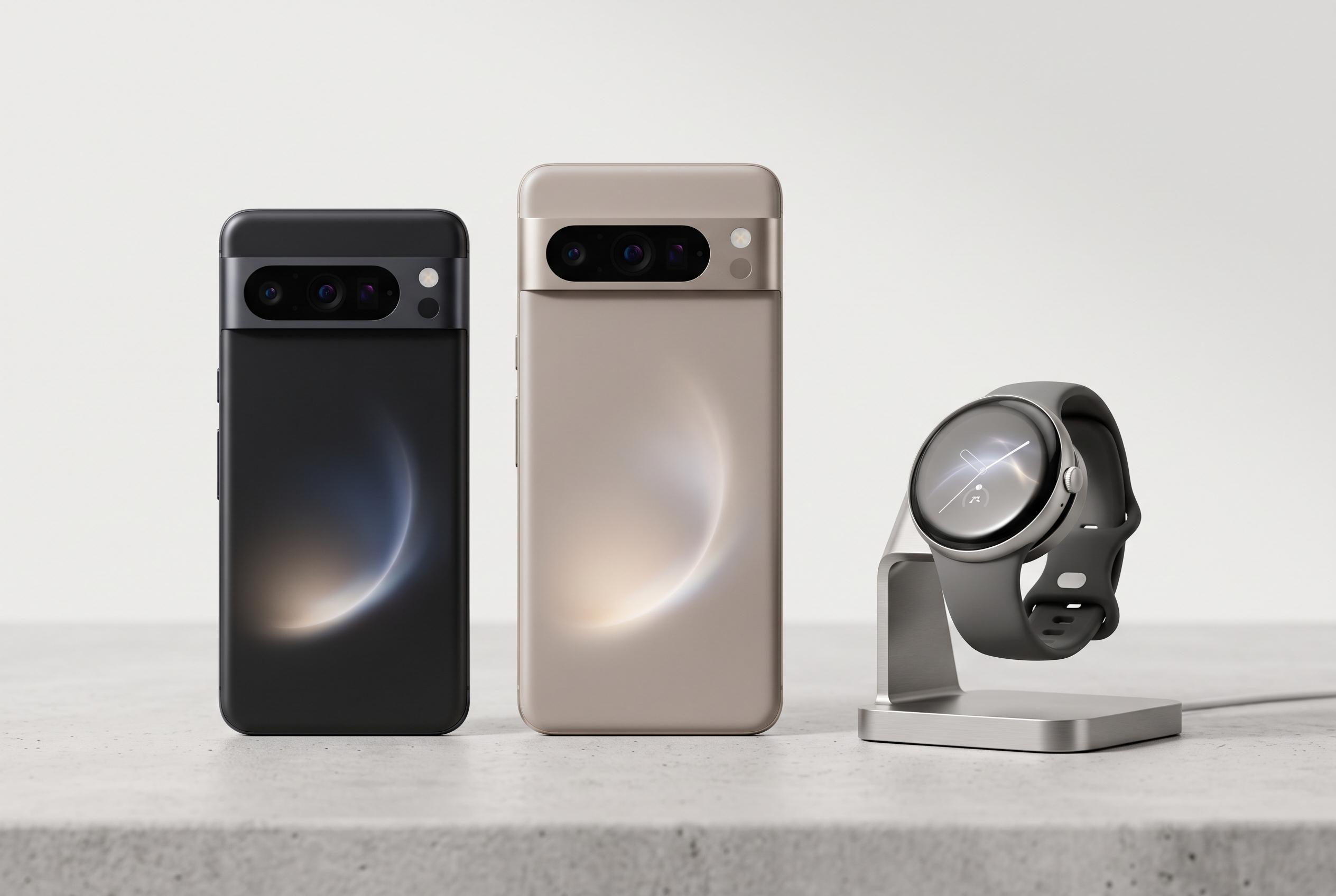

Google unveils its 2026 Pixel lineup, highlighting subtle hardware refinements, enhanced AI capabilities, and new wearable and accessory options, signalling a strategic shift towards smarter, more efficient devices.
Google has unveiled its 2026 Pixel range, led by the Pixel 11 family, a refreshed Pixel Watch and a new budget fitness tracker. The launch centres on iterative hardware changes rather than a wholesale redesign, with Google leaning heavily on its Tensor G6 chip, AI features and small but practical improvements across phones, wearables and accessories.
The standard Pixel 11 is the least changed model in the line-up, but it still gains a more efficient Tensor G6 processor, 12GB of memory and 256GB of base storage. Google has also fitted a slightly larger 4,985mAh battery and faster 25W wireless charging, while the main camera now uses a larger sensor. In hand, it remains close to the Pixel 10, with the same matte metal frame and a new Hibiscus finish among the colour options. Reuters reported that Google is also positioning the phone around broader software gains, but the hardware story here is one of modest refinement rather than a clean break.
The Pro models add the most visible changes. According to T3, Google’s new HiLight system places an LED ring around the rear flash, creating coloured notification patterns that can be linked to contacts and, in a later update, messages. Android Central said the feature is intended to make Gemini interactions feel more responsive, while also serving as a glanceable alert system. The Pixel 11 Pro and Pixel 11 Pro XL also get brighter displays, a new 50-megapixel main camera and a 48-megapixel telephoto unit, with 256GB now the starting storage tier. The trade-off is that 16GB of memory is reserved for the 512GB variant, and the battery capacity has edged down slightly.
The foldable Pixel 11 Pro Fold follows the same pattern of targeted upgrades, but weight reduction is the main change most likely to be noticed in daily use. Android Central’s launch coverage said the new foldable is thinner and lighter than its predecessor, while Tom’s Guide described it as a more direct rival to Samsung’s latest book-style foldable, albeit at a lower price point. Google has kept 16GB of memory, but the battery is now 4,806mAh, down from the previous generation’s 5,015mAh. The crease is still visible, and the uneven feel between the two halves of the chassis remains a design quirk.
Beyond the phones, Google introduced the Pixel Watch 5, which keeps a familiar appearance but gains 64GB of storage and larger batteries in both the 41mm and 45mm sizes. Android Central said the watch also brings faster performance, stronger health tracking and tighter Gemini integration, including new accessibility and workout features. The company also showed the Olive version of the Pixel Buds Pro 2, which is unchanged apart from colour, and the Fitbit Air, a screen-less tracker that has now been confirmed for India, with sales due to begin in October. Taken together, the launch shows Google doubling down on AI-led features while making only selective changes to its hardware formula.
Disclaimer: This content is intended for informational purposes only. Readers are advised to exercise their own judgement, conduct due diligence, or consult a qualified expert before acting on any information provided.