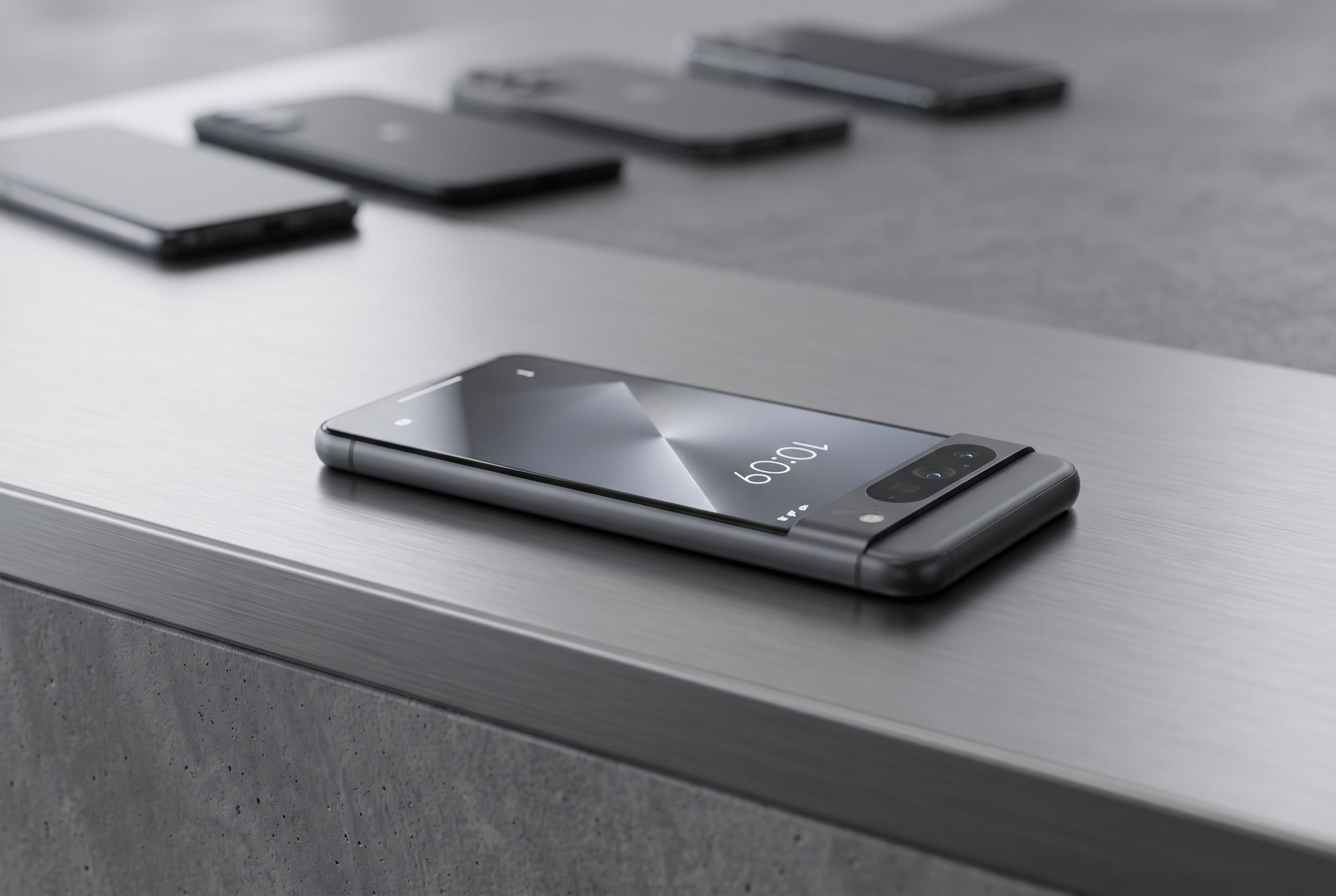

The Pixel 11 enters a highly competitive market, with rivals like Samsung, Xiaomi, Oppo, and Vivo offering innovative designs, larger batteries, and advanced cameras, challenging its position as one of the most complete compact flagship smartphones of 2026.
Google’s Pixel 11 is being pitched as one of the most complete compact flagships of 2026, but it enters a crowded field. Samsung’s Galaxy S26, Xiaomi’s 17, Oppo’s Find X9 and Vivo’s X300 all pursue the same idea from different angles: high-end hardware in a body that still works one-handed. The result is a comparison shaped less by size alone than by how each maker balances weight, screen quality, battery capacity, software support and camera strategy.
On design, the Galaxy S26 looks like the neatest package. It is the thinnest and lightest of the group, while the Oppo Find X9 is the heaviest and the Xiaomi 17 is the only one that breaks the 8mm thickness mark. Display sizes are close across the board, although the Oppo stretches to 6.59in, giving it the largest panel in the set. Google and Samsung stay with Full HD-class resolutions, while Xiaomi, Oppo and Vivo move up to sharper 1.5K panels. Peak brightness also favours most of the rivals over the Galaxy S26, which makes the latter less compelling for outdoor use despite its smaller and lighter frame.
The split becomes clearer under the hood. All five phones start with 12GB of RAM, although Vivo also offers a 16GB version. Storage options are broadly generous, but Oppo is the outlier because its Find X9 appears only in a 512GB configuration. In processor terms, Xiaomi is the most aggressive, using Qualcomm’s Snapdragon 8 Elite Gen 5. Google relies on its Tensor G6, Samsung on the Exynos 2600, and Oppo and Vivo both use MediaTek’s Dimensity 9500. That means raw performance should favour Xiaomi, while the others are making a stronger case around efficiency, software tuning and feature sets.
Battery and charging are where the gap widens most visibly. Xataka’s figures put the Pixel 11 at just under 5,000mAh and the Galaxy S26 at 4,300mAh, both paired with relatively modest wired charging. By contrast, Xiaomi reaches 6,330mAh, Oppo goes to 7,025mAh, and the Vivo X300 sits above 5,300mAh in the table, although some third-party comparison pieces have listed it slightly higher. Charging speeds tell the same story: Google and Samsung remain conservative, while Xiaomi, Oppo and Vivo all move into much faster territory, with Xiaomi’s 100W wired charging standing out most clearly. For buyers who want all-day endurance with little downtime, the Chinese rivals look more ambitious.
Software is one area where Google still has a structural advantage. The Pixel 11 runs the cleanest version of Android in the group and gets first access to new Android releases, alongside Gemini features woven deeply into the system. Samsung’s One UI remains one of Android’s most refined custom interfaces. Xiaomi, Oppo and Vivo offer more heavily customised software, with more room for personalisation but also more pre-installed software. On support, the Pixel 11 and Galaxy S26 are the strongest on paper, with seven years of updates each. Xiaomi offers six years, while Oppo and Vivo are positioned at five.
Cameras split the field into two clear philosophies. Google and Samsung lean on computational photography and AI-assisted processing rather than headline-grabbing hardware figures. Xiaomi, Oppo and Vivo take the opposite route, pairing their phones with large sensors and brand partnerships such as Leica, Zeiss and Hasselblad. On paper, Vivo’s 200MP main camera is the most striking specification, while Oppo and Xiaomi also look strong in imaging hardware and zoom. For most buyers, the practical question is less about specification depth than whether they prefer Google’s and Samsung’s image processing style or the more hardware-driven approach of the other three.
Price closes the argument. The Pixel 11 is the most expensive model in this comparison at 999 euros, and that premium is harder to justify because it has only just launched. Oppo follows at 869 euros. Xiaomi sits at 699.99 euros, Samsung at 669 euros and Vivo at 634.08 euros. In simple terms, the Pixel 11 makes the strongest case for clean Android, AI tools and long-term support; the Galaxy S26 is the most compact; Xiaomi is the performance and charging pick; Oppo offers the largest battery; and Vivo looks most balanced for camera-minded buyers.
Disclaimer: This content is intended for informational purposes only. Readers are advised to exercise their own judgement, conduct due diligence, or consult a qualified expert before acting on any information provided.