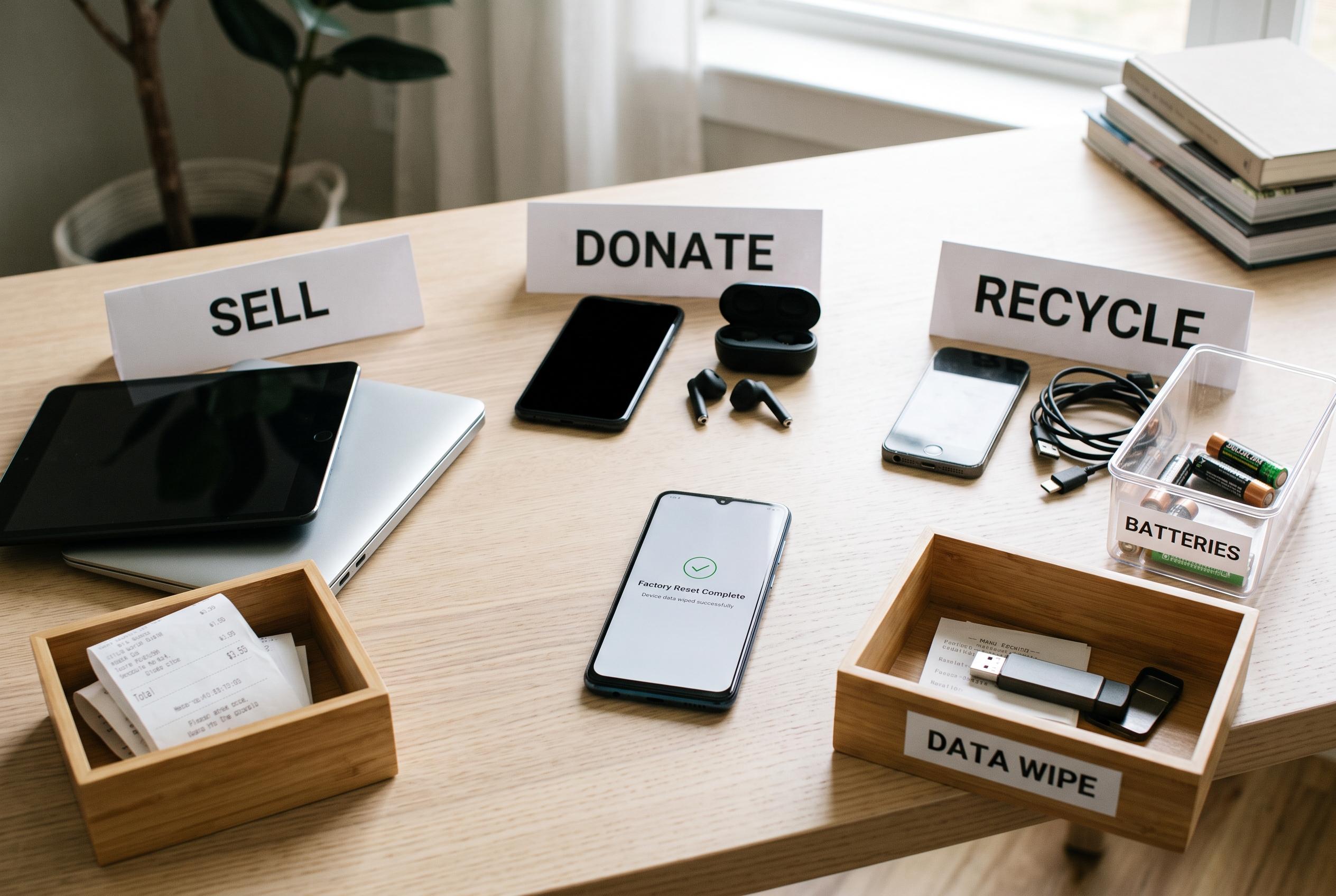

As unused electronic devices pile up, consumers are urged to properly reset, donate, or recycle to protect personal data and extend device life, with new guidelines emphasising responsible handling of batteries and hardware.
Old electronic devices need not end up forgotten in a drawer. A phone, laptop, tablet or pair of headphones that is no longer in daily use can often be sold, donated, reused or sent for recycling, provided it is checked properly first. The key question is whether the device still has value, either for another user or through responsible materials recovery.
According to Apple’s support guidance, the first step before parting with a phone or tablet is to back up what matters and remove personal information. The company advises users to think beyond visible files and consider stored photographs, messages, email accounts, payment details, saved passwords and app data. Consumer Reports similarly warns that simple deletion is often not enough to protect identity or account security.
That is why a factory reset should not be treated as the only task. Devices should also be unlinked from personal accounts, SIM and memory cards should be removed, and any data intended to be kept should be copied elsewhere first. The US Federal Trade Commission says these checks are particularly important before a device is sold, given away or recycled.
If the device still works well, selling it can extend its life and recover some of its value. Before listing it, the screen, casing, buttons, ports and battery should be inspected, and any account lock or activation protection must be cleared. Apple recommends confirming that the device has been fully prepared for transfer and that no personal information remains attached to it.
Donation is another practical option for equipment that is functional but no longer needed. A phone, tablet or computer may still be useful to a family member, school, charity or community group, but only if it is reset correctly and any faults are disclosed. That avoids passing on a device that appears usable but still carries private data or hidden problems.
Older devices can also be repurposed. A phone may serve as a music player, media screen or backup handset, while a computer may still be adequate for light browsing, document editing or occasional use. The practical test is whether it remains stable enough for the task, rather than whether it can still replace a newer model.
When a device is broken, repair should be weighed against age, cost and the availability of spare parts. If fixing it would be expensive or short-lived, recycling is usually the better answer. Consumer Reports and the FTC both note that electronics should not simply be thrown away with ordinary household rubbish, because they contain components that require proper handling.
Batteries deserve special care. If a battery is swollen, damaged, unusually warm or visibly distorted, the device should not be treated as normal household waste. In such cases, the safest course is to follow the manufacturer’s advice or use a suitable collection point. Homes & Gardens also stresses the importance of certified recycling routes for discarded appliances.
The simplest way to avoid clutter is to decide early. A periodic review of unused electronics helps separate what can be sold, what can be donated and what should be recycled. The longer a device sits unused, the more likely it is that its value will fall and its data will be forgotten, which makes preparation harder later.
Disclaimer: This content is intended for informational purposes only. Readers are advised to exercise their own judgement, conduct due diligence, or consult a qualified expert before acting on any information provided.