
A comprehensive guide reveals that capacity, portability, security, and workflow compatibility are key factors in selecting the best backup drives for short film archiving, highlighting recent advancements and practical considerations for creative professionals.
The best backup drive for archiving short films is not simply the biggest or the fastest. It is the drive that matches the way filmmakers actually work: large project folders, repeated transfers, long storage periods and the constant risk of losing footage that cannot be reshot. The guide’s central recommendation is the WD 16TB Elements Desktop External Hard Drive, which it positions as the strongest overall choice because it combines high capacity, broad user adoption and a low cost per terabyte. Independent reviews of large-capacity desktop drives reach a similar conclusion, with PCWorld and other outlets noting that high-capacity models remain the most practical option for bulk archival storage.
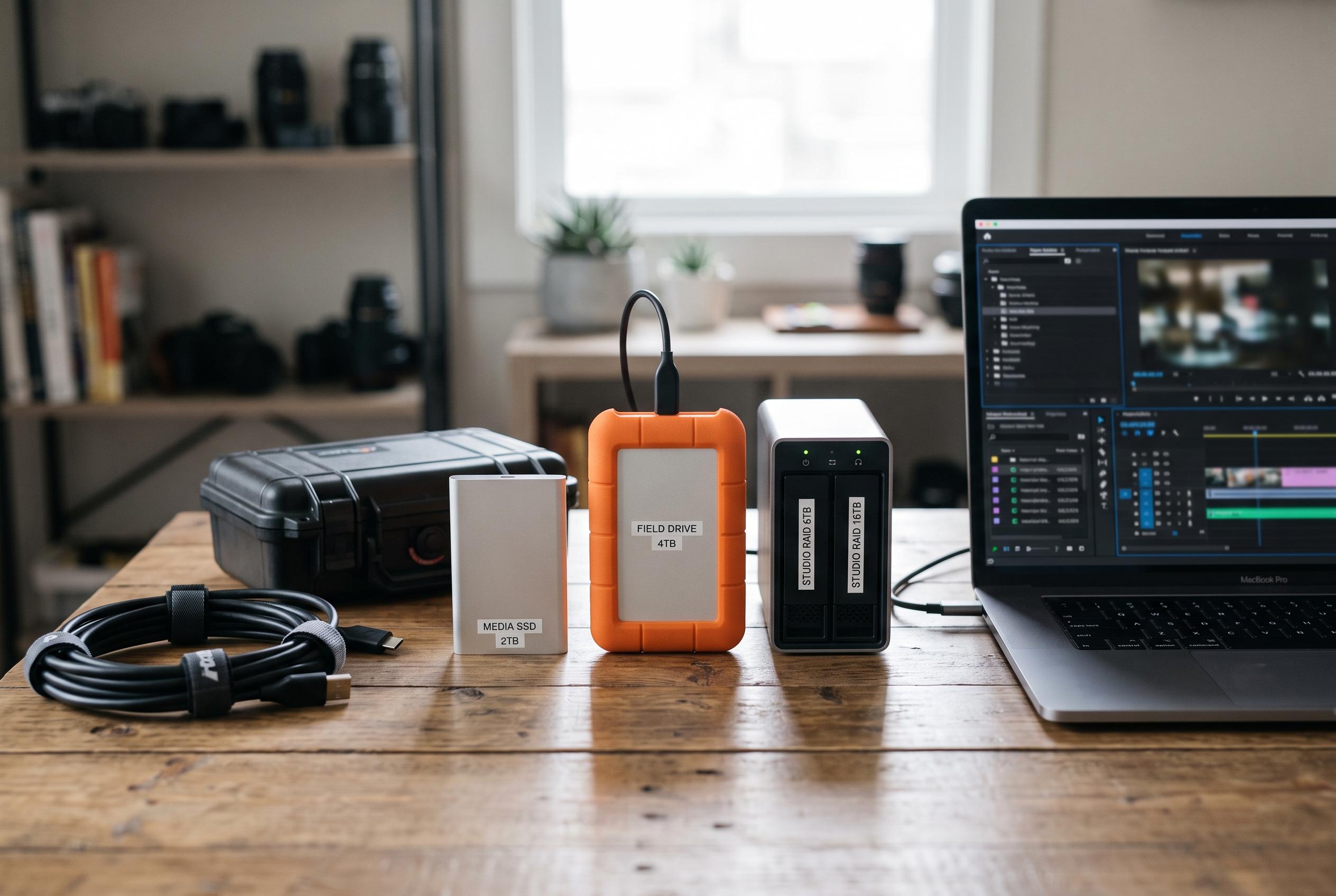
That emphasis on capacity is important because short film projects grow quickly once raw footage, proxies, audio, graphics and final masters are included. The article argues that a 10-minute short can occupy hundreds of gigabytes across the full workflow, which makes consumer-grade storage a poor fit for serious archiving. It therefore favours desktop hard drives for completed projects and portable SSDs for active location work, a distinction that aligns with broader storage guidance for creative professionals.
The Seagate Expansion 24TB is presented as the largest single-drive option in the roundup and a strong fit for crews handling very large archives. PCWorld describes the drive as an affordability play with sustained transfer rates that are significantly better than smaller 2.5-inch external drives, although it still trails SSD performance. The article also notes the practical trade-off: the drive needs mains power and is better suited to a fixed edit desk than a travel bag.
For filmmakers who value convenience as much as raw storage, the Seagate One Touch 8TB is cast as a balanced middle ground. Creative Bloq highlights the appeal of Seagate’s Rescue Data Recovery Services and USB-C power for creative users dealing with large files, and the guide similarly treats the model as a sensible option for consolidating a moderate archive without stepping up to a heavier desktop enclosure. That makes it a useful choice for editors who want one cable, reasonable speed and enough room for multiple completed projects.
Portable SSDs are treated differently from archive hard drives because they serve a separate role in production. The SanDisk 2TB Extreme Portable SSD is recommended for active projects, not long-term cold storage, because its NVMe speed and rugged casing suit shoots, travel and on-set offloading. The guide’s wider point is that SSDs are best where speed matters most, while HDDs remain the value choice for storing finished work over time.
Security and redundancy are another major theme. The guide stresses hardware encryption on the WD My Passport range, but its broader warning is more important: one copy is not a backup. It recommends a 3-2-1 approach, with a working drive, a local archive drive and an offsite copy in cloud storage or at a separate location. That is the most practical defence against mechanical failure, theft, ransomware and accidental deletion, and it is the part of the workflow that matters more than any single product choice.
Disclaimer: This content is intended for informational purposes only. Readers are advised to exercise their own judgement, conduct due diligence, or consult a qualified expert before acting on any information provided.