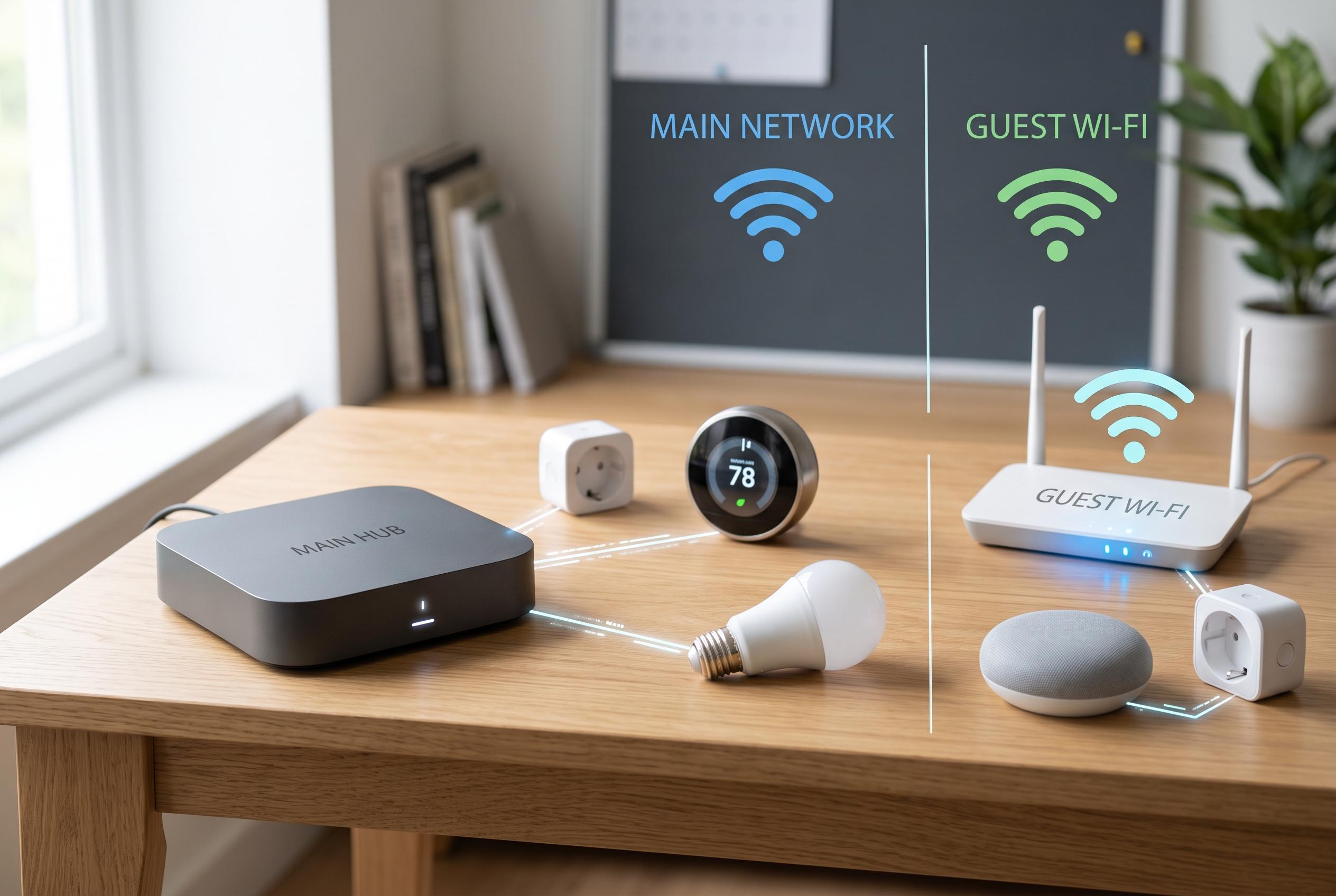

Placing smart home gadgets on a separate guest Wi-Fi network can significantly reduce the risk of cyberattacks spreading to main devices, offering a practical layer of protection amidst increasing connected device adoption.
Configuring a visitor Wi-Fi network and then ignoring it is often treated as a convenience feature. In practice, it can be one of the strongest protections in a home network, especially as households fill up with smart bulbs, cameras, sensors and other connected devices. By placing those devices on a separate segment, the damage from a compromise is far less likely to spread to computers, storage systems or other equipment that holds personal data.
The logic is simple: devices on the main network are usually allowed to talk to one another by default, which helps with file sharing and streaming. That same openness becomes a weakness when a less secure device, such as an outdated thermostat or smart plug, is attacked. Once an intruder gets in through that entry point, the compromise can be used to move towards a work laptop or a network-attached storage device. WatchGuard’s guidance on AP client isolation describes this as a key control for guest Wi-Fi, because it prevents wireless clients from communicating directly with each other on the same access point.
A guest network creates a clear boundary. Visitors can reach the internet, but they are cut off from the rest of the home infrastructure. Norton’s guidance on guest Wi-Fi recommends exactly that kind of separation, with a distinct network, encryption and password protection. For more advanced users, the next step is client isolation or even VLAN-based segmentation, which places trusted devices and internet-of-things equipment into different virtual zones and defaults to blocking traffic unless it is explicitly allowed.
There are also practical advantages. Moving smart devices to a guest network means changing that network’s password does not force a long reconfiguration of every light, camera or sensor in the house. Some routers also allow bandwidth limits or quality-of-service rules on the secondary network, which can reduce congestion caused by low-cost devices that constantly generate background traffic. Security specialists cited by PCWorld argue that guest Wi-Fi is not a complete answer on its own, but it is a sensible containment measure. As the Supernetworks research on breaking Wi-Fi client isolation shows, isolation controls should be treated as one layer in a wider defence, not as a guarantee.
Disclaimer: This content is intended for informational purposes only. Readers are advised to exercise their own judgement, conduct due diligence, or consult a qualified expert before acting on any information provided.