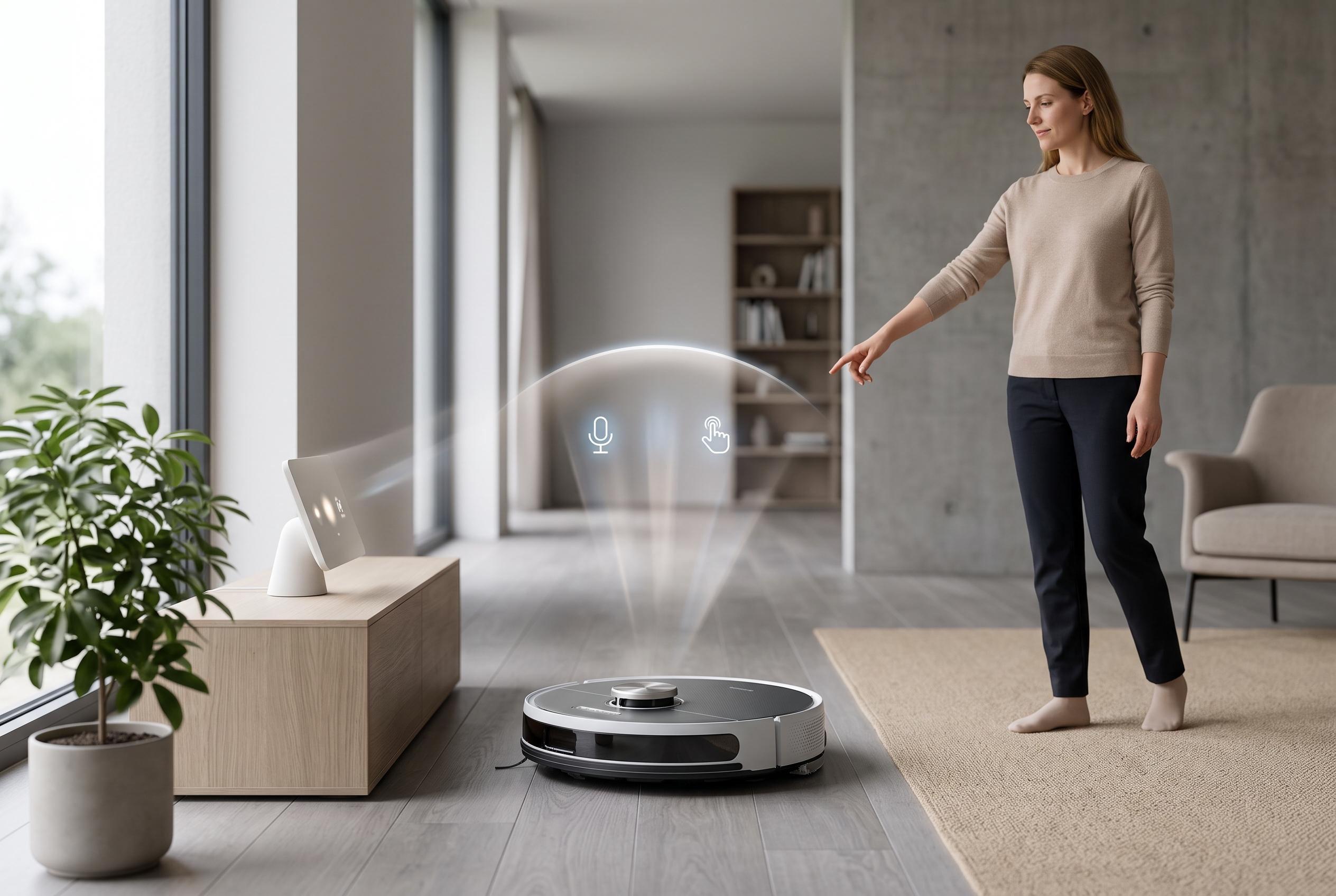

Matic Robots launches a firmware update for its high-end vacuum, enabling users to speak or point to commands for a more intuitive and private smart cleaning experience, amidst market shifts and rising prices.
Matic Robots has started pushing a firmware update that gives its premium robot vacuum a more natural way to take instructions, allowing users to speak to it directly or point at a spill and tell it to “clean this”. The feature, called Matic Cues, is being introduced to a machine that sells for $1,245 and is designed to operate without relying on a separate smart speaker or home assistant platform.
The system understands the wake phrase “Hey Matic” and can respond to commands such as cleaning a specific room, coming closer, or carrying out more than one task in a single sentence. According to Matic, the feature works in more than 70 languages and is intended to make the appliance behave less like a gadget with menus and more like a household device that follows ordinary speech.
Matic says the gesture element depends on five onboard cameras that identify where a user is pointing, while the wake-word and gesture recognition run locally on the robot. That is consistent with the company’s wider privacy position, set out in its policy and support material, which says audio and video data do not leave the home for processing in normal use and that intelligence is handled on-device. The new voice parsing step is different, however: Matic says commands are sent to Google’s Gemini API anonymously, which means the feature still depends on cloud connectivity for now.
The update arrives at a significant moment for the robot vacuum market. Bloomberg reported that iRobot, the maker of Roomba, entered bankruptcy proceedings late last year, while lower-priced Chinese rivals such as Roborock and Dreame have taken share in the US. Matic, founded by former Google Nest engineers Mehul Nariyawala and Navneet Dalal, says it has now sold more than 13,000 units and recently secured $60 million in fresh funding, taking total investment to $115 million. The company also plans to raise the price to $1,495 in early September, citing higher component costs, underscoring how product strategy and pricing are becoming tighter as the category matures.
Disclaimer: This content is intended for informational purposes only. Readers are advised to exercise their own judgement, conduct due diligence, or consult a qualified expert before acting on any information provided.