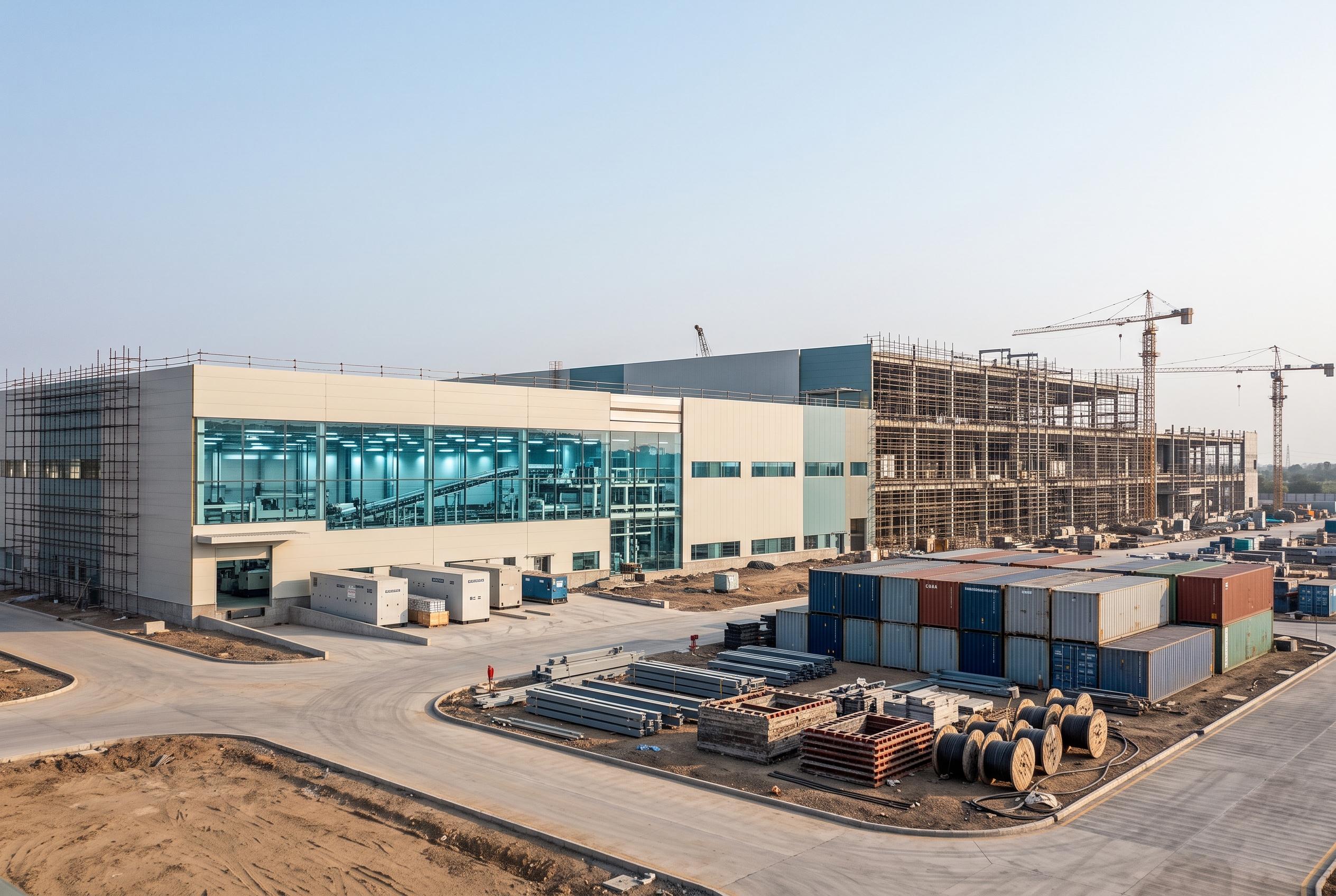

Agratas is advancing its Sanand lithium iron phosphate battery plant but full production is scheduled for 2027, contrary to online claims of an imminent breakthrough. The construction progress underscores the long technical journey from pilot lines to commercial scale in India’s EV component ecosystem.
The story around Tata Group’s battery ambitions has been overtaken by a more prosaic reality: Agratas is still building, not unveiling. What began as a report about a pilot line for lithium iron phosphate cells at Sanand in Gujarat quickly fed a wave of exaggerated claims online that the company had already produced an indigenous battery breakthrough. In fact, the evidence points to a project moving through construction, process set-up and operational preparation, with full production targeted for 2027.
Agratas has said its Sanand facility is progressing towards operational readiness, with civil works nearing completion and attention now shifting to systems, processes and equipment installation. The company describes the plant as a major step towards state-of-the-art cell production and says the site remains on track to begin making cells in 2027. Separate updates from the business show the scale of the build: the main structure is complete, the first manufacturing building is nearing completion, and the steel frame has already been finished on a site stretching 700 metres by 150 metres.
That distinction matters because battery manufacturing is a long, technical process. A pilot line is used to test whether a chemistry, process and manufacturing setup work reliably before a full-scale plant is commissioned. Agratas appears to be in that phase of development rather than at the point of commercial launch. The company has also emphasised sustainability features at Sanand, including energy-efficient power systems, green switchgear and water recycling, while saying the project is creating large numbers of skilled jobs on site.
The wider strategy is also broader than one factory. Agratas has said it is working with Tata Technologies on cell integration into modules and packs, as well as on digital architectures to support battery production in India and the UK. Tata Motors has previously framed the battery arm as central to its electric vehicle ecosystem, arguing that locally developed cells could help reduce cost, improve supply resilience and support performance and safety targets. But for now, the headline remains construction progress, not completed technology.
Disclaimer: This content is intended for informational purposes only. Readers are advised to exercise their own judgement, conduct due diligence, or consult a qualified expert before acting on any information provided.