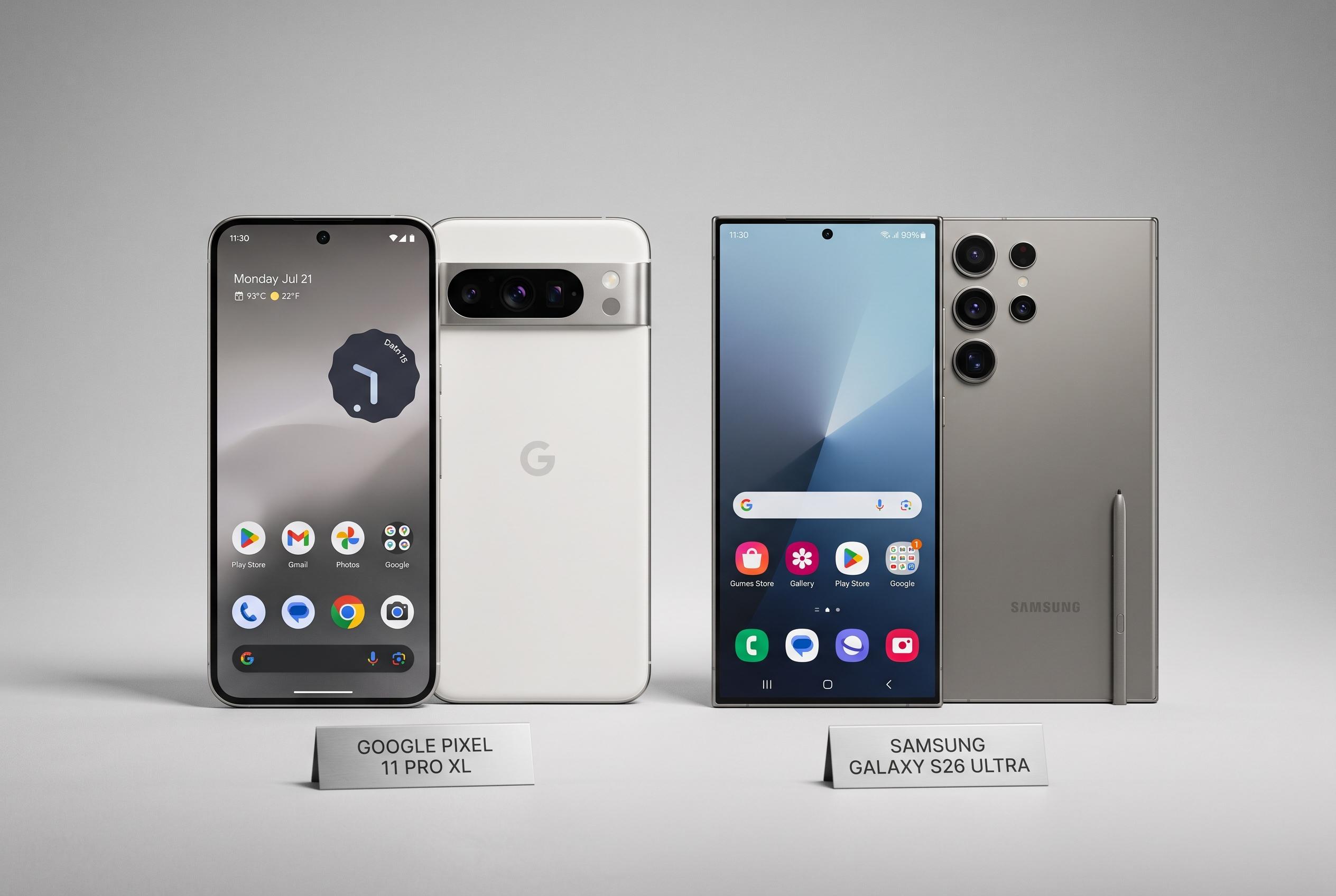

The Google Pixel 11 Pro XL and Samsung Galaxy S26 Ultra, launched at €1,300 each, embody divergent approaches to high-end Android smartphones in 2026, with performance, camera, and software priorities shaping consumer choices.
The Google Pixel 11 Pro XL and Samsung Galaxy S26 Ultra are positioned as two of the most capable Android flagships of 2026, and the appeal of each depends less on price than on priorities. Geeky Gadgets says both phones sit at the same $1,300 level, which removes the usual cost advantage and turns the comparison into a question of software style, camera ambition, battery behaviour and overall performance. The Pixel leans towards AI-led features and ease of use, while the Galaxy is pitched as the faster, more flexible handset for demanding users.
That split begins with design and display. According to the hands-on coverage from TechRadar, Google has refined the Pixel 11 series rather than overhauling it, keeping the familiar camera bar while making the hardware feel more polished. The Pro XL also carries a larger 6.8-inch panel and brighter screen tuning. Samsung’s Ultra takes a different route, with a slimmer, lighter body and a more understated camera layout. Geeky Gadgets adds that the Galaxy’s anti-reflective finish and privacy display are intended to help in public settings, while the Pixel’s headline display strength is its 3,600-nit peak brightness and class 3 facial authentication.
Performance is where the wider gap appears. Tom’s Guide reported a leaked Geekbench result for the Pixel 11 Pro XL that put the Tensor G6 well behind Samsung’s Snapdragon 8 Elite Gen 5 in the Galaxy S26 Ultra, despite Google’s move to a 2nm process. The same report said the Pixel 11 Pro XL ran Android 17 and had 16GB of RAM in the test unit, although benchmark leaks are not always a reliable guide to everyday use. TechRadar said Google’s new Tensor G6 is designed to improve efficiency and AI processing rather than chase raw speed, which fits the Pixel’s broader identity. Samsung, by contrast, is clearly targeting gamers and power users who want the strongest sustained performance.
Camera hardware shows the same contrast. Digital Camera World said the Pixel 11 Pro and Pro XL have a new 50MP main sensor and a 48MP telephoto sensor, with up to 120x Pro Zoom and a new Magic Capture mode for stills and video at once. TechRadar also highlighted Google’s new HiLight notification ring and Camera Looks feature, which is meant to create consistent photographic styles without losing skin-tone accuracy. Samsung’s Ultra counters with a more traditional pro-grade camera array, including additional telephoto hardware and video tools such as APV lossless recording and LUT support, making it the more obvious choice for users who shoot and edit moving images.
Battery and charging keep the trade-off intact. Geeky Gadgets says the Pixel 11 Pro XL uses a 5,115mAh battery with 45W charging and magnetic wireless support, while the Galaxy S26 Ultra offers a slightly smaller 5,000mAh cell but faster 60W wired charging. On software, the Pixel runs Android 17 in a clean, minimal form, while Samsung’s One UI remains the more customisable option with more built-in tools. In practical terms, the Pixel suits buyers who want AI features, bright-screen usability and simple operation. The Galaxy is better for those who value speed, privacy controls, gaming performance and a wider set of camera and software options.
Disclaimer: This content is intended for informational purposes only. Readers are advised to exercise their own judgement, conduct due diligence, or consult a qualified expert before acting on any information provided.