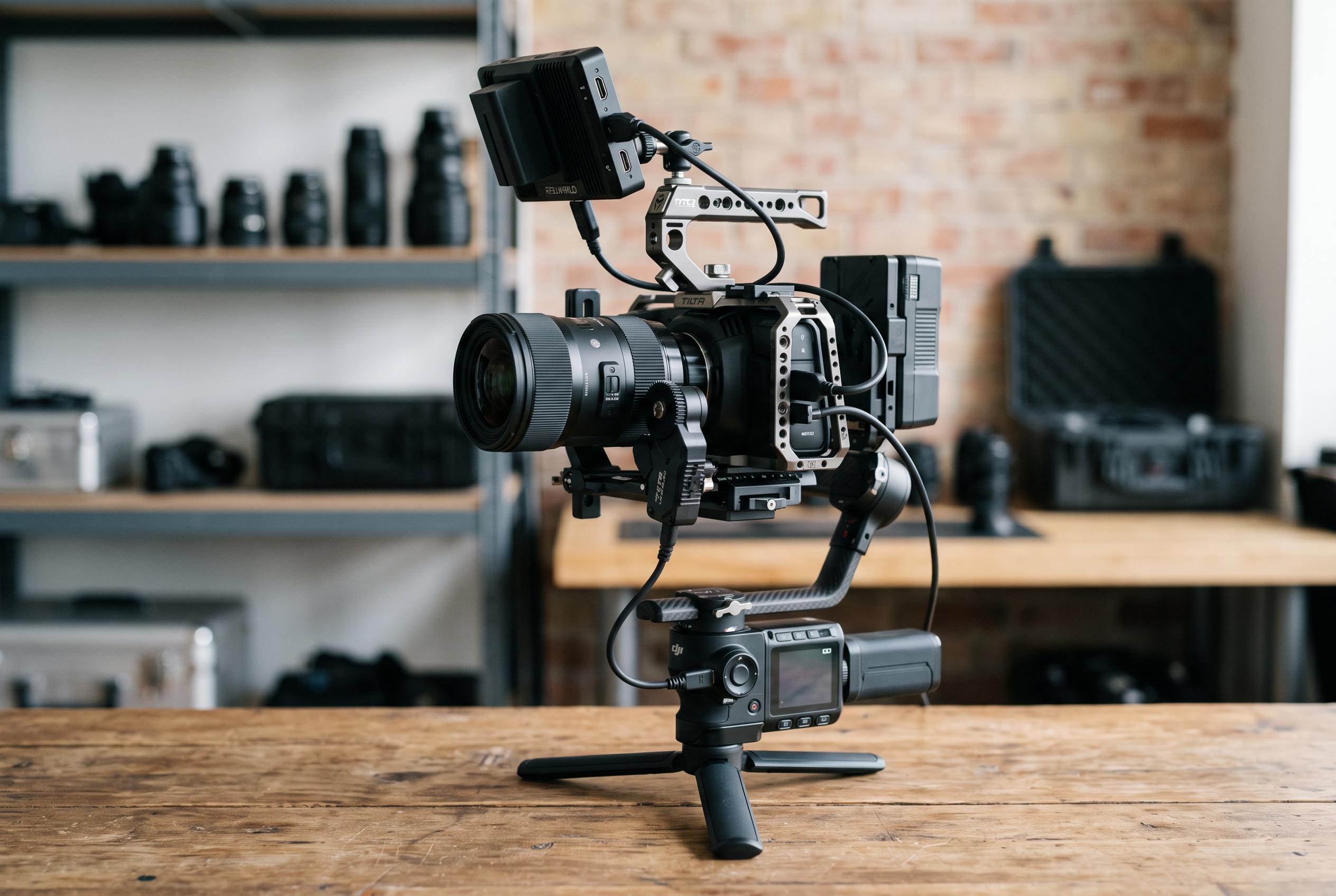

The DJI RS 4 emerges as the top choice for filmmakers combining manual lenses with stabilised rigs, thanks to its improved focus motor, native vertical shooting, and expanded accessory support, offering a practical upgrade for solo operators and mirrorless setups.
For filmmakers using manual lenses on a stabilised rig, the DJI RS 4 remains the most practical all-round choice because it combines a compact body with a 6.6 lb payload rating, second-generation native vertical shooting and an RSA communication port that opens the door to DJI’s Focus Pro Motor system. DJI says the combo package can include the motor, a briefcase handle and a carrying case, while third-party reviews note that the platform is aimed squarely at mirrorless setups rather than heavier cinema rigs.
The main appeal for manual-lens users is how cleanly the RS 4 fits into the DJI ecosystem. According to DJI’s product information, the RSA port allows the gimbal to work with expanded accessories, including the Focus Pro Motor, while the gimbal’s dial or joystick can be used for lens control. TechRadar reports that the motor can drive both focus and zoom rings, and says it is 30% faster than its predecessor, which is useful when rack focusing on moving subjects.
That integration matters in real use. Digital Camera World says the RS 4 can comfortably stabilise camera-and-lens combinations up to 3 kg, and praises its battery life, auto-locking axes and easier balancing process. DJI and B&H both list up to 12 hours of battery life with fast charging support, which makes the system more suitable for long shooting days than many entry-level alternatives.
For solo operators, the RS 4 also solves a workflow problem rather than just a hardware one. Native vertical shooting reduces the need to rebalance for social-first deliverables, and the Teflon-coated axes are designed to make setup smoother. In practice, that means a manual lens can be mounted, powered and controlled with less rigging friction than on a more piecemeal setup.
The trade-off is cost. Reviews from Digital Camera World and the broader roundup both place the RS 4 at the premium end of the category, but also frame it as the safest bet for shooters who want dependable stabilisation and native accessory support rather than a budget workaround. For manual-lens work on a gimbal, that balance of compatibility, battery life and control is why the RS 4 stands out.
Disclaimer: This content is intended for informational purposes only. Readers are advised to exercise their own judgement, conduct due diligence, or consult a qualified expert before acting on any information provided.