
DJI unveils the Osmo Pocket 4P, a compact action camera with a second lens for optical zoom, aiming to rival top-tier vlogging devices with a more affordable and versatile option.
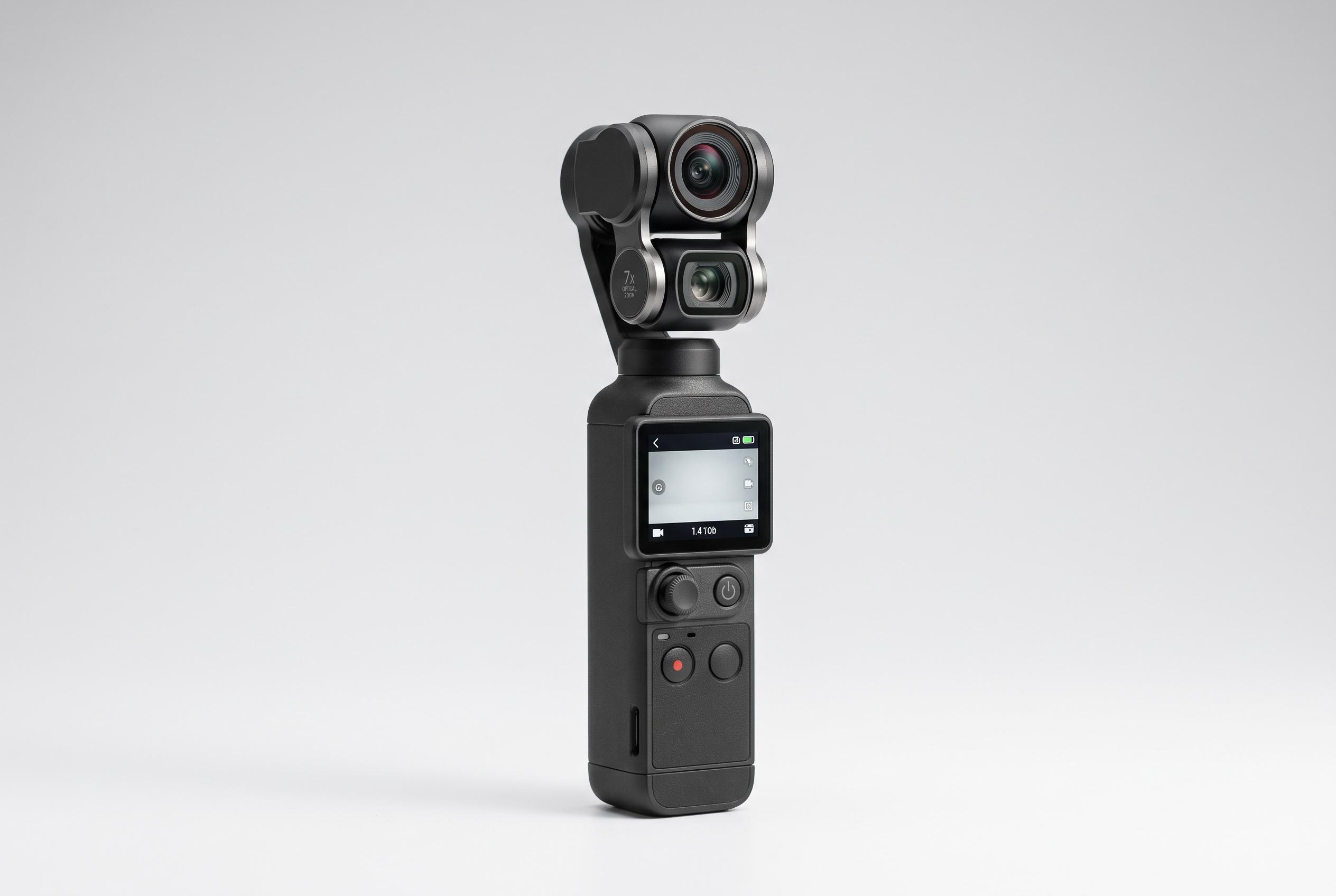
DJI’s latest pocket camera arrives with a clear message: the company is no longer content to refine the formula, it wants to challenge the best compact vlogging cameras outright. The Osmo Pocket 4P builds on the standard Pocket 4 with a second lens for optical zoom, putting it into direct competition with Insta360’s Luna Ultra and giving creators a more flexible tool for run-and-gun shooting.
The change is not subtle. DJI has enlarged the body to make room for a vertically stacked dual-camera system, combining a 20mm wide-angle sensor with a 60mm telephoto lens. That extra hardware adds weight and makes the camera less discreet in a pocket, but it also brings a useful optical reach that the standard model lacks. DJI has kept the familiar rotating two-inch screen, joystick controls and fast boot-up, while retaining internal storage of just over 100GB alongside microSD support.
Image quality is where the Pocket 4P makes its case. DJI says the main 1-inch sensor offers a 17-stop dynamic range and 10-bit D-Log 2 recording, giving experienced users more room for grading in post-production. The camera also records 4K at up to 240fps and captures 37-megapixel stills, while the telephoto module adds a 3x optical zoom that is easier to activate than on some rivals. Reviewers have noted that the two lenses deliver broadly similar image quality, although Insta360’s camera can look a little more contrasty and saturated.
The trade-offs are equally clear. The Pro model is less protected in transit, since its twin-lens block does not tuck away like some rivals’ systems, and it remains vulnerable to movement when placed on a flat surface without a tripod. Tracking also appears slightly less assured than on the standard Pocket 4 and the Luna Ultra, especially during sudden motion. DJI’s ActiveTrack system still offers several modes, including basic subject tracking, dynamic framing and multi-person follow, but the heavier optical assembly seems to reduce responsiveness in more abrupt scenes.
Battery life is respectable rather than class-leading. DJI rates the Pocket 4P at 210 minutes in 1080p at 24fps, down from 240 minutes for the standard Pocket 4 and roughly in line with the Luna Ultra. In testing, the camera held up well over long days, and charging is quick enough to make external power a practical solution for extended shoots. DJI has also added wireless auto-transfer in the Mimo app, which can move photos and video to a phone when the camera is switched off.
Pricing is perhaps the most aggressive part of the package. At €599, the Pocket 4P undercuts Insta360’s Luna Ultra by a wide margin while offering a similar dual-lens concept. That leaves DJI with a camera that feels more restrained and less modular than its rival, but also more affordable and, in some respects, more straightforward for serious video work. For creators who want optical zoom, strong low-light performance and a compact body, the Pocket 4P looks like one of the most convincing options in the class.
Disclaimer: This content is intended for informational purposes only. Readers are advised to exercise their own judgement, conduct due diligence, or consult a qualified expert before acting on any information provided.