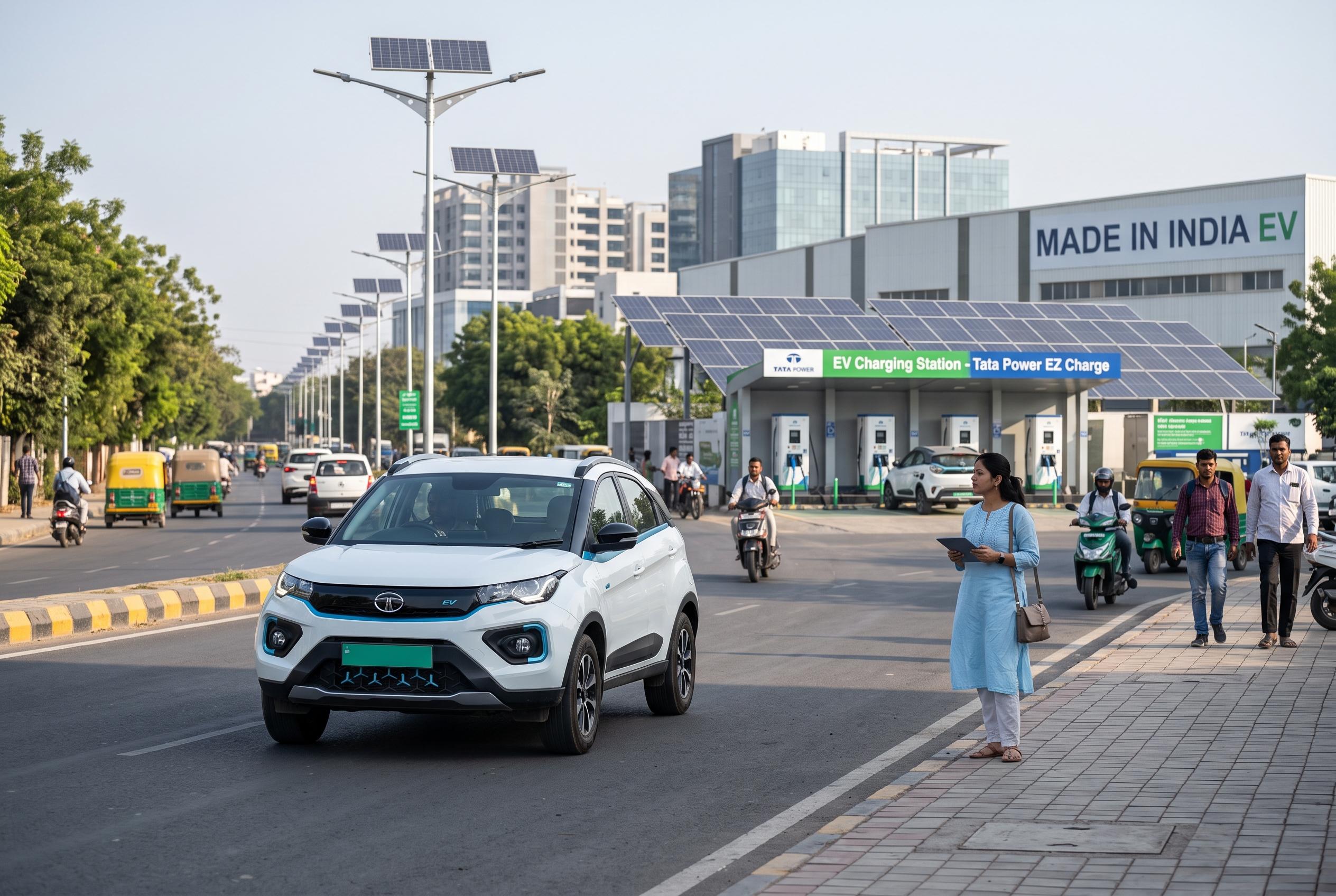

India’s EV sector witnesses rapid growth, with sales soaring and the bioeconomy expanding, as Prime Minister Narendra Modi highlights the country’s shift towards manufacturing, technology, and green mobility during his Independence Day address.
India’s electric vehicle market has become one of the clearest examples of the country’s industrial shift, with Prime Minister Narendra Modi using his Independence Day address to point to a steep rise in sales and a wider build-out in clean mobility. He said electric vehicle sales had climbed from 1.5 lakh in 2009-10 to 25 lakh in 2025-26, a claim that broadly aligns with market data showing a sharp expansion in the sector.
Industry figures released by the Federation of Automobile Dealers Associations show EV retail sales in fiscal 2025-26 rose 24.6% to 2.45 million units, driven by gains across two-wheelers, three-wheelers, passenger vehicles and commercial vehicles. Separate registration data from the Vahan portal, reported by Business Standard, showed electric two-wheeler registrations at about 1.4 million units and electric four-wheeler registrations up 91.3% to 193,633 units, underscoring the breadth of the growth.
The Prime Minister also cast the bioeconomy as a major source of future jobs and industrial opportunity. In his speech, he said the sector had grown from about Rs 60,000 crore before 2014 to Rs 20 lakh crore at present. That figure is higher than estimates published by IBEF, which said India’s bioeconomy expanded from about Rs 6.10 lakh crore in 2014 to Rs 13.87 lakh crore in 2024 and is now being positioned as a long-term strategic sector.
Alongside EVs and biotechnology, Modi highlighted aviation and drone technology as areas creating employment and strengthening domestic capability. He said new airports, flight routes and maintenance work were opening more skilled jobs, while domestic aircraft manufacturing was advancing. The broader message was that India’s next phase of growth is increasingly tied to manufacturing, technology and sectors that can absorb a large young workforce.
Disclaimer: This content is intended for informational purposes only. Readers are advised to exercise their own judgement, conduct due diligence, or consult a qualified expert before acting on any information provided.