
LG’s revised user terms and a settlement with Texas authorities have intensified concerns over how its smart TVs collect and manage viewing data, prompting calls for greater transparency and user control.
LG has found itself under renewed scrutiny after revising its user terms in a way that appeared to place the burden on owners to warn guests that voice data may be processed by smart TV features. The controversy has widened beyond television viewing habits to broader concerns about how much information the company’s devices collect, and how clearly that activity is explained to consumers. According to the Texas attorney general’s office, the issue is part of a wider dispute over automated content recognition, or ACR, a technology used by smart TVs to identify what is on screen.
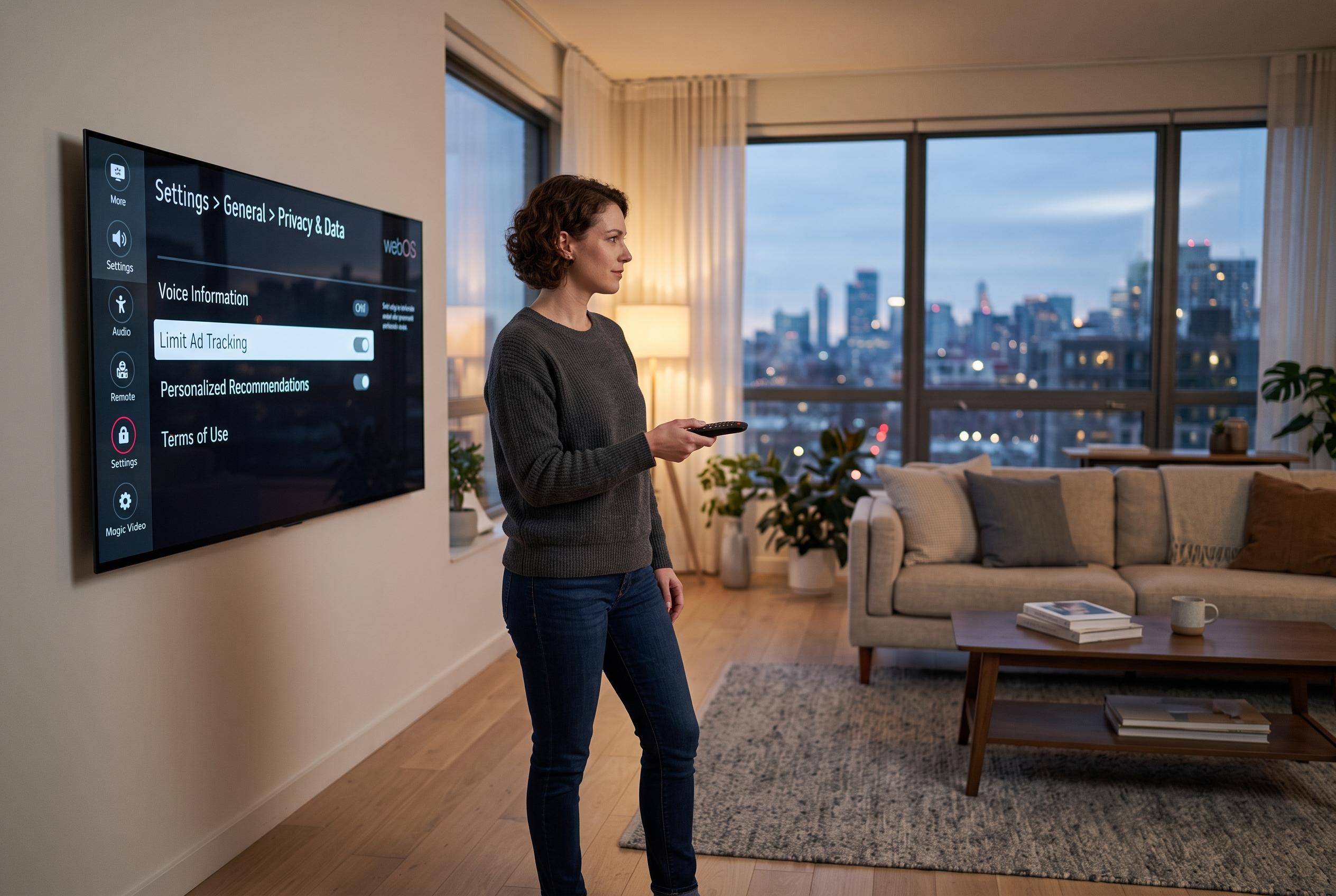
In May 2026, Texas attorney general Ken Paxton said LG had reached a settlement that would stop it using ACR to collect viewing data without informed consent. The agreement, published by the Texas attorney general’s office, also requires LG to add a clear pop-up disclosure on its smart TVs and to provide an obvious opt-out route for any viewing-data collection. The same announcement said LG must not transfer viewing data to the Chinese Communist Party.
The dispute follows a consumer alert issued by Mr Paxton in December 2025, when he warned Texans about smart TVs that he said were spying on users. He later filed suit against LG, Samsung, Sony, Hisense and TCL, alleging that the companies secretly captured viewing habits through ACR and sent the information without proper permission. The attorney general’s filing claimed the systems could take frequent screen snapshots, creating a detailed record of what people watched in their homes.
LG has since said its televisions do not collect, record or store conversations in the room, and that any voice functions are optional. But that reassurance has not ended the criticism, partly because of earlier LG material that appeared to describe the opposite. The company has faced privacy complaints before: in 2013, it was accused of gathering data on channels and programmes watched by users of its smart TVs, prompting a firmware update after public pressure.
The backlash has also spread to LG monitors, with some users alleging that the company’s software pushes McAfee advertising after startup and requests broad system access. LG has denied that its installer behaves in that way, but the episode has added to a broader trust problem around bundled software and device permissions. For users who want to minimise risk, the practical step on LG televisions is to disable microphone and voice-control features in settings, though dealing with the monitor software may require changes in Windows policy settings.
Disclaimer: This content is intended for informational purposes only. Readers are advised to exercise their own judgement, conduct due diligence, or consult a qualified expert before acting on any information provided.