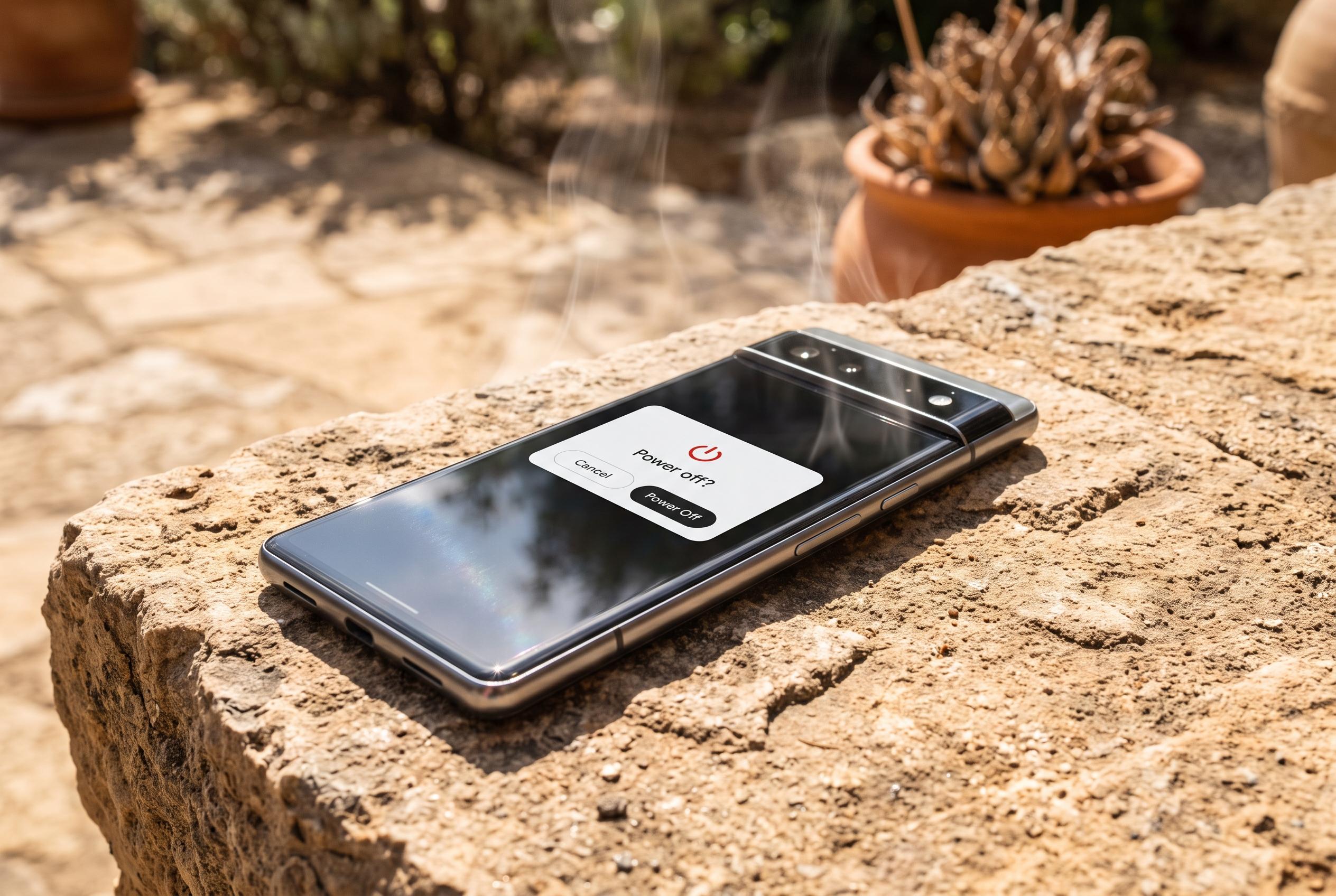

As temperatures rise, smartphones that switch off unexpectedly may be signalling underlying issues. Repair specialists recommend observing shutdown patterns, checking battery health, and considering hardware damage from heat or impact before seeking repair solutions.
Smartphones that switch off unexpectedly in hot weather are often signalling a fault rather than a mystery. Mobile repair technicians say the first clue is usually on screen: the battery percentage shown moments before the display goes black. If the shutdown repeats at roughly the same charge level, the battery is the most likely culprit. If it happens at irregular points, the cause is more often software, a recent app, or a failed update.
The pattern matters. A handset that cuts out repeatedly at around 20%, 30% or 40% may still appear to have charge, but its cell may no longer be able to deliver stable voltage under load. That is why a simple note of the time and battery level can speed up diagnosis. By contrast, if the phone turns off at 70% one day and 45% the next, repair guides point away from the battery alone and towards operating-system faults, corrupt files or unstable applications.
Battery wear also shows up when the device is under pressure. Opening the camera, recording video, playing demanding games or using navigation can trigger a sudden shutdown even when the charge indicator looks healthy. Some iPhone users can check battery health through the settings menu, while Android owners may need a manufacturer-specific menu, an app from a trusted developer or an in-person check. If capacity has dropped sharply, replacement is usually the most practical fix.
Software problems should still be ruled out before booking an expensive repair. Guidance from repair specialists and network providers points to a forced restart, removal of recently installed apps, checking for system updates and, on some Android phones, starting in safe mode. Battery recalibration can also help when the percentage reading is wrong, although it does not restore a worn-out cell. It only improves how the device estimates remaining power.
Heat, shock and liquid damage deserve particular attention in summer. Phones can shut themselves down to protect the processor, battery and main board if they overheat while charging, sitting in direct sun or being used heavily. A device that is warm to the touch should be left to cool, with the case removed and charging paused. If the problem began after a drop or exposure to water, the issue may be hardware-related. In that case, a technical diagnosis is the safest next step.
Disclaimer: This content is intended for informational purposes only. Readers are advised to exercise their own judgement, conduct due diligence, or consult a qualified expert before acting on any information provided.