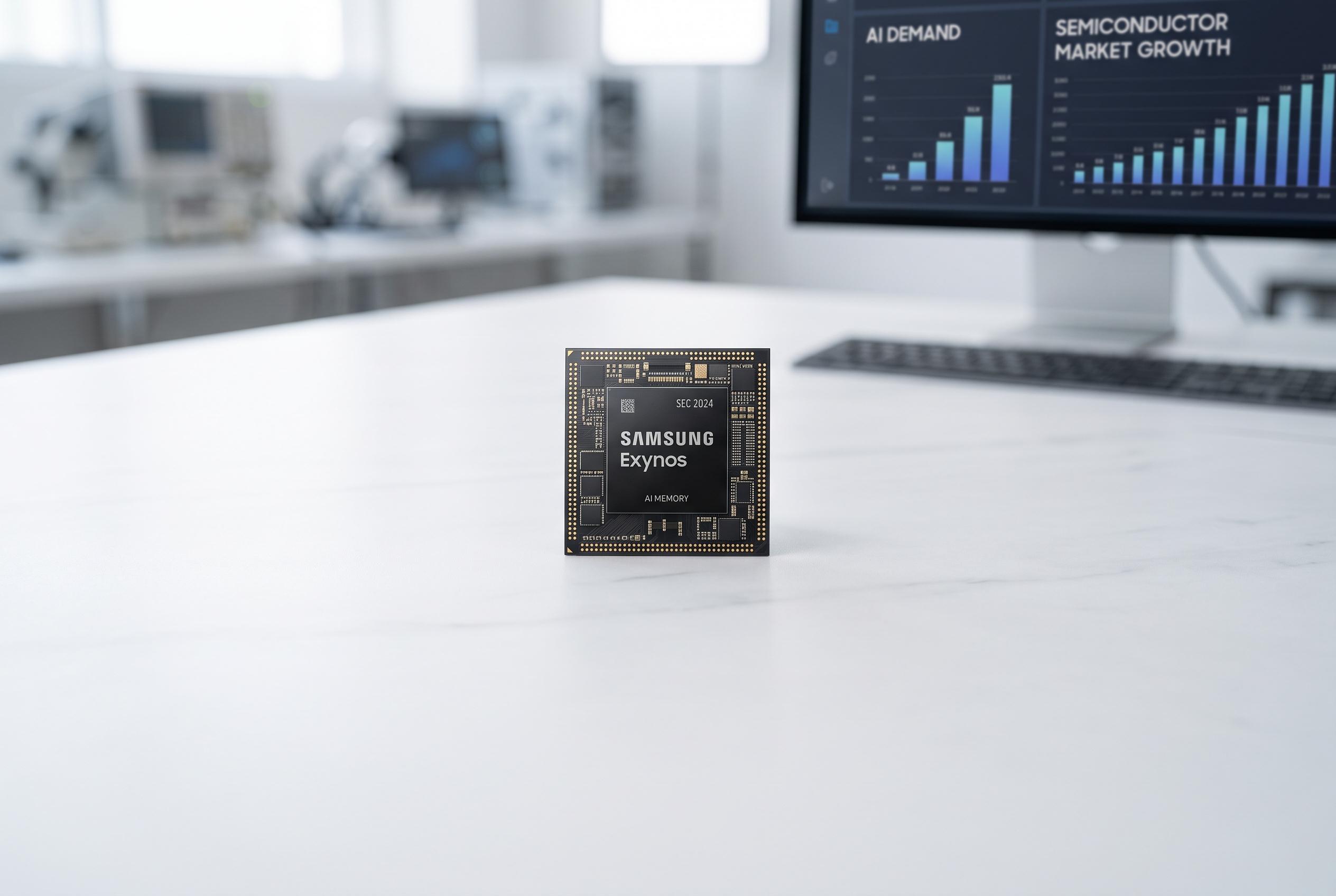

Samsung’s semiconductor division has experienced a dramatic surge in profits driven by AI memory demand, highlighting a growing divide in the semiconductor industry between AI-led growth and smartphone weakness.
Samsung’s chip arm has become one of the clearest beneficiaries of the AI infrastructure build-out, while much of the rest of the semiconductor sector is still tied to a weaker consumer cycle. MarketScale’s report points to a sharp split between enterprise-led demand and the slower recovery in smartphones, a divide that is now visible in both earnings and guidance across the industry. According to Bloomberg coverage cited in the related material, Samsung’s semiconductor profit has surged as supply remains tight for AI memory products, while Qualcomm and Arm have been pressured by softer handset demand.
The scale of Samsung’s improvement is striking. Reuters-style reporting in the supplied summaries says the company’s semiconductor operating profit rose by more than 250-fold in its latest quarter, helped by strong demand for high-bandwidth memory and other components used in AI systems. Tom’s Hardware also reported that Samsung’s Device Solutions division is on track to post profits in 2026 that could exceed the cumulative earnings of its semiconductor business over four decades, underlining how abruptly the market has shifted towards AI-related memory. The same reports say tight supply and rising contract prices have been central to the surge.
That momentum is not isolated to Samsung. Bloomberg reported that Hon Hai Precision, which assembles Nvidia’s AI servers, posted a 54% increase in sales, a sign that the demand pull is running through the supply chain rather than stopping at chipmakers. Cloudflare also lifted its full-year profit outlook, according to Bloomberg, suggesting that businesses are spending more on the networking and security layers needed to support heavier AI workloads. In memory, however, the gains are uneven: Kioxia’s outlook fell short of estimates even as Samsung and SK Hynix outperformed, indicating that premium AI components are capturing the best pricing while commodity flash remains more mixed.
The weakness in legacy categories is just as important. Bloomberg reported that Qualcomm issued a cautious profit forecast tied to smartphone softness, while Arm’s shares fell as investors judged that data centre exposure was not enough to offset mobile weakness. IBM also cut its full-year revenue guidance after lower mainframe demand, whereas ServiceNow reported stronger sales and bookings and pointed to AI-led momentum. The message from those results is that enterprise budgets are increasingly being redirected towards software and infrastructure that can show direct AI use cases, rather than older systems without that story.
For procurement and technology teams, the practical implication is that supply is likely to stay tight well beyond this year. Tom’s Hardware reported that Samsung and SK Hynix have warned AI-driven memory shortages could last into 2027, with customers reserving capacity years ahead. Another report in the supplied material said Samsung expects shortages to continue into 2028 in some consumer memory categories, as production is steered towards higher-margin HBM and server DRAM. That helps explain why the semiconductor market now behaves less like a single industry and more like two separate businesses: one powered by AI capital spending, the other still waiting for demand to normalise.
Disclaimer: This content is intended for informational purposes only. Readers are advised to exercise their own judgement, conduct due diligence, or consult a qualified expert before acting on any information provided.