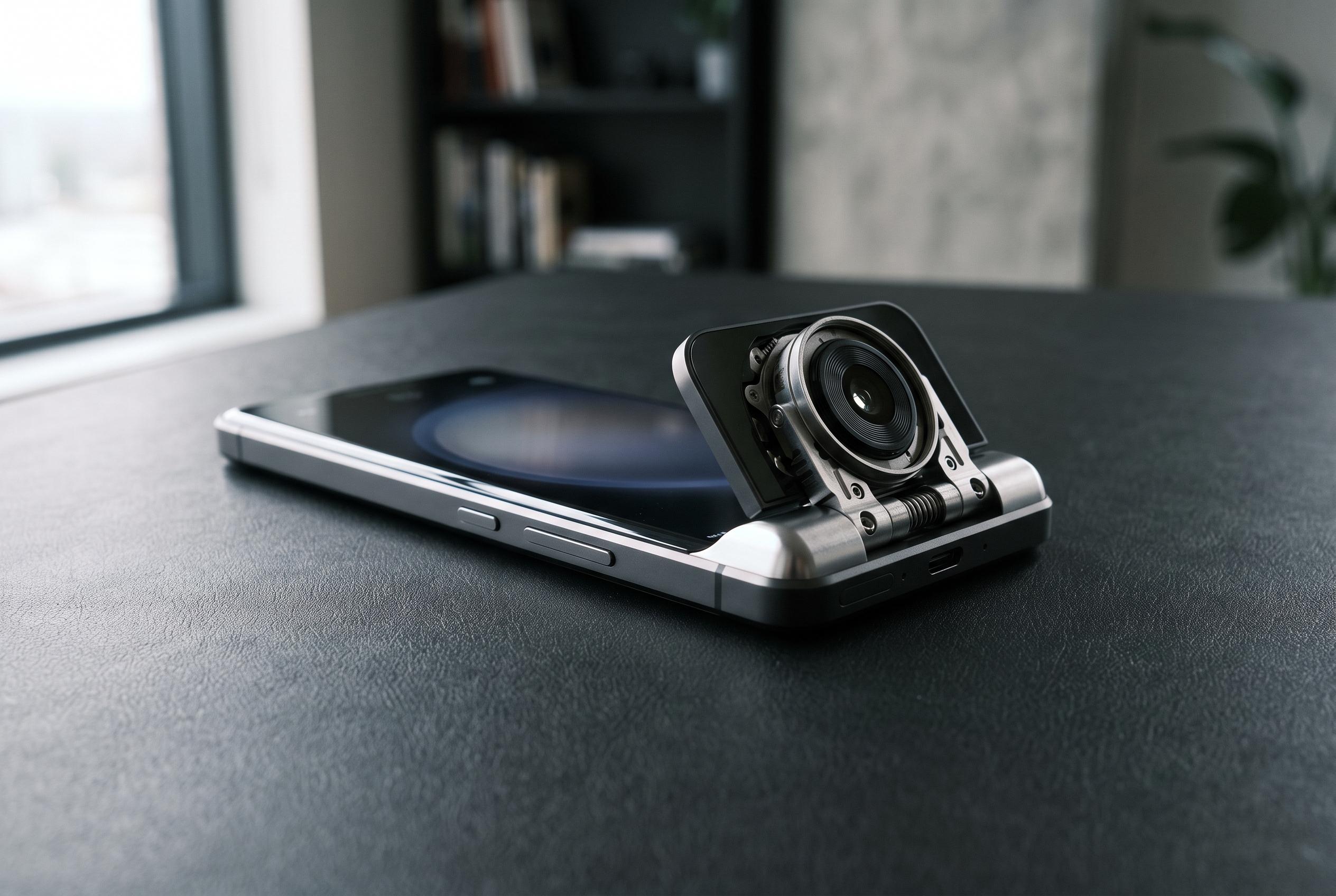

Testing reveals iKKO’s innovative sapphire front glass and unique swivelling 50MP camera, but a vulnerable pivot mechanism and inconsistent software review highlight design and performance challenges for the niche device.
A durability test by JerryRigEverything has confirmed that iKKO’s card-sized MindOne Pro really does use sapphire over its 4in display, but it has also exposed the phone’s signature feature – a 180-degree swivelling 50MP camera – as the most vulnerable part of the design. Reports published on 6 September 2026 said Zack Nelson was able to snap the camera assembly away from the body because the module relies on narrow pivot pins rather than a more substantial hinge, even though the rest of the chassis resisted bending. The timing is awkward for iKKO: the company opened its IFA 2026 stand in Berlin on 4 September and is still presenting MindOne as a compact AI handset built around that rotating camera. (giznewsdaily.com)
MindOne began as a crowdfunding curiosity and has remained a niche product rather than a conventional flagship. TechRadar reported in August 2025 that the campaign had already raised more than $1.2m; iKKO said on 27 August 2026 that the project ultimately reached 3,411 backers and about $1.5m. The company’s current product page lists the Pro model at $429, describes it as an 86 x 72 x 8.9mm phone with a 4.02in AMOLED panel, and says new deliveries started in August 2026. Forbes, reviewing retail hardware in May, put the earlier crowdfunding price at $330 and the keyboard case at another $80. (techradar.com)
On materials, Nelson’s test was unusually favourable. Gadgety and GizNewsDaily said scratches on the sapphire cover only appeared at Mohs level 8, and the display also survived direct flame. The square body stayed rigid under a bend test. Once opened, however, the phone looked more conventional: a 2,200mAh battery, a graphite thermal pad instead of a more elaborate cooling system, and only IP54 protection. GizNewsDaily added that there was no full waterproofing around components such as the speaker and vibration motor. (gadzhety.online)
The more awkward issue may be iKKO’s long-running marketing around “free global internet”. TechRadar corrected its own early coverage last year to say the offer applied only to AI tools in 60 regions, not unrestricted mobile data. Current iKKO sales pages make a similar distinction: free “AI internet” in more than 60 regions, a rechargeable vSIM for paid full-data use in more than 140 countries, and a nano-SIM slot for ordinary service. Gadgety’s summary of the teardown said ordinary data still depended on eSIM or a physical SIM, underlining how muddled the product’s messaging has been, while teardown round-ups said the bundled chatbot was slow and could not analyse images. (techradar.com)
That uncertainty extends beyond the connectivity pitch. Ben Sin wrote in Forbes that the handset worked best as a secondary phone and said the swivelling camera in his review unit “did not wobble at all”, staying in place at any angle. He also described the screen as a 90Hz LCD and the processor as a MediaTek Helio G99. That differs from the current iKKO specification sheet and from the teardown reports, which identify an AMOLED panel and a MediaTek MT8781. Sin nonetheless said the accessory keyboard case made the device feel more complete, adding a BlackBerry-style typing experience; iKKO’s own sales material says the case also adds a Cirrus Logic DAC, a 3.5mm jack and a 500mAh battery. (forbes.com)
Regional reviews suggest buyers may also be getting materially different software builds. The Czech site iSpace.cz, which said SETOS would distribute the phone locally from 26 June 2026, tested a pre-production unit with Google services, Android 15, NFC, a fingerprint reader and a listed price of 12,999 Kč. Its reviewer treated the AI mode as a simple extra layer activated by a dedicated top-edge button. SSPAI’s review of a China-market handset in August was far less positive: it found no Google services, Tencent MyApp as the preloaded store, and a build carrying a December 2025 security update even though the Android 15 software dated from September 2024. (ispace.cz)
SSPAI argued that iKKO AI OS was not really a second operating system at all but a launcher-style mode inside Android. The publication said the AI chat tools would not search the web and could answer only from information available before June 2024, despite menu labels referring to more recent models. It also reported that the panel ran at 96Hz and 48Hz rather than the advertised 90Hz, that battery life could collapse within a day with a SIM installed, and that the camera produced washed-out images with a green cast indoors. iKKO posted an AI OS 2.0 update on 27 August 2026 promising custom AI models, a redesigned interface and wider language support, signalling that the software stack is still evolving. (sspai.net)
Taken together, the outside reporting leaves the MindOne Pro looking less like a miniature flagship than a well-finished experiment: striking industrial design, unusually tough front glass and a genuinely different shape, offset by a fragile camera pivot, limited water resistance and software that appears highly dependent on market version and continuing updates. Even supportive reviewers have framed it as a specialist device for work, travel or occasional use, not a primary handset. That may still be enough for a product whose biggest commercial success so far has been persuading several thousand backers to fund a phone that looks unlike almost anything else on sale. (giznewsdaily.com)
Disclaimer: This content is intended for informational purposes only. Readers are advised to exercise their own judgement, conduct due diligence, or consult a qualified expert before acting on any information provided.