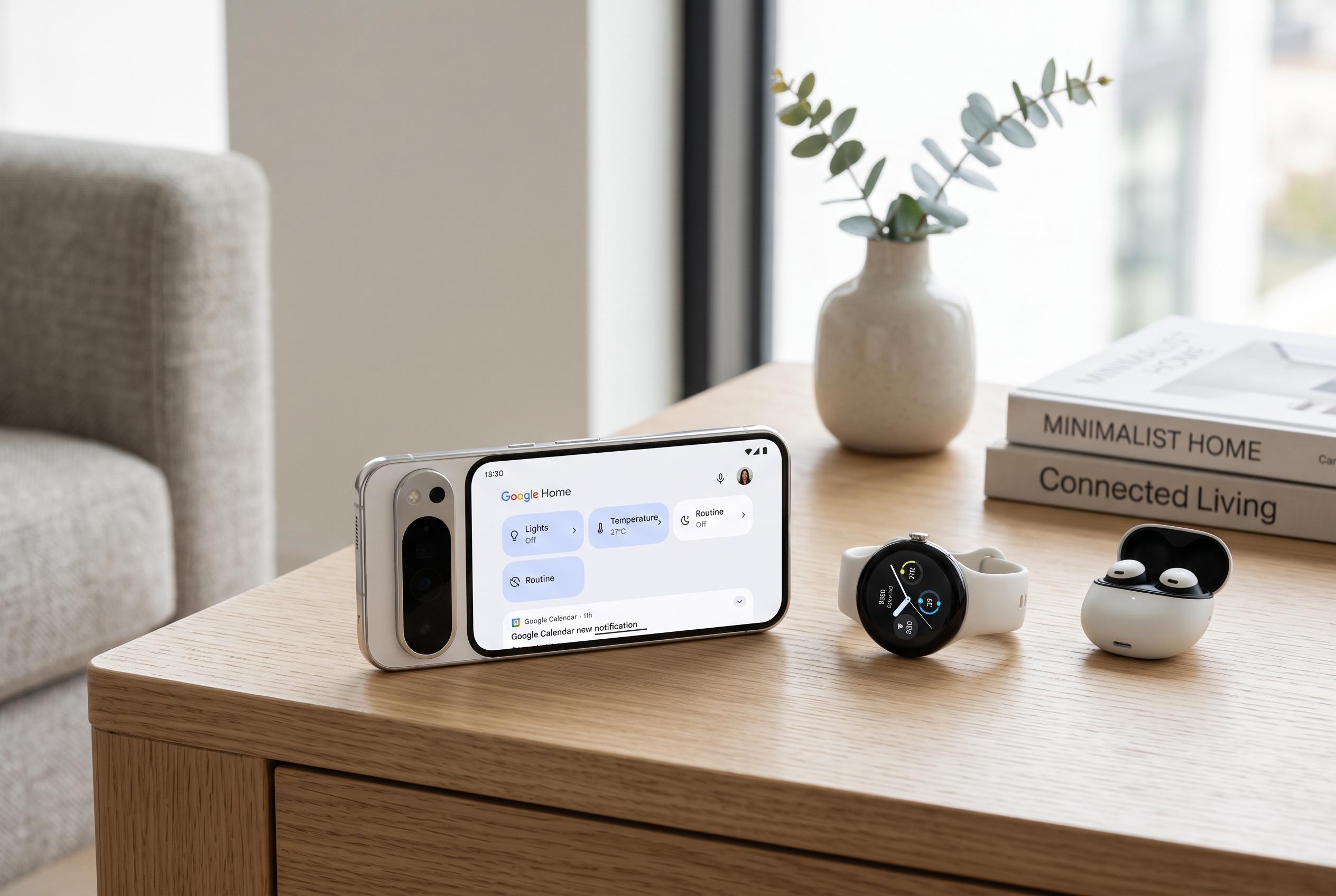

Google’s latest device unveiling marks a strategic move towards marketing its hardware as an integrated experience, aligning more with Apple’s message-focused approach and highlighting AI-driven features across its ecosystem.
Google’s latest device launch underlined a shift that has been building for years: the company now sells its hardware less as a set of specifications and more as an integrated experience. At this week’s Made by Google event, the focus was not on clock speeds or component counts, but on what the phones, watch and accessories were meant to do for users. That is a presentation style long associated with Apple at its most effective, when the message centred on outcomes rather than internal engineering.
According to Android Central’s report on the August 12 event, Google unveiled the Pixel 11 family, including the Pixel 11, Pixel 11 Pro, Pixel 11 Pro XL and Pixel 11 Pro Fold, alongside the Pixel Watch 5 and a new tracker called Pixel Tag. The company placed Gemini at the centre of the product story, tying together camera tools, translation functions, fitness features and search. The emphasis was on AI-led convenience, with features such as Magic Capture, Live Video Translate and Gemini-powered workout tools presented as the main reasons to care about the hardware.
That approach reflects the broader purpose of Pixel, which Tom’s Guide described as larger than raw market share. Ten years after the first Pixel phone, Google still holds only a modest global position, but analysts see the line as a showcase for Android’s best ideas and for Google’s own software ambitions. The Pixel range has gained traction in the US, the UK and Japan, but its real value to Google appears strategic: it lets the company demonstrate how its software, AI and camera processing can work when tightly coupled with its own devices.
The hardware message is now extending beyond phones. T3 reported that Pixel Tag is Google’s first tracking accessory, and that it works through the renamed Android Find Hub, signalling a more direct challenge to Apple’s AirTag ecosystem. The same event also highlighted the Pixel Watch 5’s health features, including sleep tracking, GPS improvements and trend analysis, while TechRadar said Google is even pushing more AI functions into the Pixel Buds Pro 2 through a free software update rather than a new model. That suggests a product strategy built around recurring service layers and incremental feature drops, not just annual device refreshes.
In that sense, Google is not simply copying Apple’s industrial design language; it is adopting Apple’s old discipline of selling a promise. Apple’s most memorable launches were built around simple consumer benefits, from the iPod’s “a thousand songs” pitch to the idea of technology disappearing into everyday use. Google’s challenge is whether it can make the same style of messaging feel coherent across phones, watches, earbuds and tracking devices, while still convincing buyers that Pixel is more than an Android reference platform. For now, the company appears increasingly comfortable framing its products as deliverables first and hardware second.
Disclaimer: This content is intended for informational purposes only. Readers are advised to exercise their own judgement, conduct due diligence, or consult a qualified expert before acting on any information provided.