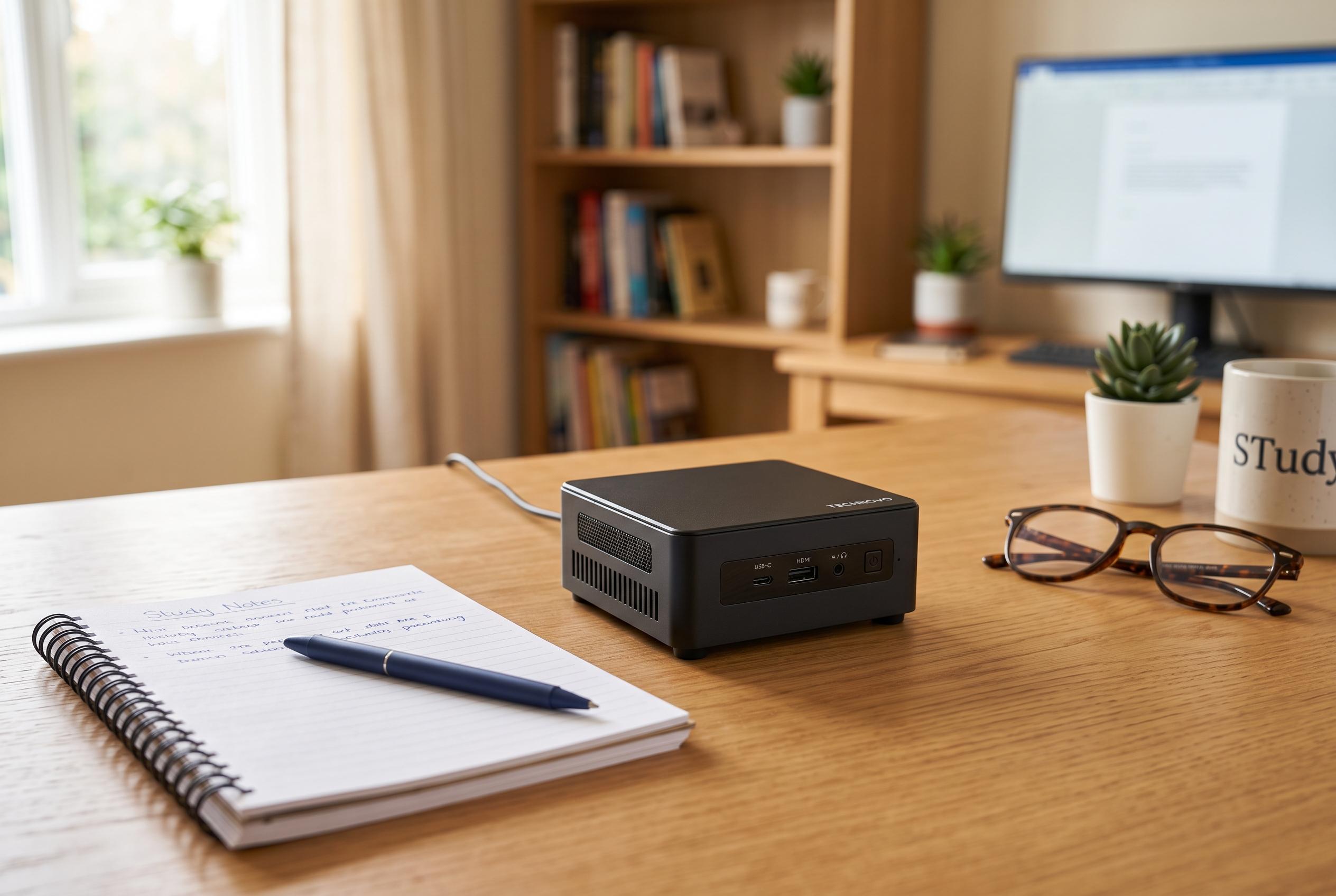

As students seek practical and affordable computing options, mini PCs offer a performance and upgradeability advantage over laptops, making them an increasingly popular choice for desk-bound study and light gaming.
For students who need one machine for essays, research and the occasional game, a mini PC can be a more practical buy than a laptop. The core argument is simple: if most of the work happens at a desk, it makes little sense to pay for portability you rarely use. XDA Developers argued that a compact desktop can deliver stronger sustained performance, while also leaving a backpack free of a heavy chassis and oversized power brick.
The main advantage is that a mini PC is not trying to be everything at once. Windows Central notes that these systems are well suited to office work, browsing and media tasks, but depend on external peripherals, so they are less convenient for moving between classes. That trade-off matters. A laptop is self-contained, but a mini PC paired with a monitor, keyboard and mouse gives a student a more comfortable study setup and avoids the cramped, single-screen workflow that can slow reading, writing and note-taking.
That desk-bound flexibility can also improve productivity. PC World says mini PCs are often compact, energy efficient and quieter than larger desktops, while still being capable enough for everyday work and light gaming. In practice, the extra screen space matters as much as raw speed. A student can keep a document, source material and notes open side by side, which reduces tab switching and makes long sessions less tiring.
Upgradeability is another reason mini PCs age well. PC Build Advisor points out that many of these machines still allow RAM and storage upgrades, unlike laptops that increasingly rely on soldered components. That gives buyers a longer useful life and a better chance of keeping up with software demands over time. For students, that can be more valuable than a thin-and-light design that becomes difficult to service or expand after a couple of years.
The timing may also favour mini PCs. XDA Developers said current memory pricing has made DIY builds less attractive, while some mini PCs are still arriving with generous configurations such as 32GB of DDR5 memory and fast NVMe storage. That combination can make them unusually strong value buys, particularly for students who want desktop-class performance without the bulk of a full tower or the compromises of a gaming laptop. For anyone whose computer spends most of its life on a desk, the mini PC is no longer a niche option. It is often the more balanced one.
Disclaimer: This content is intended for informational purposes only. Readers are advised to exercise their own judgement, conduct due diligence, or consult a qualified expert before acting on any information provided.