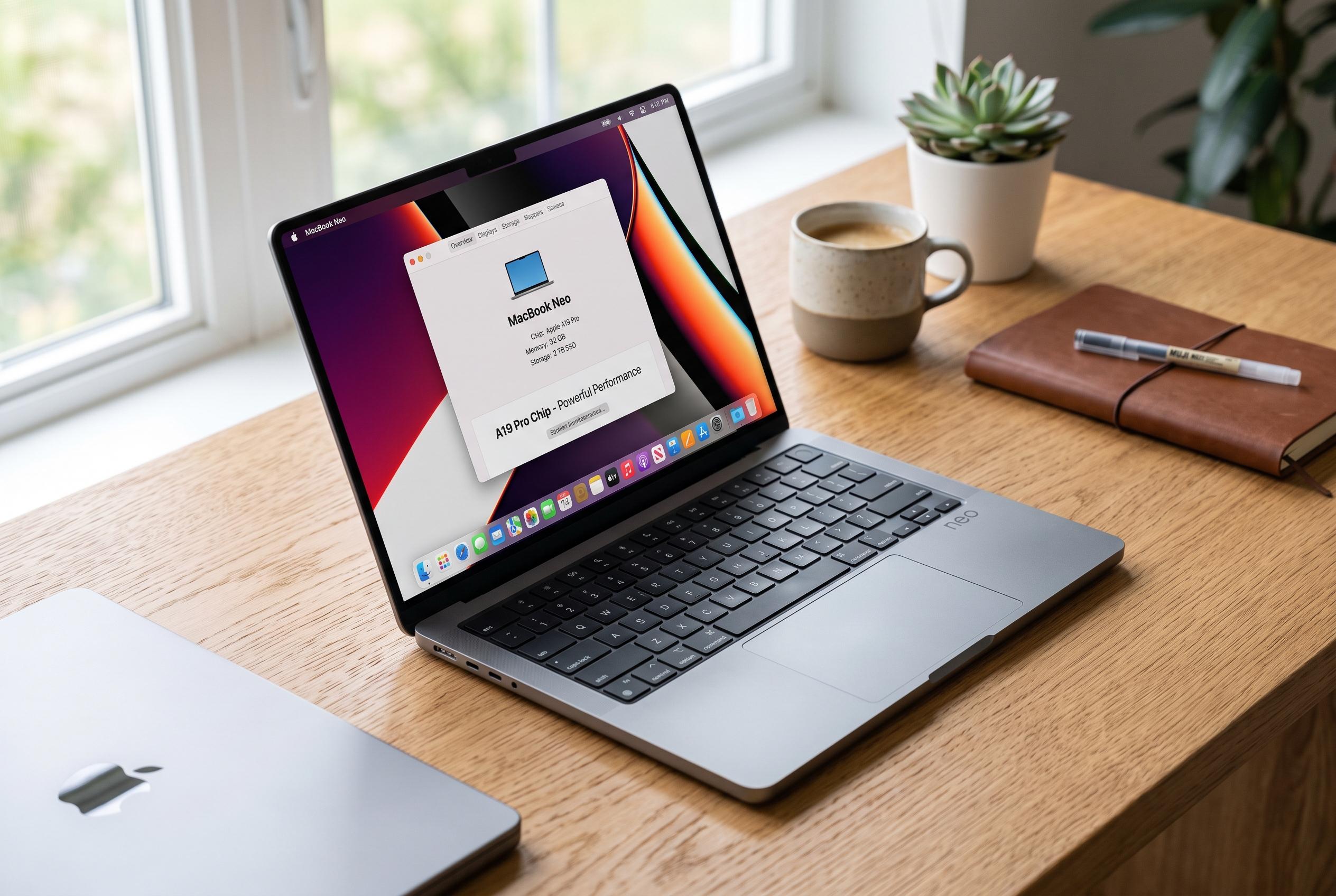

Apple’s second MacBook Neo is set for a spring 2027 release, featuring a refreshed A19 Pro chip and potential design upgrades, as supply chain constraints influence product timing and strategy.
Apple’s second MacBook Neo is increasingly being framed as a spring 2027 product, with supply-chain timing and chip availability pointing to a launch window in late March or early April. The first model, which reached buyers in March 2026, gave Apple an unexpectedly strong entry into the lower-cost laptop segment and helped establish the Neo as a consumer machine rather than a professional one.
According to the reporting and industry commentary cited across the related summaries, the key constraint is silicon supply. The original MacBook Neo used a binned version of the A18 Pro chip, with some graphics capability removed so Apple could repurpose processors that did not meet iPhone Pro specifications. The next model is expected to follow the same pattern with the A19 Pro, which would mean Apple first needs enough excess or lower-tier A19 Pro inventory before it can scale production of the laptop.
That supply logic also helps explain why a spring launch now looks plausible. Apple is said to be reorganising parts of its product calendar, with consumer-focused iPhone models expected to arrive several months after the Pro tier. In that structure, the Neo would fit neatly beside the non-Pro iPhone line, giving Apple a more regular annual rhythm for its entry-level MacBook while preserving its separate timetable for premium hardware.
There are also signs that the second-generation model could gain modest but meaningful upgrades. MacRumors reported that Apple is expected to keep the machine affordable while moving it to a binned A19 Pro, and separate reporting from 9to5Mac suggested a 10% to 15% gain in CPU performance and as much as a 40% lift in graphics performance compared with the A18 Pro. Analyst Ming-Chi Kuo has also indicated that a touchscreen may be under consideration, while other reports point to a possible increase to 12GB of memory. Taken together, the picture is of a cautious refresh: familiar design, newer silicon and a few refinements aimed at keeping the Neo competitive with cheaper Windows laptops and Chromebooks.
Disclaimer: This content is intended for informational purposes only. Readers are advised to exercise their own judgement, conduct due diligence, or consult a qualified expert before acting on any information provided.