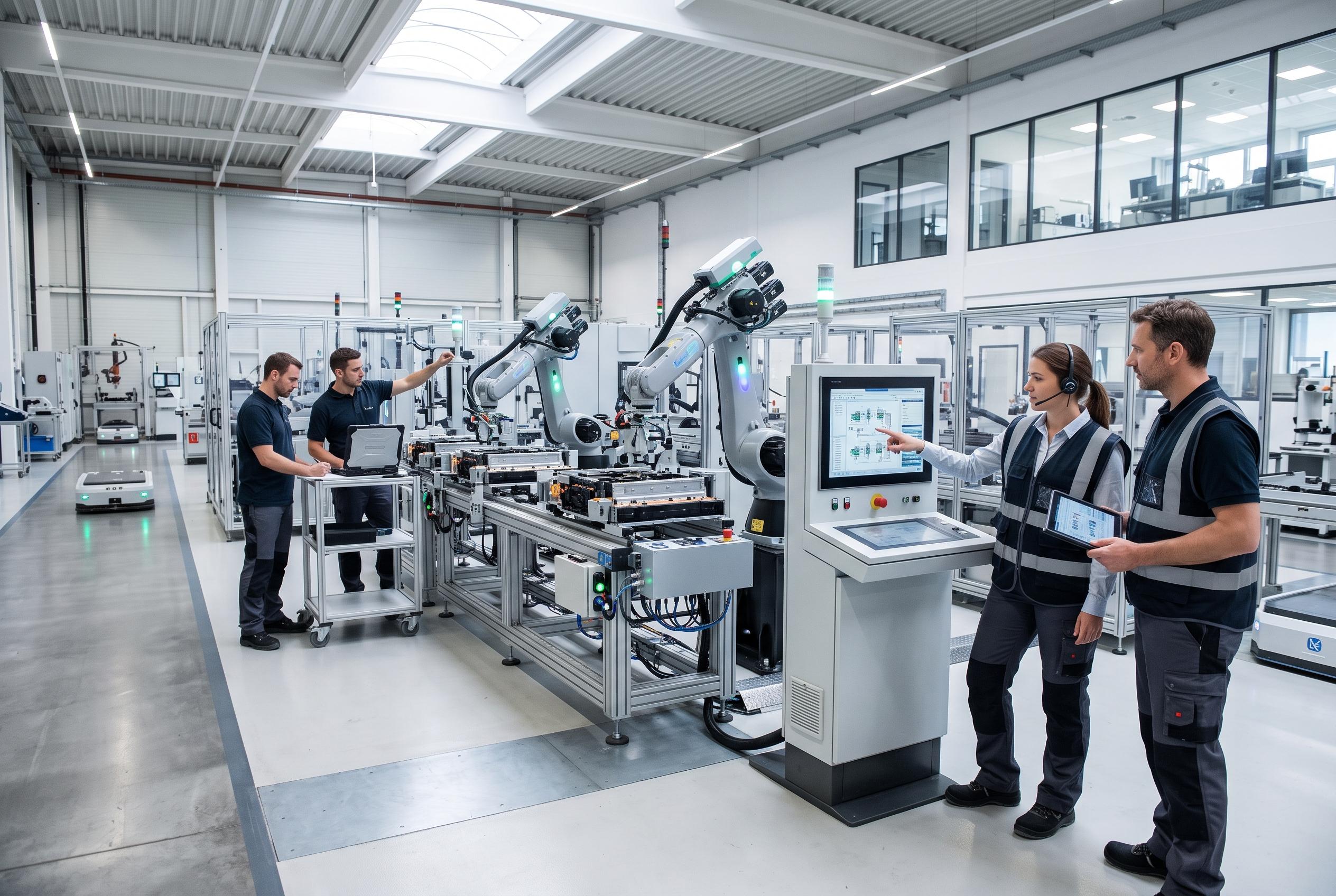

Elon Musk reaffirms that AI could overtake human intelligence in just a few years, emphasising its potential to revolutionise industries through advancements in models and robotics amidst rising investment and labour-market concerns.
Elon Musk has revived one of the boldest claims in technology: that artificial intelligence could overtake the combined intelligence of humanity within years, not decades. In an interview with The Economist, he sketched a future in which machine intelligence moves far beyond today’s chatbots and assistants, then joins with robotics to do both mental and physical work at scale. The point, for business leaders, is less whether his timing proves exact than whether the direction of travel is right.
That direction is already visible in the amount of money being poured into AI infrastructure. According to reporting by Tom’s Hardware, Musk has said xAI plans to lift data-centre capacity from 1.4 gigawatts to 10 gigawatts by the end of 2027, backing a revenue target of $300 billion to $500 billion a year. Space.com likewise reported that Musk expects AI to become the dominant source of value in his businesses within five years, with computing operations driving a large share of that growth. Those projections underline how quickly AI is moving from software feature to industrial platform.
The larger strategic issue is that digital intelligence alone does not move pallets, fit parts or build houses. Musk’s argument is that real economic change will require “end effectors” , machines that can act in the physical world. That is why humanoid robotics matters as much as model performance. In manufacturing and logistics, such systems could eventually handle inspection, replenishment, loading and routine maintenance, particularly in environments built for flexibility rather than a single fixed task.
That promise sits alongside a growing concern about the scale of investment. The World Economic Forum has noted a widening gap between the vast sums being committed to chips, data centres and power systems, and the value so far realised by businesses. Yet it also points to research suggesting AI can already perform tasks worth $4.5 trillion. The implication is that the technology is not hypothetical; the challenge is turning capability into measurable productivity without overpaying for it.
The labour-market consequences remain the most sensitive part of the debate. The Atlantic has argued that the United States is poorly prepared for AI-driven disruption, especially if white-collar roles are redesigned or eliminated faster than new jobs appear. That concern has been echoed by executives across sectors. At a 2026 industry panel, Take-Two Interactive chief executive Strauss Zelnick suggested AI is more likely to remove mundane work than replace creative talent, arguing that the tools should free people to focus on higher-value tasks.
For companies, the immediate lesson is practical rather than speculative. If AI becomes widely available, competitive advantage will depend less on ownership of the model and more on the quality of the surrounding organisation: clean data, disciplined processes, connected systems and clear human oversight. Musk’s most unsettling point is not that machines may become smarter, but that governance may lag behind capability. Whether or not his timetable proves accurate, firms that treat AI and robotics as a distant issue may find the future arrives before they are ready.
Disclaimer: This content is intended for informational purposes only. Readers are advised to exercise their own judgement, conduct due diligence, or consult a qualified expert before acting on any information provided.