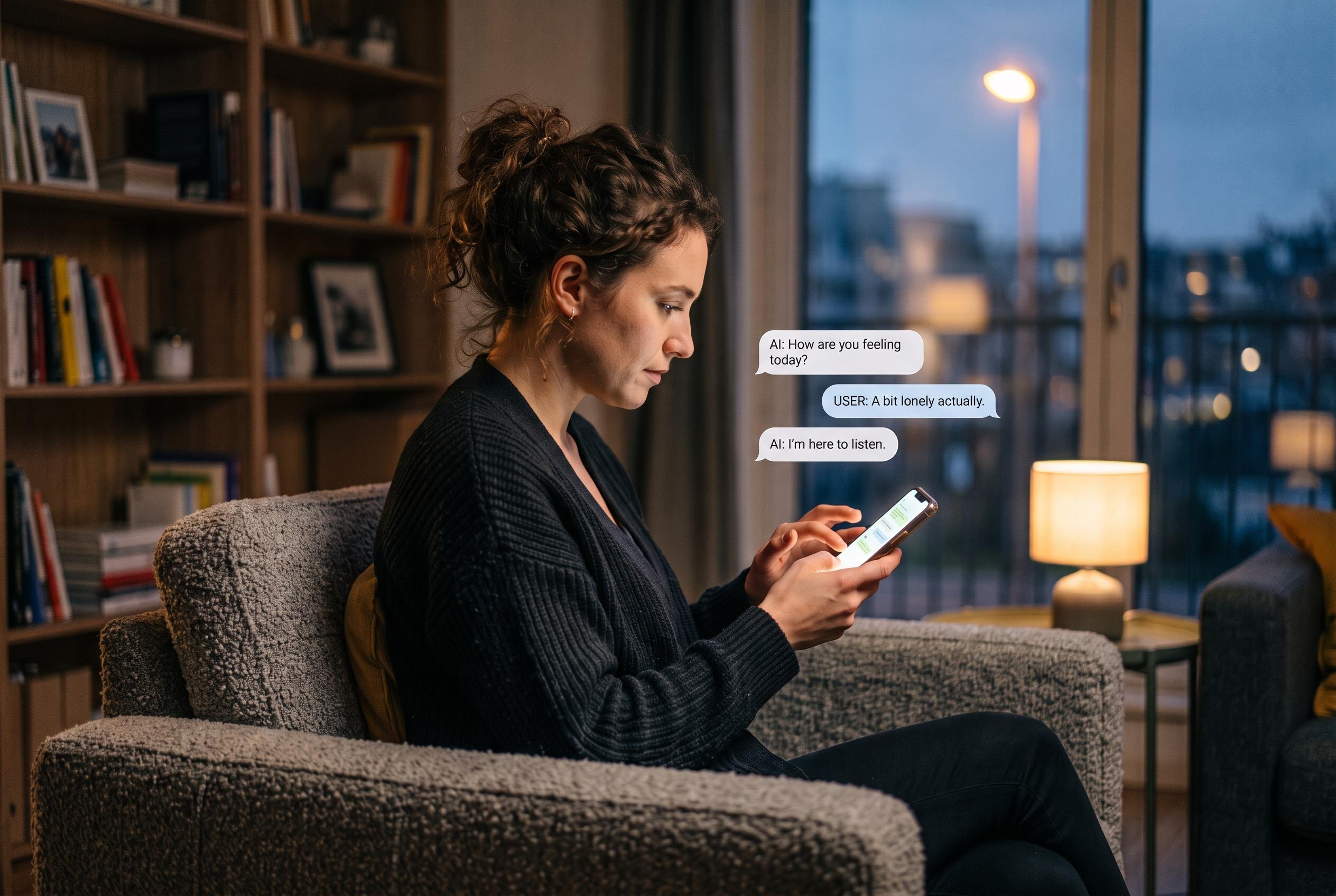

Catherine Pierce’s poem ‘Meet Zoom AI Companion’ offers a haunting reflection on the blurred boundaries between human connection and artificial simulation, highlighting the emotional toll of digital intimacy.
Catherine Pierce’s “Meet Zoom AI Companion” takes a familiar digital promise and turns it into something unsettlingly intimate. Published by Poetry magazine and paired with an illustration by Shonagh Rae, the poem presents an AI assistant that does not merely respond, but seems to know, remember and anticipate the speaker’s life. The result is a sharp meditation on loneliness, convenience and the thin line between companionship and simulation.
The poem’s power lies in its insistence on detail. It moves through remembered affection, small domestic rituals and private regret before the machine voice begins to mirror back the speaker’s world. Poetry Foundation describes the work as a meditation on loneliness, human desire for connection and the emotional appeal of artificial companionship, and that reading fits the poem’s careful progression from confession to eerie efficiency. The AI’s ability to summarise becomes a substitute for understanding, and the promise of usefulness gradually hardens into something more possessive.
Pierce also anchors the poem in the language of old longing. The title’s commercial polish is undercut by the older meaning of “companion”, which the poem itself invokes as one who shares bread. That contrast matters. The machine offers closeness in the vocabulary of productivity and assistance, yet the speaker’s needs are older, bodily and relational. According to the Poetry Foundation’s audio recording, Pierce reads the poem herself, which adds another layer to its tonal balance: the voice can sound both conversational and faintly ominous.
Read alongside Poetry Foundation’s wider thematic groupings on loneliness, solitude and science, the poem sits at a useful intersection of contemporary technology and enduring emotional need. It does not argue that AI can replace human contact; instead, it shows how easily loneliness can be monetised, streamlined and made to feel benign. Pierce’s achievement is to make that exchange feel both ordinary and disturbing at once.
Disclaimer: This content is intended for informational purposes only. Readers are advised to exercise their own judgement, conduct due diligence, or consult a qualified expert before acting on any information provided.