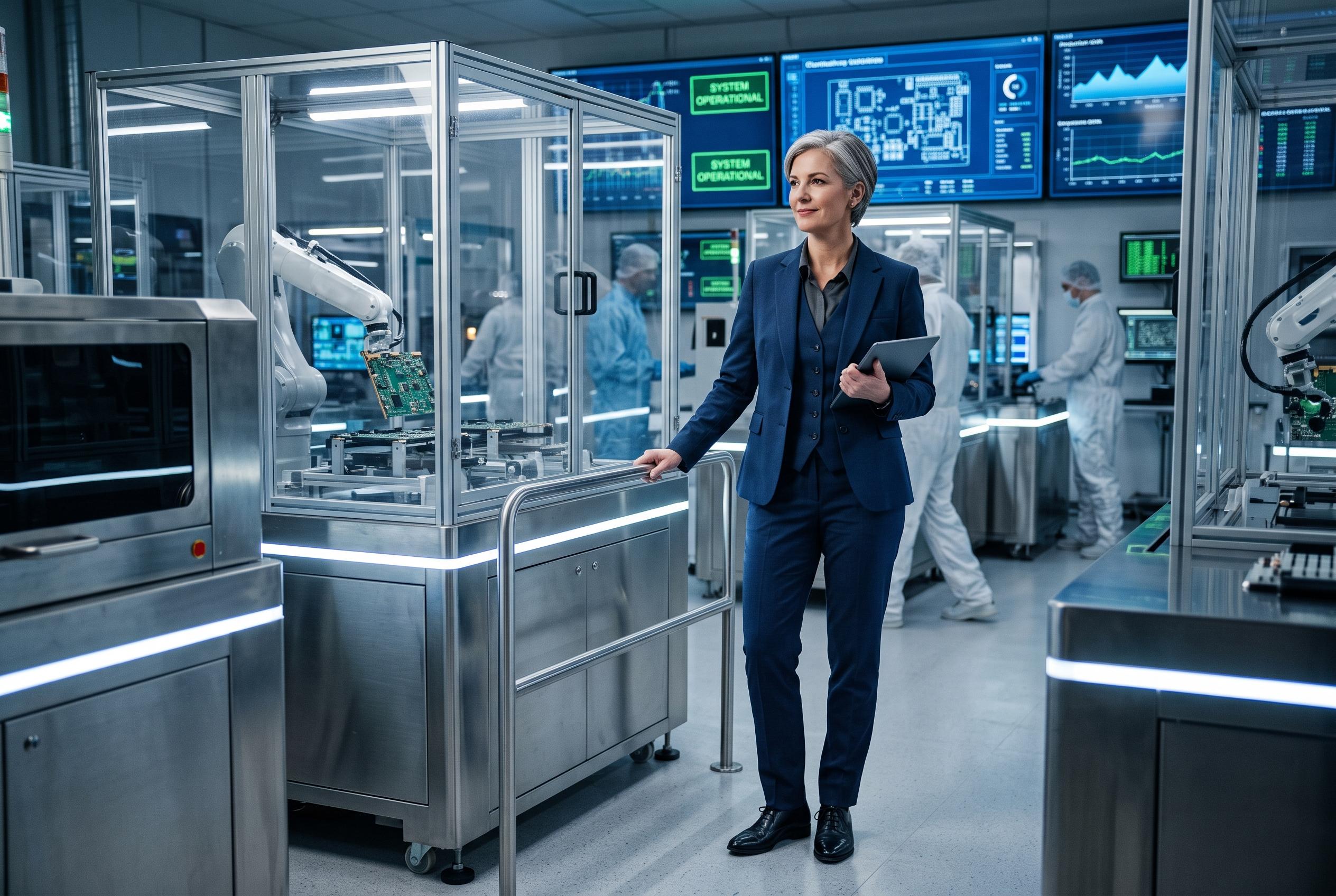

Universal Display’s CEO asserts that the current slowdown in the OLED market is temporary, with multibillion-dollar investments and expanding applications indicating a robust, long-term industry outlook despite cautious demand in smartphones.
Universal Display’s chief executive has cast the OLED market’s current softness as a short-term issue, arguing that the industry’s recent wave of investment reflects a much longer horizon. Speaking at the Oppenheimer Annual Technology, Internet, and Communications Conference, Steve Abramson said panel makers are still committing multibillion-dollar sums to new manufacturing lines because they expect OLED adoption to keep broadening across consumer electronics and vehicles.
He said smartphone demand has become more cautious, especially where higher component and memory costs are squeezing affordability, but stressed that factory build-outs are being planned over several years rather than a few quarters. MarketBeat reported that Abramson described more than $20 billion of industry capital as being tied to OLED expansion, with Samsung and BOE already moving into mass production at Gen 8.6 sites and other Chinese and Korean manufacturers still adding capacity. BusinessWire has previously reported that Universal Display and PPG opened a new manufacturing facility in Shannon, Ireland, in 2023 to double output of phosphorescent OLED materials, underscoring how the supply chain has been scaling alongside demand.
Abramson said OLED penetration in smartphones is now around 65%, compared with almost no meaningful presence 15 years ago, but he argued that other categories are still at an earlier stage. He put penetration at roughly 5% in information technology devices and about 1% in automotive displays, which he said leaves considerable room for notebooks, tablets, monitors and in-car screens to convert from LCD technology. Universal Display has long framed its business around that transition, supplying phosphorescent materials and licensing intellectual property to display makers.
The company also sees larger formats as a key growth avenue. According to Abramson, the industry’s new Gen 8.6 capacity is intended to support wider OLED use in IT products, where higher efficiency and better image quality matter for work, streaming and mixed-use devices. He said the technology’s main advantages remain deep blacks, fast response times, wide viewing angles and lower power consumption, features that are becoming more relevant as devices carry more demanding software and AI workloads.
Abramson linked that power-efficiency theme directly to artificial intelligence, saying AI increases the value of battery life in edge devices such as smartphones, tablets and monitors. He added that Universal Display is also using machine-learning tools internally to speed materials development, while continuing to work on phosphorescent blue, one of the industry’s most closely watched technical challenges. The company is pursuing several routes at once, including phosphor-sensitised fluorescence and pure blue phosphorescence, because different product classes have different demands for colour, lifetime and manufacturability.
On capital allocation, Abramson said Universal Display intends to keep investing in organic growth while returning cash to shareholders through dividends and buybacks. The company began paying a dividend in 2017 and has raised it every year since, and he noted that a $100 million repurchase authorisation announced in April 2025 was fully used by the first quarter of 2026, before a new $400 million programme was approved in April 2026. BusinessWire has also reported earlier capacity investments in Barberton, Ohio, and Shannon, Ireland, while Universal Display’s own filings have shown its interest in adjacent technologies such as OVJP, a printing platform aimed at OLED TV manufacturing. Abramson’s message was that investors may be too focused on the timing of phosphorescent blue, and not focused enough on the company’s broader position in a market that is still expanding.
Disclaimer: This content is intended for informational purposes only. Readers are advised to exercise their own judgement, conduct due diligence, or consult a qualified expert before acting on any information provided.