
In 2026, the most compelling iPhone upgrades focus on smarter battery chemistry, always-on-the-go charging solutions, and practical recovery tools that prioritise reliability and convenience over flashy features.
The most persuasive iPhone accessory upgrade in 2026 is not another charger promising a slightly bigger number on the box. It is better battery design. In a 2025 review, Macworld found that Statik’s 5,000mAh State Power Bank beat other packs of the same size in iPhone recharge tests, returning 84 per cent in one run and 88 per cent in another. That is a more useful distinction than a modest speed increase, because small power banks tend to become frustrating only after repeated use starts to erode capacity.
Macworld treated Statik’s “semi-solid-state” claim with some care, which is the right approach. The publication said the pack uses a partially solid electrolyte rather than the fully liquid chemistry common in conventional lithium-ion units. In practice, that can mean better safety, less risk of overheating, improved cold-weather behaviour and slower degradation over time, even if it does not amount to the long-promised battery revolution sometimes associated with fully solid-state designs. The reviewer also noted that the pack is not the smallest 5,000mAh option available. Even so, at 4.1 by 2.8 by 0.45 inches and 141g, it is small enough for everyday use, which makes the chemistry relevant instead of academic.
If the battery pack is about longer-term reliability, Nomad’s ChargeKey is about removing a very ordinary irritation: not having a cable when you need one. Android Central described it as the “best travel USB-C cable around”, largely because it clips on to a key ring and the two USB-C connectors snap together magnetically when not in use. The braided lead also supports up to 240W charging and 10Gbps data transfer. An iPhone will not draw anything like 240W, but that ceiling matters if the same cable is also expected to handle a laptop, tablet or external storage. The point is not maximum power. It is that the cable is always on hand.
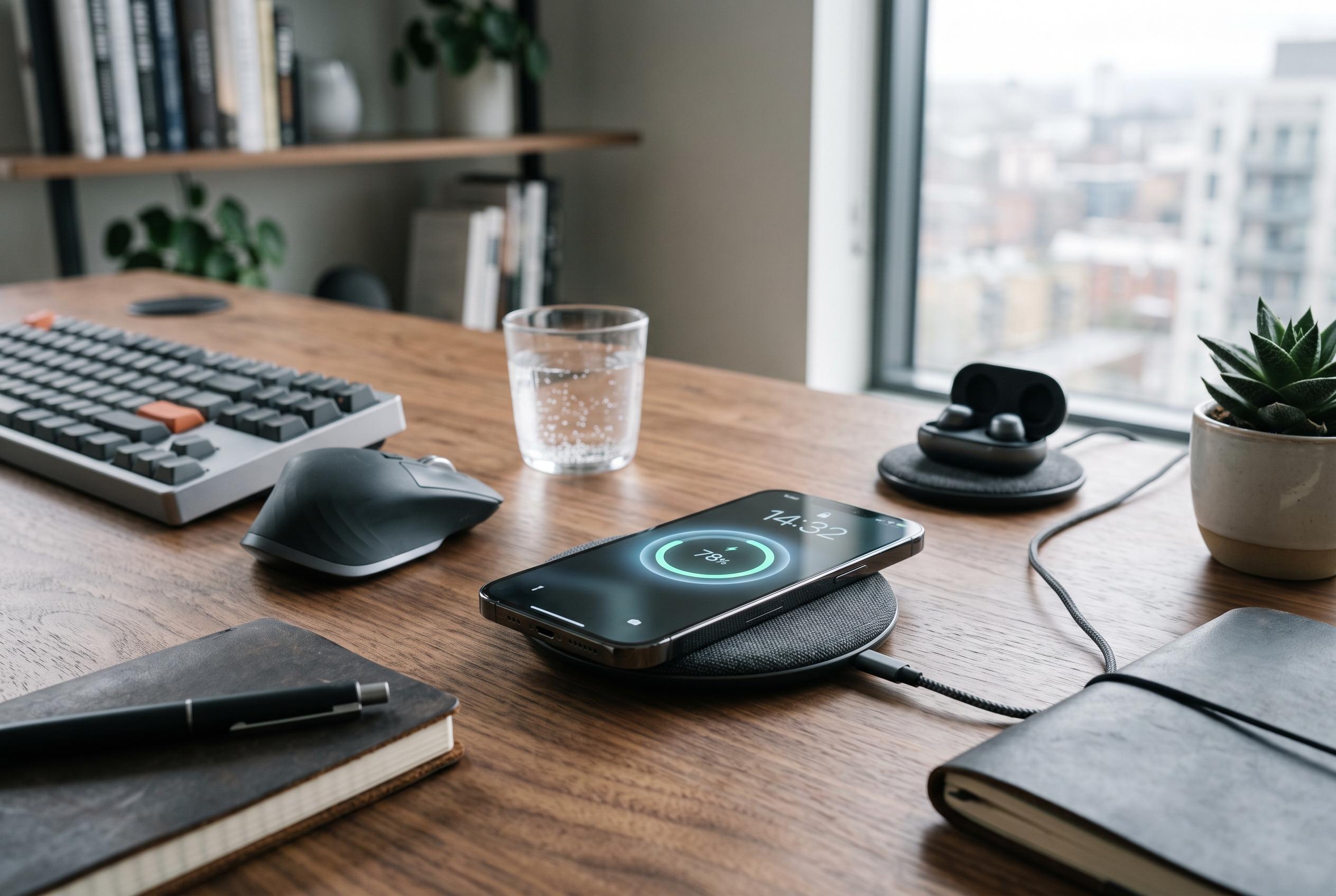
For a fixed charging spot at home, the more instructive case is Nomad’s Stand One Max. When MacRumors covered the Qi2 version in August 2024, it reported that the redesign moved away from the earlier MagSafe implementation, reduced the launch price to $150 from $180, and repositioned the Apple Watch charger so iPhone StandBy mode could finally be used. In MacRumors’ testing, an iPhone 15 Pro Max rose from empty to 39 per cent after an hour, which placed it broadly in line with MagSafe charging. The product is important less for peak performance than for what it replaces: a phone charger, a watch puck and a separate pad for AirPods, all folded into a single metal stand with a glass top.
Wallets have improved as well, particularly once tracking was added. MacRumors reported in June 2025 that Nomad’s Leather Mag Wallet holds up to four standard cards and includes an integrated Tracking Card that works with Apple’s Find My network. That allows the wallet to play a sound, surface its location through nearby Apple devices and issue a warning if it is left behind. Those details matter because detachable magnetic wallets tend to fail in the same predictable way: they are easy to misplace. Tracking turns the format from a stylish card sleeve into something much closer to a practical replacement for a pocket wallet.
The finish is part of that argument. After two weeks of use, Tom’s Guide said the same Nomad wallet looked more like an ordinary wallet than an obvious technology accessory, and that the Horween leather improved visually as it picked up marks and wear. That is a stronger endorsement than a launch specification sheet because it addresses how the product behaves once it leaves the box. Tom’s Guide also showed the wallet attached neatly through a case, which is essential for any accessory that depends on magnets but is rarely discussed in marketing language.
UAG’s Dryout range points to a different sort of accessory need: recovering from accidents rather than optimising a routine. Macworld’s August 2026 report on the Dryout system made clear that these products are meant to draw out residual moisture after a spill or a soaking, not to replace common-sense first steps. The publication recommended shutting the device down immediately, disconnecting power and accessories, turning it so liquid can drain, and wiping away visible moisture before using a Dryout product. UAG says the absorbent core works for around three to nine hours depending on temperature and can then be reset with sunlight, direct heat or a hairdryer. Macworld also set out the wider range, including a $35 Phone Recovery Pouch, a $55 Sling, $140 Tote and Rolltop models, and a $170 Backpack.
Taken together, these accessories suggest a better test for value than specification chasing. Independent review data shows that battery chemistry can matter more than a capacity label. A tiny key-ring cable is more useful than a faster spare lead left at home. A three-device charging stand earns its place only if the user really charges an iPhone, Apple Watch and AirPods together each night. A MagSafe wallet becomes substantially more credible once it can be found through Find My. The strongest iPhone accessories now do something unglamorous but important: they remove friction from charging, carrying or rescuing the devices people already depend on.
Disclaimer: This content is intended for informational purposes only. Readers are advised to exercise their own judgement, conduct due diligence, or consult a qualified expert before acting on any information provided.