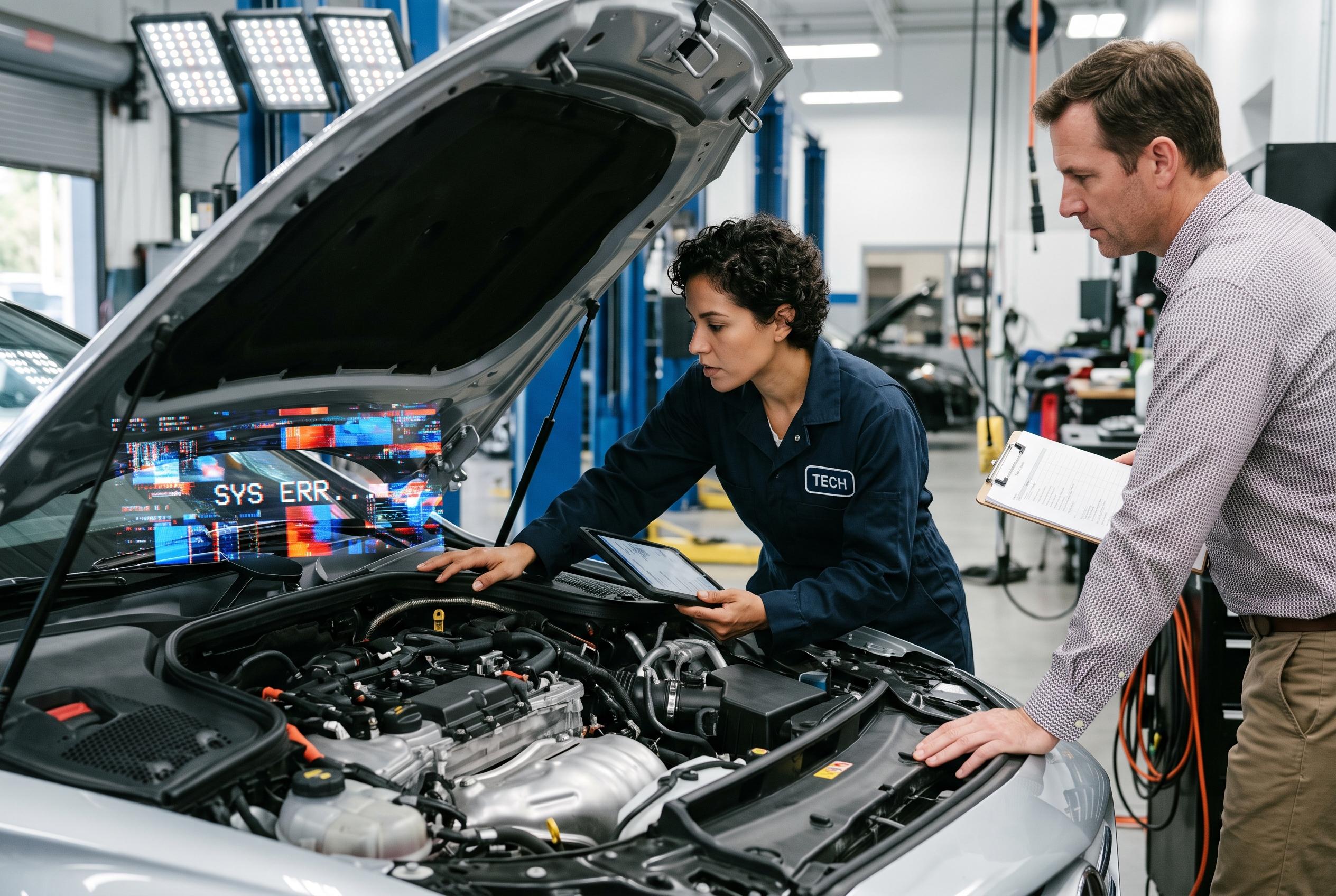

As vehicles become increasingly reliant on software, their digital systems tend to age faster than their mechanical components, creating challenges for owners and affecting vehicle longevity and resale value.
Cars increasingly seem to age in two different ways. The mechanical side can remain robust for years, while the digital layer grows sluggish, awkward or unsupported much sooner. As Cuescreens and TopCarCheck both argue, this creates a widening gap between how long a vehicle can keep running and how modern it still feels to use.
The pattern is most visible in infotainment systems, driver-assistance features and connected services. Fast-moving consumer technology advances far more quickly than automotive hardware cycles, so a car that is sound beneath the bonnet can still feel dated when its screen boots slowly, its maps are old or its interface is clumsy. Fastlane Feeds says touchscreen-only controls and experimental software-heavy layouts can make that effect worse, because design trends change long before a car reaches the end of its mechanical life.
That difference matters because modern vehicles are increasingly defined by software. TopCarCheck notes that digital systems do not always age as predictably as brakes or tyres, and that update support tends to fall away as cars get older. When that happens, features can become unreliable, incomplete or simply obsolete, which affects usability and resale value even if the core drivetrain remains healthy.
Some models show how costly that can become. Daxstreet highlights the BMW 5 Series built between 2004 and 2014 as a case where ageing electronics can undermine ownership, with failures in the iDrive controller and digital displays adding expense and frustration. The same site points to older Range Rover models as another example of complex mechanical and electronic systems ageing badly, with air suspension and transfer-case problems compounding the burden.
Electric vehicles add another layer to the issue. Autoevolution says EVs may avoid some of the wear seen in petrol and diesel cars, but their technology can date quickly as charging speeds, range and software improve. In that sense, a car may remain mechanically strong for a decade while still feeling obsolete long before then, not because it has failed, but because the digital benchmark has moved on.
Disclaimer: This content is intended for informational purposes only. Readers are advised to exercise their own judgement, conduct due diligence, or consult a qualified expert before acting on any information provided.